What a Film Production Schedule Actually Is (And What It Isn’t)
A film production schedule is not a wish list. It’s a working document that sequences every scene you need to shoot, assigns each to a specific day and time slot, accounts for location availability, cast conflicts, daylight hours, and company moves, and gets revised constantly until it actually reflects reality. Think of it as the spine of your shoot. Everything else, your call sheets, your budget, your crew deals, hangs off it.
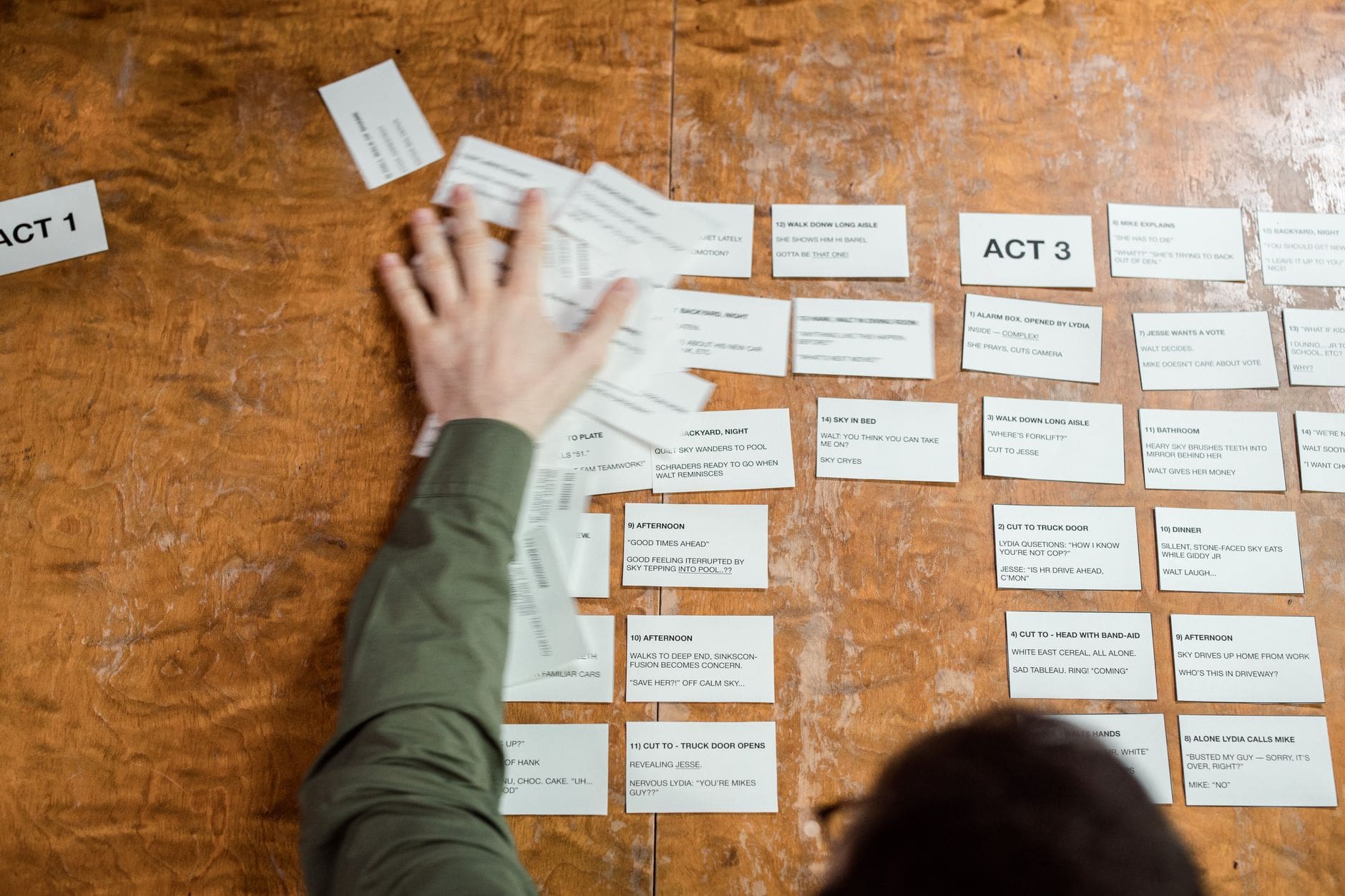
Most people confuse the production schedule with the shooting schedule. They’re related but different. The shooting schedule is the ordered list of scenes you plan to shoot, usually organized by the stripboard. The production schedule is the broader document that places those strips into actual calendar days with start times, meal breaks, travel, and turnaround built in. You need both. The stripboard feeds the schedule.
And here’s the thing most first-timers miss: the schedule is a negotiation tool before it’s a shooting plan. You build it, show it to your department heads, they push back, and you revise. A schedule that’s never been challenged by your gaffer, your 1st AD, or your location manager is a schedule that will get destroyed on day one.
Start With the Breakdown, Not the Calendar
Before you touch a scheduling tool, you break down the script. Every scene gets its own breakdown sheet: scene number, interior or exterior, day or night, location, cast members, extras, special equipment, stunts, animals, vehicles. Every element that costs time or money gets flagged.
This is where most indie productions skip ahead and pay for it. They jump straight to “we’ll shoot the apartment scenes on Tuesday” without knowing that three of those apartment scenes have a dog, two of them need a crane shot, and one of them requires a cast member who’s only available mornings. The breakdown sheet is what keeps all of that visible at once.
Software like StudioBinder or Movie Magic Scheduling does this digitally, and the stripboard view is genuinely useful because you can drag strips around and immediately see how a change in one scene ripples into the rest of the day. Movie Magic is the industry standard on bigger productions. StudioBinder is more accessible for indie budgets. Either one beats a spreadsheet.
How to Build the Actual Film Production Schedule
Once your breakdown is solid, you start scheduling by grouping scenes, not by story order. This is called “out of continuity” shooting, and it’s how every professional production works. You cluster scenes by location first. Driving back to the same location twice costs you money and time. Then within each location, you sort by cast. Get your highest-paid or most schedule-constrained actors in and out efficiently.
After location and cast, you look at day versus night. Night shoots are expensive. Crew fatigue compounds. You want to batch your nights together rather than scattering them across the schedule, and you need to build adequate turnaround time into the day after. The Directors Guild of Canada and the DGA in the US both have minimum turnaround requirements, typically ten to twelve hours. If you’re working with union crew, this isn’t optional.
Then you look at daylight. This one trips up more people than almost anything else. If you have an exterior scene that requires natural light, you need to know exactly how many hours of usable daylight you have on the shoot date in that specific location. In Vancouver in November, you might get nine hours of light. In Albuquerque in June, you get fifteen. That difference changes how many pages you can reasonably shoot in a day. Use a tool like SunCalc to get exact sunrise and sunset times for your specific location and dates before you finalize anything.
A realistic page count for a low-budget indie is two to three pages per day. Experienced professional productions with full crews might push four to five. If someone is promising you seven pages a day with a four-person crew, they’re either shooting coverage-free or they’re lying to themselves.

The Contingency Scenes Every Schedule Needs
Build cover sets into your film production schedule. These are interior locations you can shoot at any time, regardless of weather, that don’t require complex setups. Two or three pages worth of coverage scenes, ideally involving your smallest cast, that can be pulled off the schedule and swapped in when your exterior location goes south due to rain, permit issues, or a cast member calling in sick.
No cover set means that when something goes wrong on an exterior day, your whole crew stands around on the clock while you scramble. That’s your budget burning. Professionals always have a backup.
Flag your most vulnerable days. Which days depend on weather? Which depend on a single cast member with no replacement? Which involve a difficult company move between two locations? Highlight those days and add buffer. Fifteen minutes of buffer built into the call sheet is worth more than two hours of overtime you’ll panic through later.
Who Builds the Schedule and Who Approves It
On a union or mid-budget production, the 1st Assistant Director builds and owns the shooting schedule. The UPM owns the production schedule as it relates to budget and logistics. They work together constantly. The director approves it and, honestly, should be involved much earlier than most directors want to be. Showing up to a schedule presentation and saying “I can’t shoot this in twelve days” two weeks before prep ends is a bad situation for everyone.
On no-budget or micro-budget shoots, the director often builds it themselves, sometimes with a producing partner. That’s fine. But whoever builds it needs to have actually broken down every scene first. Scheduling based on a gut feeling about how long things will take is how you end up with an unfinished film.
If you’re looking for an experienced 1st AD or UPM to collaborate with, the crew directory on FilmLocal is a solid place to find working professionals. And if you need cast information to feed into your scheduling process, the actor and cast directory can help you identify availability constraints early.
Keeping the Schedule Alive Through Production
The schedule you build in prep is not the schedule you’ll finish with. That’s fine. What matters is that you’re updating it daily and that the whole team is working off the same version. Stale schedules are almost as bad as no schedule.
After each shooting day, your 1st AD should be updating the stripboard to reflect what actually got shot and what’s carrying over. If you fall behind by half a page, figure out where it gets absorbed before it becomes a whole day. Small slippage left unmanaged turns into a missing scene at the end of week two.
The schedule is a living document. Treat it that way. Check out more practical filmmaking guides in the filmmaking articles section, and if you’re staffing up for your next project, film production job listings can connect you with crew who know how to keep a schedule intact.



Key Takeaways
A production schedule that survives your shoot is built on math and constraints, not optimism, and it gets challenged by your department heads before cameras roll.
- Break down every scene completely before you schedule a single day. Don’t skip this step.
- Group scenes by location first, then cast, then day versus night. Never schedule in story order.
- Know your exact daylight hours for each exterior shoot day. Two to three pages per day is a realistic target for low-budget productions.
- Build cover sets into every schedule. Interior scenes you can shoot anytime are your insurance against weather and cast problems.
- Update the stripboard after every shooting day. Small slippage compounds fast if you ignore it.
The production schedule is the most practical tool on any film set. Build it carefully, defend it actively, and revise it honestly.
FAQs
What software do most productions use to build a film production schedule?
Movie Magic Scheduling is the industry standard on professional productions and is worth learning if you’re pursuing AD or UPM work. StudioBinder is a strong, more affordable option for indie and micro-budget projects and handles breakdown sheets and stripboards well. Either one is significantly better than trying to manage a production schedule in a spreadsheet.
How far in advance should you build the production schedule?
Ideally, you’re building the initial schedule during pre-production, at least three to four weeks before your first shoot day on a short film, and six to twelve weeks out on a feature. The earlier you have a working draft, the more time you have to identify conflicts with cast, locations, and crew availability before they become emergencies.
What’s the difference between a call sheet and a production schedule?
The production schedule covers the entire shoot, every day from first to last. A call sheet is a single-day document distributed the night before each shoot day. It lists who needs to be where, at what time, with what equipment. The call sheet is generated from the production schedule but lives on a much shorter timeline.
How many pages per day is realistic for a low-budget film?
Two to three pages per day is honest for a small crew with limited resources. Some experienced crews with tight shot lists and simple setups push four. If your schedule requires more than that consistently, you either need more crew, fewer setups per scene, or more shooting days.
Do union productions have scheduling rules you have to follow?
Yes. Both SAG-AFTRA and the major crew guilds have rules around turnaround time, meal penalties, and overtime that directly affect how you structure your schedule. For example, DGA agreements typically require ten to twelve hours between crew dismissal and the next call time. Ignoring these isn’t just risky for morale, it creates financial and legal exposure. Check the specific agreement for your production before you lock any schedule.
Ready To Build A Production Schedule That Holds Up On Shoot Day?
The difference between a schedule that works and one that collapses is almost always in the prep work: a thorough breakdown, honest page count math, and a first draft that gets stress-tested by the people who’ll actually execute it. Build the schedule with constraints in mind, not around them. And when something changes on set, update the document the same day. That habit alone will save more shoots than any other single practice.