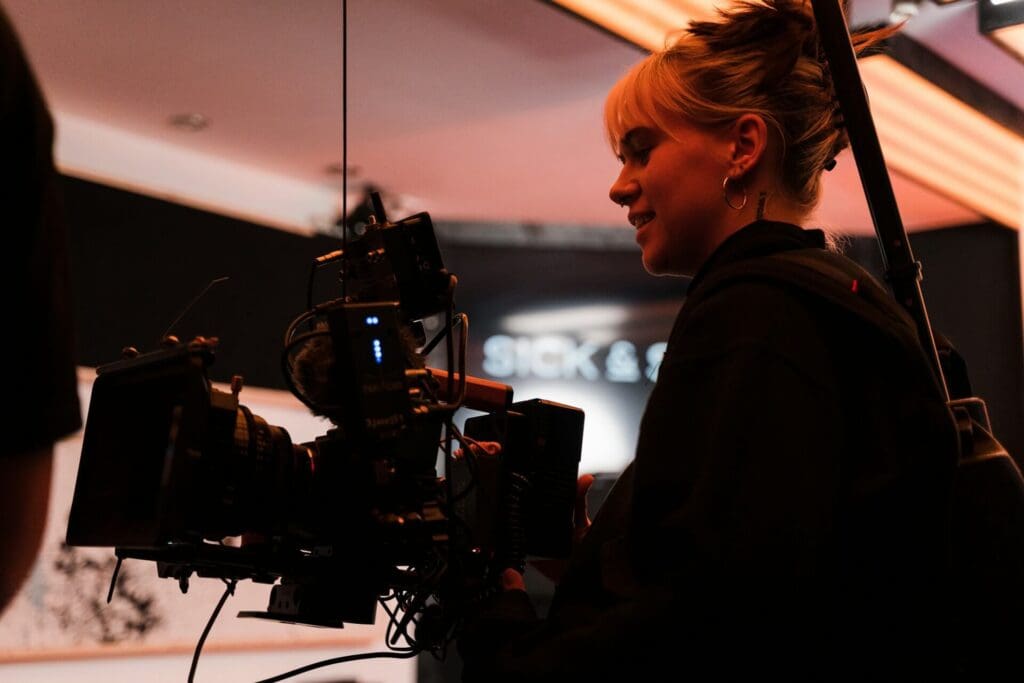
Film Noir Lighting Techniques Start With One Rule: Light Less
Most beginners approach noir backwards. They think about what to light. Noir is about what you don’t light. John Alton, who shot T-Men (1947) and The Big Combo (1955), literally wrote the book on this, “Painting with Light,” published in 1949. His whole philosophy was that a well-placed shadow tells the audience more than any amount of fill light ever could. Read that book if you haven’t. It’s still in print and it’s still correct.
The practical starting point is contrast ratio. Standard three-point lighting sits around 2:1 or 4:1. Film noir cinematography pushes that to 8:1, 16:1, sometimes beyond. You’re not trying to see the actor’s face clearly. You’re trying to reveal half of it and bury the rest.
Hard Light Is Your Primary Tool
Forget soft boxes for this. Noir runs on hard, direct sources. Fresnel units, bare bulbs, practical lamps with no diffusion. The shadows have to have edges you could cut yourself on. That’s not an accident, it’s the whole point.
On a real budget, a 650W Fresnel like the Arri 650 Plus gives you exactly the quality of light you need. Point it at your subject with no diffusion, stop it down on the barn doors, and you get that razor-edged shadow. On a micro-budget, a practical clamp light with a 100W equivalent LED bulb works surprisingly well if you keep the source small and the distance manageable. The physics are the same regardless of the fixture.
Key your subject from a steep angle, 45 to 60 degrees above eye line, and anywhere from 30 to 90 degrees off-axis. The further off-axis you go, the more face you lose to shadow. That’s a choice you make based on how much you want the character to feel hidden.
The Venetian Blind Shadow: How It Actually Works
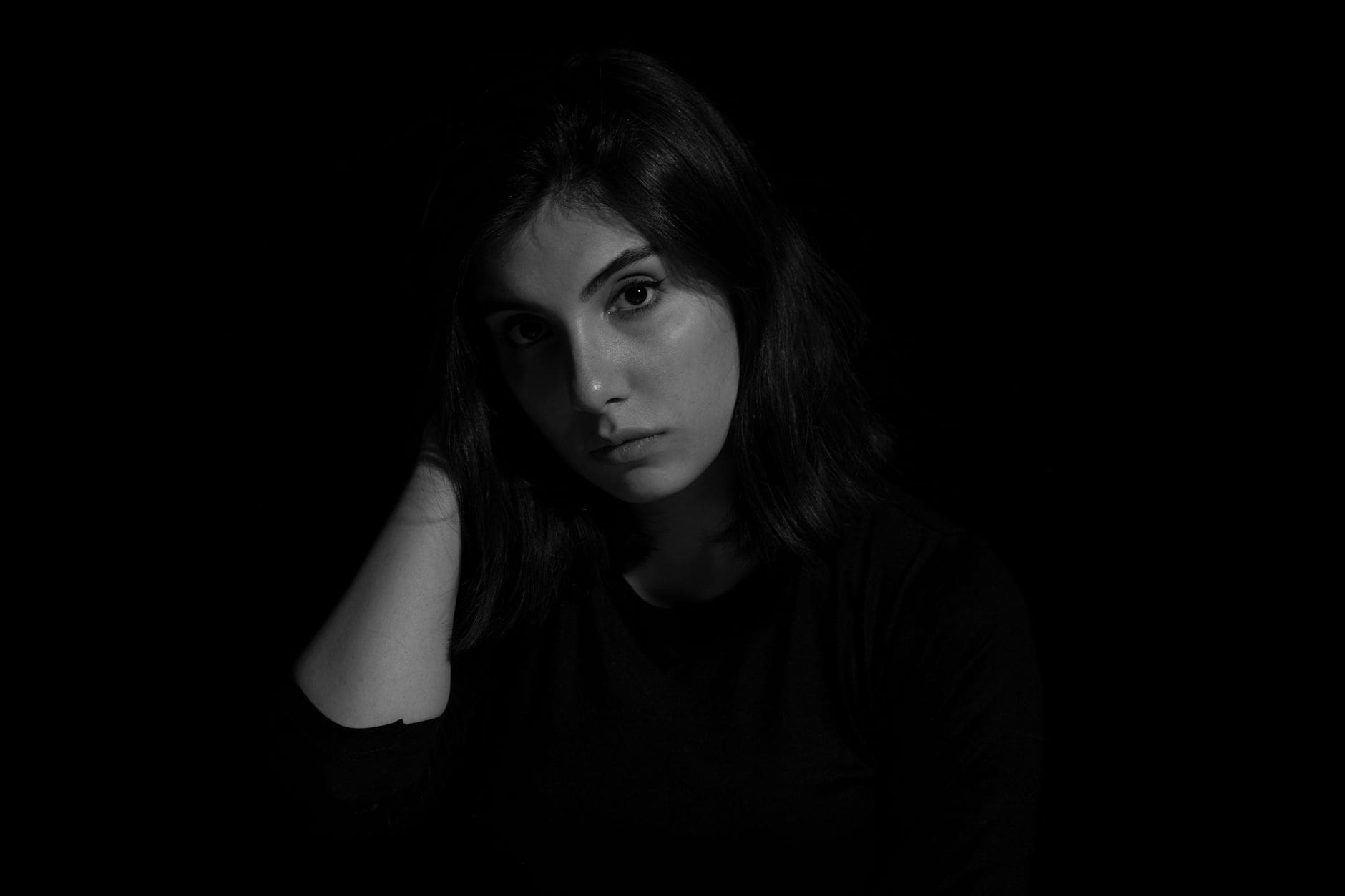
This is probably the single most iconic film noir lighting technique. Stripes of light and shadow cutting across a face or a wall. You’ve seen it in Double Indemnity, Laura, Chinatown. It reads immediately as corruption, entrapment, psychological pressure.
You can create it three ways. First, an actual venetian blind in front of a hard source. Second, a flag or cutter cut into strips and mounted in front of your light. Third, a purpose-built “cookie” or cucoloris, a flat with irregular cutouts, which gives you a more organic broken-shadow pattern rather than clean stripes.
The hard part isn’t building the gobo. It’s placement. Your light source needs to be far enough from the blind or cookie that the shadows sharpen up on the subject. Too close and the shadows go soft and lose their edge. Move the light back, or move the subject closer to the wall you’re projecting onto. Shoot tests before you lock anything in.
Motivated Practicals and the Low-Angle Setup
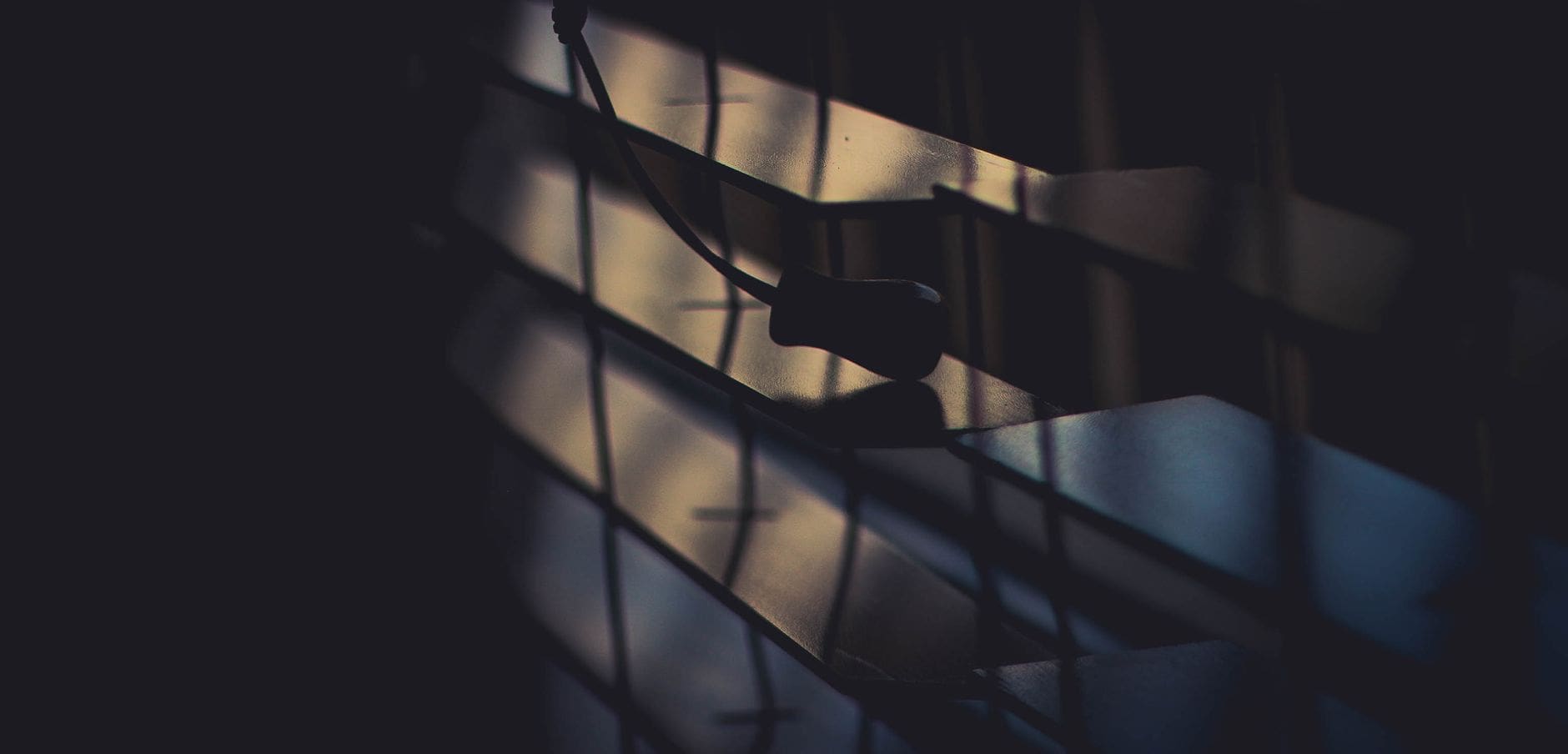
Noir interiors almost always have a practical source in the frame, a desk lamp, a hanging bulb, a street light through a window. That practical doesn’t have to do the actual lighting work. It just has to sell the logic. Your real key light is hidden just outside frame, matched to the color temperature and direction of the practical.
Low-angle lighting shows up constantly in noir and it’s deeply uncomfortable on camera. A light placed below eye line reads as unnatural because it reverses the shadow patterns we’re conditioned to read as normal. Cinematographers like Academy Award-era DP Nicholas Musuraca, who lit Cat People (1942) and Out of the Past (1947), used this strategically for villains and morally compromised characters. You don’t do it for every shot. You do it for the moment when the character reveals who they really are.
One setup worth knowing: place a bare practical on a low table and let it throw light upward onto your actor’s face, then kill almost everything else in the room. Add a single back light to separate the actor from the background. That’s it. Two sources. Extremely effective.
Smoke, Depth, and the Look of Night Exteriors
Flat interiors feel cheap. Noir interiors feel dimensional because there’s almost always atmosphere in the air. Smoke machines, haze machines, or a glycol-based atmospheric effect like the Rosco Vapour Plus make beams of light visible and give depth to dark backgrounds that would otherwise go completely flat.
You don’t need a lot. A thin haze, barely visible to the naked eye, will catch a hard side light and make it read on camera in a way that clean air simply won’t. On set, gaffer tape over your HVAC vents before you introduce any haze, otherwise it clears in minutes and you’re constantly resetting.
Night exteriors in classic noir were often shot on actual location streets, but lit so aggressively with arc lights and Fresnels that they look almost stylized. The key was wet pavement. DP cinematographers would wet down streets to get reflections of street lights and practicals. That doubling of light sources makes night streets feel alive and dangerous. It’s cheap. A garden hose and a fire hydrant connection, or a water truck if you’re on a bigger shoot. The 1946 production of The Killers, shot by Woody Bredell, used this to extraordinary effect on almost every exterior.
Putting It Together on a Low Budget
You don’t need a truck full of gear. A 650W Fresnel or even two 300W units, a few flags and cutters, a bounce card you’ll mostly ignore, a haze machine, and a handful of practical lamps. That’s a workable noir package. Rent what you can’t buy. Most rental houses in any mid-size market will have Fresnels for under $30 a day per unit.
The more important investment is prep time. Storyboard your key frames. Identify which shots need shadow pattern work and which just need low fill. Then execute. Noir lighting is slow to set properly because every adjustment to a hard source changes every shadow in the frame simultaneously. Budget extra time in your lighting schedule, at least 30 to 40 percent more than you’d allow for a standard dialogue setup.
If you’re working on building a reel with dark, stylized work, these techniques translate directly to horror, thriller, neo-noir, psychological drama. They’re foundational skills. Gaffer and DP candidates in our crew directory who can demonstrate noir-style lighting in their work consistently stand out from people with only soft, flat reels. And if you’re an actor looking for dramatic material that shows range, productions using these techniques are often listed in our film production job listings. Worth watching.
For more on building your technical skill set on set, browse our filmmaking articles covering everything from camera operating basics to production design fundamentals.


Key Takeaways
Film noir lighting is built on contrast, hard light, motivated shadow, and deliberate restraint, and you can recreate it with a small, affordable kit if you understand the underlying logic.
- Push your contrast ratio to 8:1 or higher. Eliminate fill light aggressively and let shadow do the storytelling work.
- Use hard, undiffused Fresnel units as your key source. Soft boxes and LEDs with diffusion panels work against the look.
- Build venetian blind or cookie shadows with a hard source at distance. Close placement softens edges and kills the effect.
- Introduce a thin glycol haze to make light beams visible and give depth to dark backgrounds, even on interior sets.
- Wet down exterior surfaces at night to double your practical light sources through reflections. It’s cheap and immediately effective.
The technique is learnable, but it requires deliberate practice and longer lighting setups. Build these skills now and they’ll serve you across every dark genre you shoot.
FAQs
What is the difference between low-key lighting and film noir lighting?
Low-key lighting is the broad technical category, any setup with high contrast and predominantly dark tones. Film noir lighting is a specific application of low-key technique with particular characteristics: hard sources, motivated practicals, deep shadow, atmospheric haze, and shadow patterns used for psychological effect. All noir lighting is low-key, but not all low-key lighting is noir.
Can you achieve film noir lighting techniques with LED fixtures?
Yes, but you need hard LED sources, not panels with diffusion. A small Fresnel-style LED like the Aputure Spotlight Mount kit or an Arri Orbiter on a tight beam will give you hard-edged shadows comparable to traditional tungsten Fresnels. The key is output quality and source size. Small, intense, undiffused sources behave the same regardless of the underlying technology.
How much fill light should you use in a noir setup?
As little as possible. Many classic noir setups use zero fill on the face deliberately. If you add fill at all, it should be extremely weak, a small bounce card at distance, keeping the shadow side no brighter than about one-sixth of the key side. The moment you see clean, readable detail in the shadow side of the face, you’ve lost the noir quality.
Do you need a smoke or haze machine to shoot noir style?
Not for every shot, but for any setup where you want visible light beams or need to add depth to a dark background, some atmospheric haze makes a significant difference on camera. A basic haze machine rents for around $50 to $75 per day at most grip and lighting houses. It’s worth the line item if the look matters to your project.
What’s the best way to practice these lighting setups before a real production?
Shoot portraits in a dark room with a single 650W Fresnel or even a well-positioned practical lamp. Work through different key angles, try building a simple venetian blind gobo, and test your contrast ratios before you’re on a timed set. Review your footage on a calibrated monitor rather than a phone screen so you’re reading the shadows accurately. One afternoon of deliberate practice teaches you more than three shoots where you’re just reacting under pressure.
Ready To Build Your First Noir Lighting Setup On A Real Shoot?
The most important thing is to start with less light than you think you need, then pull more away. Noir is a subtractive discipline, not an additive one, and that instinct runs counter to how most people learn to light. Get one hard source, one strong practical, some flags, and a dark room, and spend a few hours just watching where the shadows fall. That hands-on time is worth more than any amount of theory.