Disclosure: This article contains affiliate links. If you make a purchase through one of these links, FilmLocal may earn a commission at no extra cost to you.
What a Steadicam Operator Actually Does on Set
A steadicam operator is the person who wears the rig. That’s the short version. The longer version is that they’re responsible for executing smooth, stabilized camera movement in situations where a dolly can’t go, a crane is overkill, or the director needs the camera to feel alive without feeling shaky. Walking with an actor. Following a stunt through a stairwell. Tracking a crowd scene across uneven ground. That’s the work.
The system itself has three main parts: the vest, which distributes the weight across the operator’s hips and torso; the arm, a spring-loaded sled that isolates vibration; and the sled, which holds the camera and monitor. The whole rig can weigh anywhere from 30 to 70 pounds depending on the camera package. You feel every pound by hour ten of a shooting day.
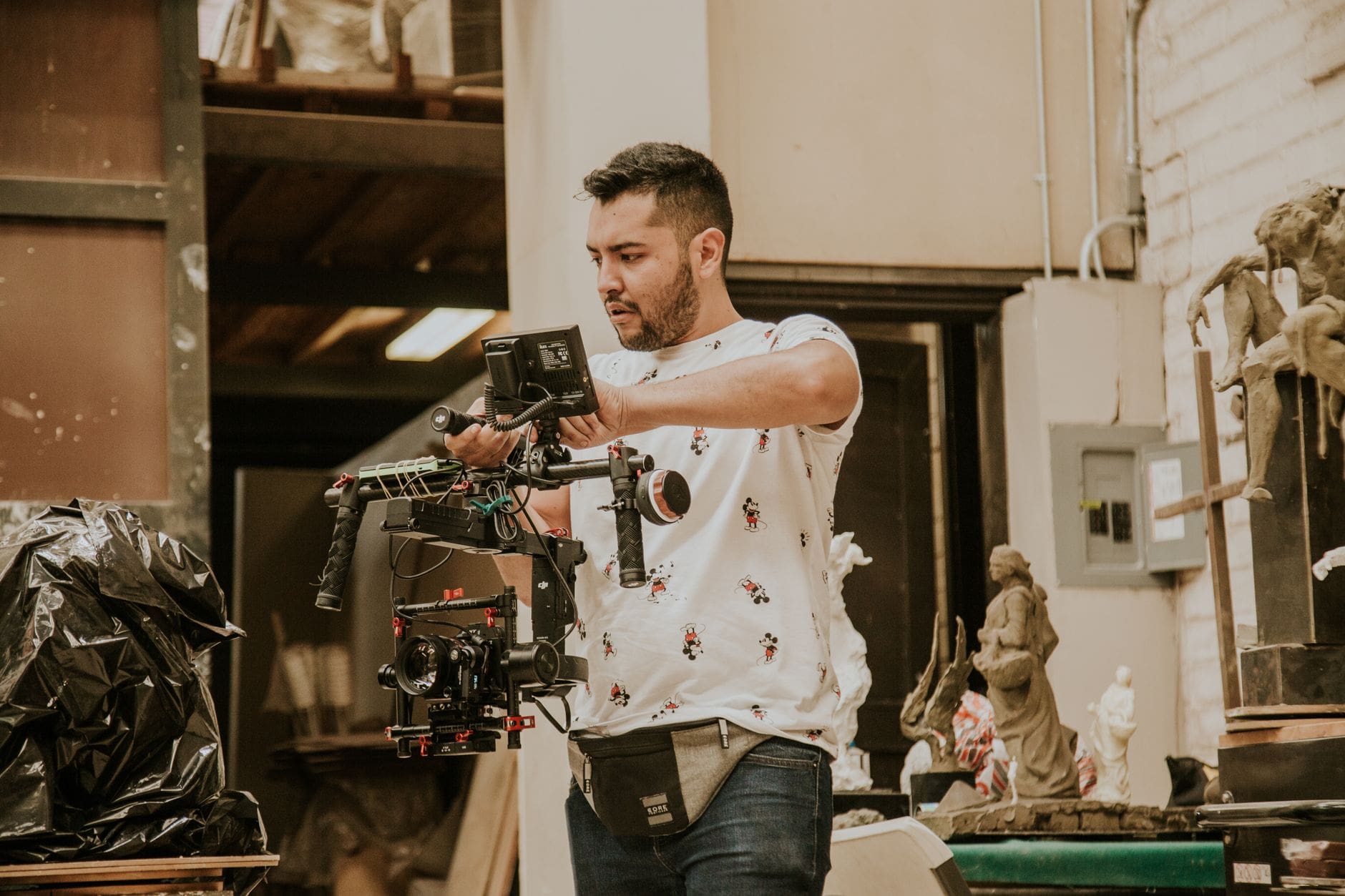
Operators don’t just carry the rig. They set it up, balance it to the specific camera and lens combination, adjust the arm tension for their body weight, and then execute the shot the DP and director have in mind. Sometimes that means a simple walk-and-talk. Sometimes it means memorizing a 90-second choreographed sequence with six performers and two set dressers moving furniture around you.
The Skills You Actually Need
Physical endurance is the obvious one. But the operators who last aren’t just fit. They’re precise under fatigue. There’s a real difference between those two things. You can train your cardio and still fall apart on take twelve when the director wants one more.
The technical side is deeper than most people expect. You need to understand camera balance intimately, which means knowing how shifting a battery position affects your low-mode versus high-mode operation. You need to read a monitor, frame a shot, and communicate with the DP simultaneously. And you need to understand lenses because a wide angle forgives your footwork in a way a 50mm absolutely does not.
Spatial awareness is something instructors talk about a lot in workshops. You’re moving through a set, tracking an actor, watching your frame on a monitor, avoiding the grip who just moved a C-stand, and not stepping on the sound recordist’s cable. All at once. New operators often fixate on the frame and forget the world around them. That gets people hurt.
Communication matters too. A steadicam operator who can’t talk clearly with a first AC about focus pulls, or who can’t translate a director’s vague gesture into an executable camera move, will get fewer calls back regardless of their technical ability.
How to Train and Get Certified
There’s no single required certification to call yourself a steadicam operator. But the Tiffen Steadicam Workshops are the closest thing to an industry standard for training. They run multi-day intensive programs that cover balancing, operation modes, and on-set workflow. Expect to pay $1,500 to $2,500 USD depending on the program level. It’s real money, but you’re getting hands-on time with the equipment and feedback from working professionals.
Many operators also come up through the camera department, starting as a camera PA or loader, moving to second AC, and building their steadicam skills on the side. That path takes longer but it gives you real set experience before you’re ever responsible for a Steadicam shot. You understand how a camera package works, you have relationships with DPs, and you’re not learning set etiquette at the same time you’re learning to balance a rig.
Renting gear to practice is non-negotiable. You can find Steadicam rentals at most major camera houses. Some operators buy a used rig early to build hours, and you can find equipment through Adorama if you’re in the market. A used Steadicam Pilot or Zephyr system in decent condition will run you $3,000 to $8,000. It’s not cheap, but the hours you put in on your own time will show on set.
What Steadicam Operators Earn
On a union feature under an IATSE contract, a steadicam operator typically earns scale as a camera operator, plus an equipment rental fee for the rig itself. Camera operator scale on a studio feature in the US runs roughly $55 to $75 per hour depending on the local and the specific agreement. The equipment rental, called a “box rental” or equipment fee, often adds another $300 to $600 per day on top of your labor rate. That’s real money on a 30-day shoot.
On non-union indie productions, the rates drop significantly. Day rates of $500 to $800 all-in are common on lower-budget projects, sometimes less. Some newer operators take those gigs to build their reel, which is a reasonable trade-off early on. Just go in with clear expectations about the rate and get it in writing.
Commercial work tends to pay better than indie features and can be more consistent. A busy steadicam operator working primarily commercials and music videos in a mid-to-large market can gross $80,000 to $120,000 in a strong year. Top operators on major studio productions, the ones who’ve built a reputation over a decade or more, earn well above that.
Breaking In: The Realistic Path
The honest answer is that this takes time. Most working steadicam operators didn’t get their first real credit in year one. They spent years in the camera department, or on small productions, or assisting established operators on bigger shoots.
Shadowing an experienced operator is one of the best things you can do early. Some will let you carry cases and watch. Some will let you ask questions between takes. That proximity is worth more than most courses. Find those people through your local film community, through union halls, or by browsing a crew directory to identify working professionals in your market.
Build a reel as fast as you can, even if the projects are small. Short films, student productions, local commercials. Directors and DPs need to see how you move before they’ll hire you on something that matters to them. A thirty-second clip of a genuinely smooth walk-and-talk in a tight corridor tells them more than a resume ever will.
Check film production job listings regularly for camera department openings, especially second AC and operator roles. Getting into the department is how you build the relationships that eventually lead to steadicam calls. And once you’re working, treat every job as an audition for the next one. That’s not a cliché. That’s just how the industry actually works.

Key Takeaways
Becoming a steadicam operator is a long-game investment in physical skill, technical knowledge, and professional relationships.
- A steadicam operator manages the full rig setup and execution, not just carrying the camera. Understanding balance, arm tension, and lens behavior is part of the job.
- Formal training through workshops like Tiffen Steadicam is the fastest way to build foundational technique, but real set experience in the camera department is what builds a career.
- Union scale on a studio feature can reach $55 to $75 per hour plus a daily equipment rental fee. Non-union indie day rates typically run $500 to $800 all-in.
- Shadowing working operators and building a reel on small productions early will move your career faster than waiting for the right opportunity to appear.
- Physical endurance matters, but precision under fatigue matters more. Train your body and your spatial awareness simultaneously.
The operators who build lasting careers combine genuine technical skill with the professional reliability that keeps DPs and directors calling them back show after show.
FAQs
Do I need to join a union to work as a steadicam operator?
No, but union membership through IATSE opens the door to studio features, network television, and commercials with significantly better rates and protections. You can build a non-union career first, and many operators transition to union work after establishing a reel and industry relationships. Check your local IATSE chapter for how roster or permit work works in your specific market.
How long does it take to become a steadicam operator?
Most working operators spent three to seven years building their skills before getting consistent work under that title. Some people move faster if they’re already established in the camera department. There’s no fixed timeline, but anyone promising you’ll be operating on features within six months of your first workshop is not being straight with you.
What camera systems does a steadicam operator typically work with?
Any camera the production is using. That could be an ARRI ALEXA 35, a Sony VENICE, a RED MONSTRO, or on smaller productions, a Blackmagic Cinema Camera. The rig needs to be balanced specifically for each camera and lens combination, so you’ll spend real time at the start of each day dialing that in.
Is steadicam operation different from operating a gimbal like a DJI Ronin?
Yes, significantly. A gimbal uses electronic motors to stabilize the camera mechanically. A Steadicam uses a physical counterbalance system and relies on the operator’s movement and technique to achieve smooth footage. Many operators work with both, but the skill sets are distinct. The industry still distinguishes between the two on credits and rate cards.
Where can I find steadicam operator jobs?
Production listings, camera rental house bulletin boards, and professional networks are the main channels. You can browse current openings through film production job listings or list yourself in a crew directory so productions can find you directly. Building a visible online presence with your reel and credits is increasingly how operators get discovered for commercial and indie work.
Ready To Start Building Your Steadicam Career?
Get into the camera department first if you can, get hands on a real rig as soon as possible, and treat every job as a chance to prove you’re reliable and skilled. The technical work is learnable. What separates the operators who stay busy from the ones who don’t is usually how they show up, how well they communicate, and whether the people they work with want to call them again.