The Best Budget Audio Recorder for Filmmaking: What Actually Matters
The best budget audio recorder for filmmaking isn’t the one with the most features on the spec sheet. It’s the one that records clean 24-bit audio, handles mic preamps without adding hiss, and doesn’t fall apart on a muddy exterior location in November. Three brands dominate this space: Zoom, Tascam, and Sound Devices. Each one has a clear use case, and picking the wrong one wastes money.
Let’s be specific about budget. Under $300 USD is entry-level. $300 to $700 is mid-range. Above that, you’re buying professional gear. This article covers all three tiers honestly, because “budget” means different things depending on whether you’re a student shooting your first short or a boom op building a kit for paid day calls.
Zoom H5 and H6: The Honest Assessment
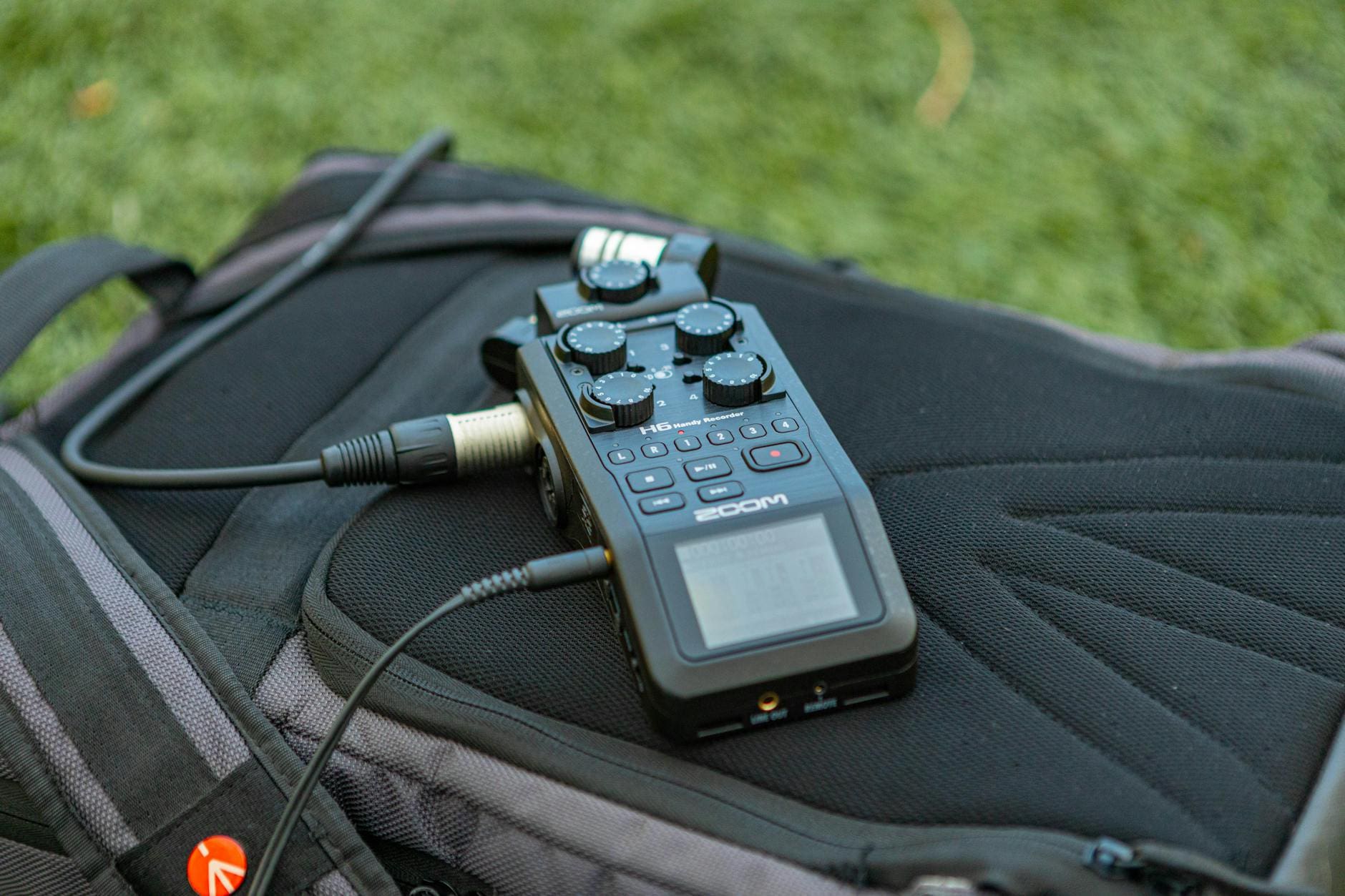
Zoom owns the entry-level recorder market. The Zoom H5 sits around $269 USD ($360 CAD), and the H6 runs about $329 USD ($440 CAD). Both use the same interchangeable capsule system, and that’s either brilliant or a gimmick depending on how you use it.
The H5 gives you four tracks. Two XLR/TRS combo inputs, plus the onboard stereo capsule. For a solo documentary shooter or a student running a boom and a lav, that’s enough. The preamps are decent at this price. You’ll hear a noise floor around -128 dBu. That’s not Sound Devices territory, but it’s usable. Boom mics like the Sennheiser MKH 416 will sound fine through it. Cheaper mics will sound like cheap mics. The recorder isn’t the weak link there.
The H6 adds two more inputs and a mid-side capsule option. If you’re recording production sound for a narrative short with multiple lavs and a boom, the H6 is the better call. But don’t buy it just because it has more inputs you won’t use. The interface is a little cramped, the jog wheel feels plasticky, and the menu system takes getting used to.
Honest take: Zoom H5 is the single best starter recorder you can buy right now. It’s not perfect. The preamps add some noise on gain-hungry dynamic mics. But for $269, you get 24-bit/96kHz recording, phantom power, decent build quality, and a format that pros recognize. You won’t be embarrassed handing over the audio card on a real set.
Tascam DR-60D MkII and DR-70D: Better Preamps, Ugly Design
Tascam doesn’t get enough credit in this conversation. The DR-60D MkII runs about $179 USD ($240 CAD). The DR-70D is around $249 USD ($330 CAD). Both are designed specifically for DSLR and mirrorless shooters, which is why they’re flat and mount under a camera body.
The preamps are measurably quieter than Zoom’s at comparable price points. The DR-70D has four XLR inputs and a dual-recording mode that records a safety track at -12dB simultaneously. That’s a professional feature at a non-professional price. For dialogue-heavy work, that safety track has saved careers.
The downsides are real. The build feels cheaper than the H5. The form factor works great under a camera but is awkward in a sound bag. And the menu system is genuinely confusing the first time you use it. Give yourself an afternoon with the manual before a shoot day.
If you’re a one-person crew shooting interviews or short docs and you want better preamps for less money, the DR-70D beats the Zoom H5 on noise floor. But if you’re going to work with a dedicated sound person or eventually move into proper production sound roles listed in the film production job listings, you’ll want gear that fits standard industry workflows. Zoom is more universally understood on set.
Sound Devices MixPre-3 II: The Jump to Professional
The Sound Devices MixPre-3 II costs $699 USD ($930 CAD). That’s not budget in the student sense. But if you’re a boom op or sound mixer building a working kit, it’s entry-level professional. And it’s a completely different category of recorder.
The Kashmir preamps in the MixPre series are the reason professionals pay the premium. Noise floor around -130 dBu. You can actually record a ribbon mic without the floor hissing at you. The limiters are analog, not digital. That means when your actor suddenly yells during an emotional scene, the recording catches it clean instead of hard-clipping. That’s not a minor difference. That’s the difference between usable audio and a reshoot.
The MixPre-3 II records three inputs at 32-bit float. That format is becoming standard on professional sets because it’s nearly impossible to clip. You can recover audio that was recorded too hot in post. Sound Devices explains the technical side of 32-bit float recording on their site if you want to understand what you’re buying.
At $699, it’s a serious investment on a student budget. But working sound mixers on IATSE-covered productions in Toronto and Vancouver regularly use MixPre units as backup recorders or on smaller shoots. If you’re trying to build a kit that can move you from student films into paid work on union sets, this is where you start. Check the crew directory to see what experienced sound departments are actually carrying.
What to Actually Buy Based on Where You Are
Here’s the direct breakdown.
You’re a student or first-time filmmaker with zero gear: Buy the Zoom H5. It’s $269. It works. It’ll handle a Rode NTG3 or a Sennheiser MKH 416 without embarrassing you. Use it until you outgrow it.
You’re a solo documentary shooter who needs clean interviews and better preamps: Buy the Tascam DR-70D at $249. Mount it under your camera, run two lavs, done.
You’re a boom op or sound mixer trying to break into paid work and build a real kit: Save the extra money and buy the Sound Devices MixPre-3 II at $699. The IATSE crews you’ll be working alongside in Toronto or Vancouver are using Sound Devices. Show up with the same gear, even entry-level pro, and you’re taken seriously faster.
The Features That Actually Matter on Set
Ignore megahertz wars and focus on four things.
Preamp quality is the biggest differentiator between budget recorders and professional ones. More gain with less noise. That’s it. The MixPre-3 II wins this across all three brands at this price tier.
Limiting matters on drama shoots where you can’t control performance volume. Analog limiters (Sound Devices) beat digital limiters (Zoom, Tascam) for catching transients cleanly. 32-bit float recording on the MixPre-3 II takes limiting out of the equation entirely.
Phantom power reliability affects your mic choices. All three recorders provide 48V phantom power, but the MixPre-3 II delivers it more cleanly on low-power condenser mics.
Build quality and weather resistance matter if you’re shooting exteriors in Canadian winters or New York humidity. None of these recorders are weathersealed. The Sound Devices unit feels substantially more durable. The Zoom H5 is fine. The Tascam feels the most fragile of the three.
For more on how audio fits into broader production workflows, browse the filmmaking articles on FilmLocal.
Key Takeaways
The right budget audio recorder depends on your actual role and where you’re trying to go in the industry, not just how much you want to spend right now.
- Buy the Zoom H5 ($269 USD) if you’re just starting out. It’s the most recognized entry-level recorder on set and handles professional mics cleanly.
- Buy the Tascam DR-70D ($249 USD) if you shoot solo doc-style work and want better preamps for the same money, especially under a camera body.
- Buy the Sound Devices MixPre-3 II ($699 USD) if you’re building a kit for paid production sound work. The preamp quality and 32-bit float recording are professional-grade features that matter on real sets.
- Don’t buy a recorder based on input count alone. Four inputs you don’t know how to use are worse than two inputs you do.
- If ownership isn’t realistic right now, renting for individual shoots makes sense while you save toward the right piece of gear rather than buying something you’ll replace in six months.
Spend the right amount once instead of upgrading through three recorders over two years. The MixPre-3 II in particular is gear that will still be relevant in your kit five years from now.
FAQs
Is the Zoom H5 good enough for professional film sets?
For student films, micro-budget shorts, and documentary work, yes. For union narrative productions, most professional sound mixers use it as a backup or field recorder rather than a primary. The preamps are solid for the price, but working sound departments typically run Sound Devices or Zaxcom as their main recorder.
What’s the difference between 24-bit and 32-bit float recording?
32-bit float recording, as found on the Sound Devices MixPre-3 II, makes it nearly impossible to clip your audio even if levels are set wrong. You can recover audio that was recorded too hot during post-production. 24-bit recording, used on Zoom and Tascam units, clips hard if you push the gain too far. For experienced operators with good gain-staging habits, 24-bit is fine. For solo shooters managing multiple things at once, 32-bit float is safer.
Can I use a Zoom H5 for paid gigs in Toronto or Vancouver?
Yes, especially on non-union short films, corporate video, and documentary work. If you’re trying to break into IATSE-covered productions as a sound trainee or boom op, bring whatever you have, your personal gear kit matters less than your skills at that stage. Your department head will have the primary recording equipment.
Do these recorders work with wireless lav systems like Rode Wireless GO II or Sennheiser EW 100?
All three recorders accept standard 3.5mm TRS or XLR outputs from wireless receivers. The Rode Wireless GO II connects via 3.5mm. The Sennheiser EW 100 connects via XLR. Make sure your recorder has the right input type or the appropriate adapter before your shoot day. The Zoom H5 and Tascam DR-70D both handle this without issue.
Should I buy or rent a recorder when I’m just starting out?
If you’re shooting more than three or four projects a year, buying the Zoom H5 or Tascam DR-70D makes financial sense quickly. A single rental day for a basic recorder runs $30 to $60 CAD depending on the house, so ownership pays off within a year of regular use. If you’re only shooting occasionally, renting gives you access to better gear for specific projects without the upfront cost.
Ready To Find Your Next Sound Gig Or Post Your Audio Crew Listing On FilmLocal?
Your recorder choice directly affects the quality of audio you deliver and how seriously production teams take your kit when you show up to work. The Zoom H5 gets you started on real shoots without embarrassing yourself. The Sound Devices MixPre-3 II is where you invest when you’re building a career in production sound. Either way, the best budget audio recorder for filmmaking is the one that matches where you actually are right now, not where you hope to be eventually.