Disclosure: This article contains affiliate links. If you make a purchase through one of these links, FilmLocal may earn a commission at no extra cost to you.
The Best Lighting Kits for Filmmaking Right Now
Let’s skip the theory. You need lights that work on a real production, fit in a real vehicle, and don’t eat your entire budget before you’ve hired a single crew member. The best lighting kits for filmmaking in 2026 fall into three categories that actually matter for working crews: three-point kits, portable LED panels, and dedicated interview rigs. Here’s what’s worth buying in each one.
Three-Point Kits: The Aputure 300d II Bundle vs. the Nanlite Forza 60B Kit
If you’re building a general-purpose kit from scratch, the three-point setup is still the workhorse. Two kits stand out right now.
The Aputure 300d II running around $1,099 per unit is the industry standard at the mid-level. Pair two of them with a 120d II (around $599) as your fill and you’ve got a three-point setup for roughly $2,800 before modifiers. That’s not cheap. But these lights earn their price: the 300d II hits 350+ lux at 10 feet, uses a Bowens mount so you can attach practically any modifier you already own, and it’s quiet enough for dialogue scenes. The color accuracy sits at CRI 96+, which means your skin tones hold up without a fight in post. You can find the full range at Adorama alongside competitive pricing on stands and modifiers.
The Nanlite Forza 60B kit goes for around $499 per unit and punches hard for the price. It’s a bi-color fixture, so you get 2700K to 6500K tunability without gels, and the output is genuinely impressive for a light this size. If you’re doing run-and-gun documentary work or small commercial shoots where you’re constantly moving, the Forza 60B makes more sense than the Aputure. It’s lighter, sets up faster, and the bi-color range means one less thing to think about on set.
The honest trade-off: Aputure gives you more raw output and a deeper ecosystem of accessories. Nanlite saves you money and weight. If you’re shooting narrative work with a gaffer who knows what they’re doing, go Aputure. If you’re a one-person doc crew or a small commercial team, Nanlite is the smarter call.
Portable LED Panels: Godox SL150W II vs. Dracast LED500 Pro
Portable panels have come a long way. The old complaint about LED panels, flat, ugly, directional light, is much less true in 2026 than it was five years ago.
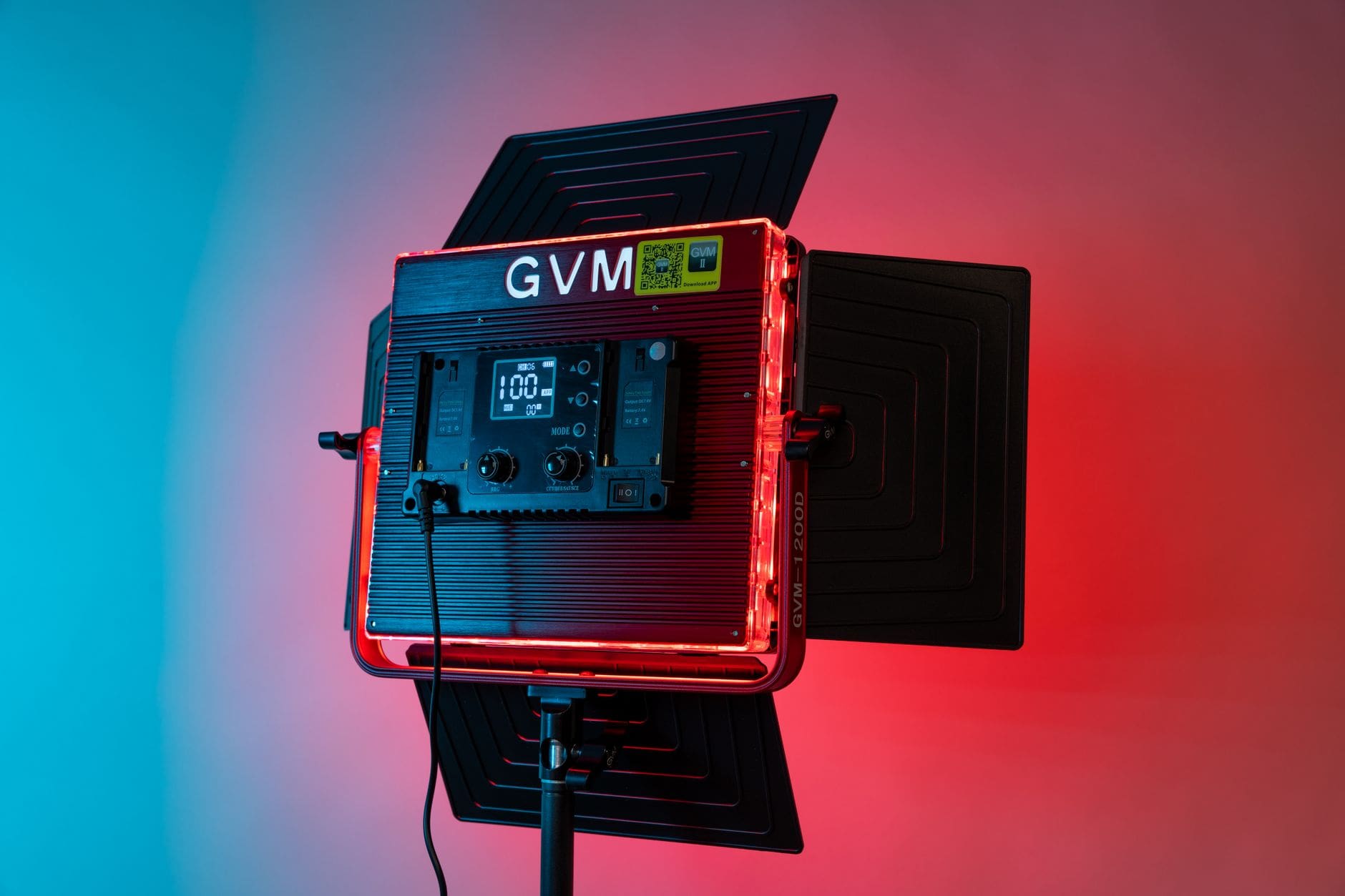
The Godox SL150W II sits around $329 and it’s one of the best values in production lighting right now. CRI 96+, 5600K daylight balanced, and it runs cool and quiet. Godox has built out a massive ecosystem, so you’ll find softboxes, grids, and barn doors that fit without adapters. It’s a reliable light for YouTube-level content up to small narrative films. The fan noise is noticeable in dead-quiet rooms, so be aware of that during audio-sensitive shoots.
The Dracast LED500 Pro Series runs closer to $799 for the bi-color version. It’s built tougher, and Dracast’s reputation in the professional broadcast market is solid. These lights show up regularly on network reality TV shoots and in interview setups at broadcast news operations. The flicker-free performance at all frame rates and shutter angles is genuinely better than the Godox at this price tier. If you’re doing broadcast work or anything where a DP is going to scrutinize your output, the Dracast earns its premium.
For most indie filmmakers, the Godox gets the job done. For crew working in broadcast or corporate video at a higher level, the Dracast is worth the extra spend.
Interview Rigs: The Litepanels Astra 1×1 vs. the F&V Z400S UltraColor
Interview lighting is its own discipline. You need soft, controllable sources that set up fast and pack down fast. Stands, sandbags, and a compact key light with good CRI are non-negotiable.
The Litepanels Astra 1×1 Bi-Focus is the gold standard for interview rigs. It runs around $1,199 per panel and you’ll see it on virtually every high-end corporate interview shoot, in broadcast news studios, and on documentary sets. The variable beam angle on the Bi-Focus version gives you spot-to-flood control without moving the stand. CRI is 95+, it’s dead quiet, and the build quality is exceptional. Litepanels has been a professional standard for over a decade for good reason.
If that price stings, the F&V Z400S UltraColor at around $449 is a legitimate alternative. It’s a 1×1 bi-color panel with CRI 95+ ratings and a slim, lightweight build. Plenty of DP’s use these as B-units alongside more expensive lights, or as a complete kit when budget is tight. The color consistency across the bi-color range isn’t quite as tight as the Litepanels, but it’s hard to see the difference on most web and streaming deliverables.
A solid interview rig also needs good stands. Don’t skip on this. C-stands from Avenger or Matthews, even second-hand ones, will outlast three generations of whatever cheap alternatives you’re tempted to buy.
What to Actually Buy Based on Your Situation
Here’s the honest breakdown. Your budget and your work type should drive this decision, not brand loyalty.
- Starting out, under $1,500 total: Two Godox SL150W II units plus one Nanlite Forza 60B as your rim or hair light. Solid CRI across the board, Bowens-compatible accessories, and you’re under budget with money left for modifiers.
- Mid-level indie/commercial crew, $3,000 to $5,000: Aputure 300d II as your key, 120d II as fill, Forza 60B or a Dracast panel as your background or rim. This is a working kit that won’t embarrass you on a real set.
- Broadcast or high-end corporate interviews: Two Litepanels Astra 1×1 units, proper C-stands, and a good silk or diffusion frame. Don’t cheap out here. The client notices.
If you’re looking for crew who already own and know how to use this gear, the crew directory on FilmLocal is a good place to find gaffers and grips with verified experience. Producers hiring for lit productions can also check current film production job listings to see what’s active in your market.
One more thing. The IATSE Local 728 (Studio Electrical Lighting Technicians in Los Angeles) publishes rate cards that give you a real benchmark for what professional lighting labor costs on a union set. If you’re budgeting a production that involves hired crew, those numbers are worth knowing before you lock your budget.
Key Takeaways
The best lighting kit is the one that matches your actual work, not the most expensive option or the most popular YouTube recommendation.
- The Aputure 300d II is the mid-level narrative and commercial standard, but it’s overkill for run-and-gun work.
- Nanlite Forza 60B offers strong bi-color performance at roughly half the price of comparable Aputure fixtures, making it ideal for smaller crews moving fast.
- Godox SL150W II is the best value portable LED panel under $400, with a wide modifier ecosystem and CRI 96+.
- Litepanels Astra 1×1 is the professional interview lighting benchmark. If you’re doing broadcast-level corporate work, it’s worth the $1,199 per unit.
- Don’t underinvest in stands and grip hardware. Cheap stands on a hot set are a safety liability, not just an inconvenience.
Buy lights that match the work you’re actually doing now, with a little room to grow. You can always add to a solid foundation.
FAQs
What’s the best lighting kit for filmmaking if I’m just starting out?
Two Godox SL150W II panels and a Nanlite Forza 60B will get you through most early-career shoots under $1,500. They have solid CRI ratings, wide modifier compatibility, and they’re forgiving to learn on. Start there, then add specialty lights as your work demands it.
Do I really need bi-color LEDs or can I just use gels?
Gels work fine and plenty of experienced gaffers still prefer them for control. But bi-color LEDs save real time on location when you’re mixing with ambient light that shifts through a shoot day. If you’re doing a lot of documentary or corporate work in mixed lighting environments, bi-color is worth it. For controlled studio or narrative work where you set your own light temperature, it matters less.
Is Aputure worth the price over cheaper alternatives?
For narrative filmmaking and commercial work where quality control matters, yes. The output consistency, build quality, and accessory ecosystem justify the premium. For YouTube content or early-career work where you’re still learning, start cheaper and upgrade when the work demands it.
What CRI rating should I be looking for in a professional LED light?
95+ is the professional standard for most production work. Below 90, you’ll start to see color shifts in skin tones that take real time to fix in post. Some manufacturers advertise TLCI ratings alongside CRI. Both above 95 is ideal for broadcast and streaming deliverables.
Can I build a professional interview rig without spending $2,000+?
Yes. Two F&V Z400S UltraColor panels plus quality used C-stands can get you a solid interview rig for around $1,200 to $1,500 total. The color accuracy is close to the Litepanels Astra at a fraction of the cost. For web deliverables and most streaming platforms, most clients won’t see the difference.
Ready To Light Your Next Project Like A Pro?
Pick a kit that fits your current workflow, not the one that looks most impressive on a gear list. A Godox SL150W II you actually understand and use well will serve you better than an Aputure 300d II sitting in a case because the setup felt overwhelming. Get lights with CRI 95+, invest in real stands, and learn your modifiers before you chase more power.