Disclosure: This article contains affiliate links. If you make a purchase through one of these links, FilmLocal may earn a commission at no extra cost to you.
The Best Shotgun Mic for Film Production Depends on What You’re Actually Shooting
These three microphones cover roughly $250 to $1,000 in street price, and none of them is the wrong answer. But each one suits a different kind of work. Get that wrong and you’re spending money on a mic that fights you every day.
The Rode NTG5 runs around $499. The Sennheiser MKH 416 sits at roughly $999. The Deity S-Mic 2 lands at about $249. All three are supercardioid or hypercardioid shotguns designed for boom operation on film and video production. That’s where the easy comparisons end.
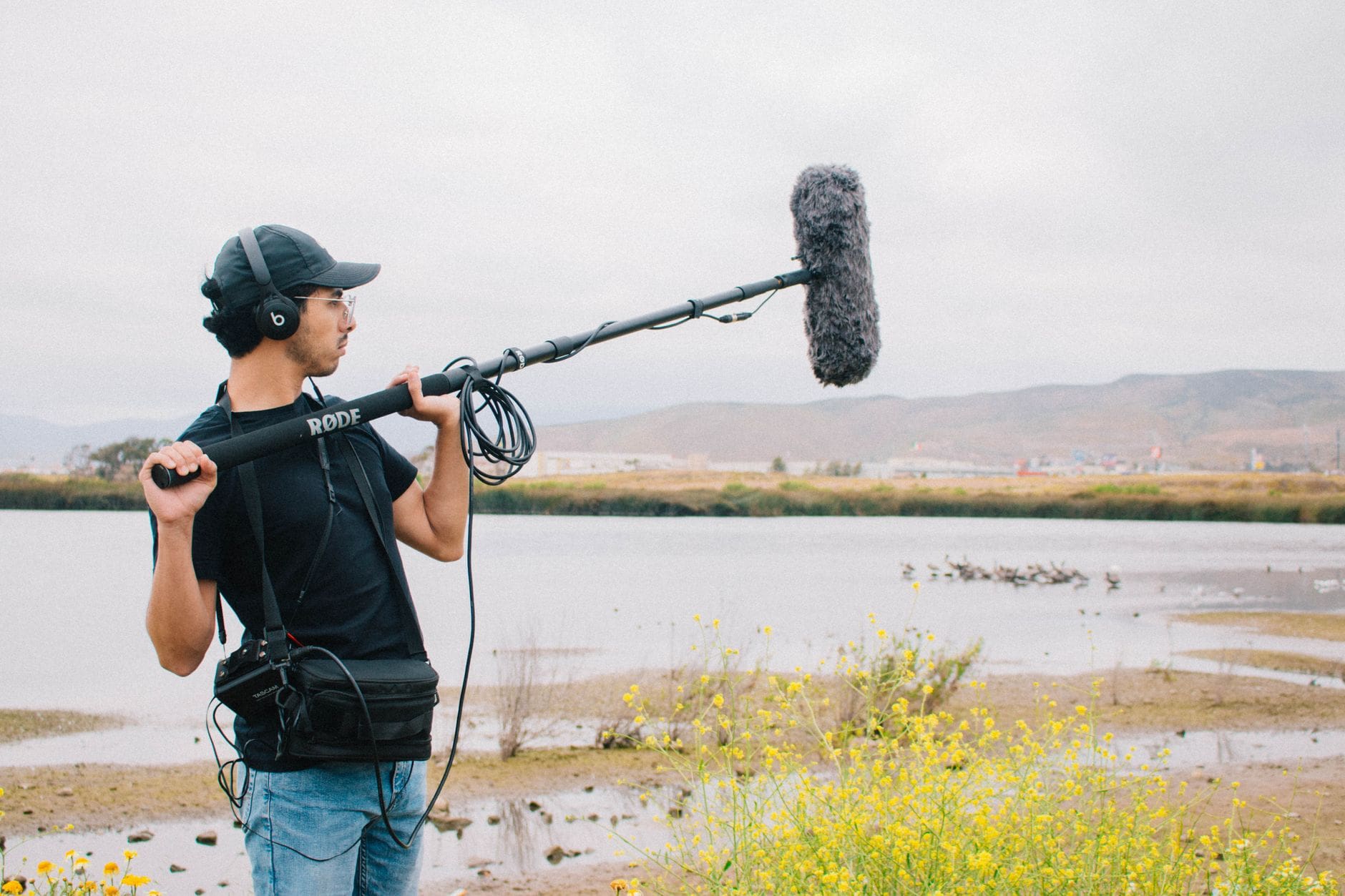
Sennheiser MKH 416: The Industry Standard That Earned Its Reputation
The 416 has been the go-to boom mic on professional film sets since the 1970s. That’s not sentiment. It’s because the mic genuinely holds up under conditions that would expose weaknesses in cheaper designs.
It uses an RF condenser capsule design, which means it handles humidity and temperature swings far better than standard condenser mics. If you’re shooting exteriors in Vancouver in November or in New Orleans in August, that matters. A lot. Standard condensers can fog up or sound muffled when moisture gets into the capsule. The 416 shrugs it off.
The off-axis rejection is aggressive. That’s the whole point on a film set. You want your boom operator to capture the actor, not the generator forty feet away or the air conditioning unit above the drop ceiling. The 416’s tight pickup pattern gives your sound mixer a cleaner signal to work with, and your dialogue editor in post will thank you for it.
Honest cons: the 416 has a frequency response that rolls off a little in the very high end and adds a subtle presence boost around 8-10kHz. Most sound people find this flattering on dialogue. A few find it slightly colored compared to more neutral mics. At $999, it’s also an investment that some productions won’t budget for. And it’s a longer mic than the NTG5, which can cause issues in tighter shooting environments.
Bottom line on the 416: if you’re working narrative features, episodic television, or any production where sound quality directly affects saleability, this is the mic most professional boom operators reach for. Check Sennheiser’s own documentation if you want the full spec sheet.
Rode NTG5: The Lightest Serious Boom Mic on the Market Right Now
The NTG5 weighs 76 grams. The MKH 416 weighs 175 grams. That gap is a big deal when your boom operator is holding a pole above their head for a ten-hour day. Fatigue affects performance. A lighter mic means better takes at hour nine.
Rode built the NTG5 with a transformerless output and a very flat, natural frequency response. It doesn’t color the sound the way the 416 does. Some sound mixers prefer this. Others miss the presence boost the 416 adds to dialogue. You’ll want to hear both before forming a strong opinion, but the NTG5 holds up in ABX tests against mics costing twice as much.
Self-noise on the NTG5 is 10dB(A). The 416 comes in at 13dB(A). In practice, that difference is barely audible in dialogue recording, but it gives the NTG5 a technical edge if you’re recording very quiet sources.
It also handles moisture well, though Rode uses a different approach than Sennheiser’s RF design. Real-world shooters in humid climates report good results, but the 416 is still the more proven option in genuinely brutal conditions.
At $499, the NTG5 is the best shotgun mic for film production departments that need professional quality without the MKH 416 price tag. Documentary crews, smaller narrative productions, and owner-operators will find the value here. You can browse more audio-forward filmmaking articles on FilmLocal if you’re building out a full kit.
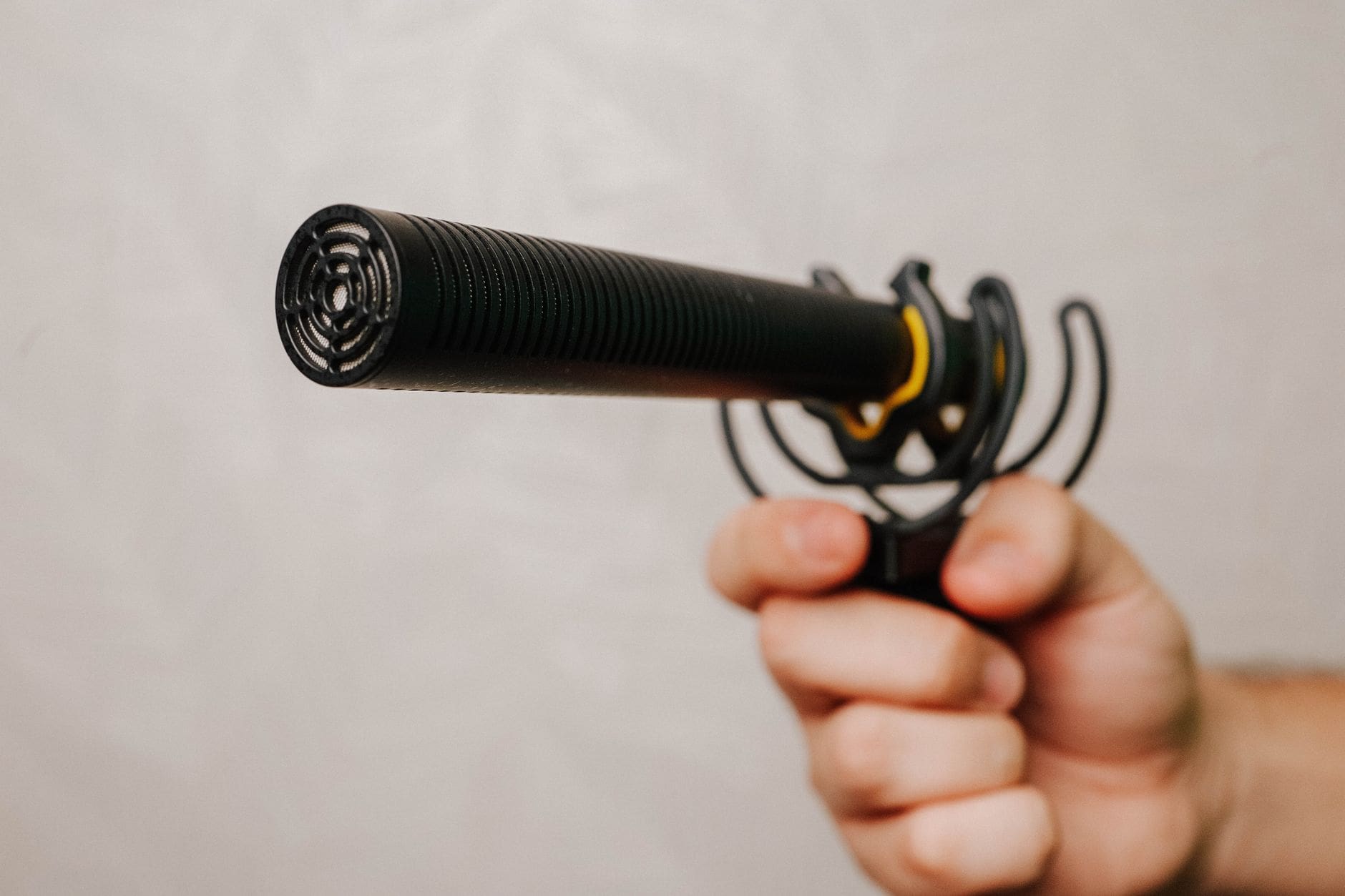
Deity S-Mic 2: The Budget Mic That Actually Competes
At $249, the Deity S-Mic 2 shouldn’t sound as good as it does. But it does. That’s the honest take.
Deity positioned this mic directly against the NTG3 when it launched, and the audio community took notice. The S-Mic 2 has a self-noise of 12dB(A), a frequency response of 50Hz to 20kHz, and a sensitivity of -32dBV/Pa. Those are competitive specs at any price point.
The build quality is solid. It comes with a foam windscreen, a shockmount, and a carrying case, so you’re not immediately spending another $100 on accessories. That matters when you’re calculating real cost.
Where does it fall short? Off-axis rejection isn’t quite as tight as the 416. On a noisy location, you’ll notice it. The capsule design also doesn’t handle extreme humidity as gracefully. If you’re operating primarily in controlled interior environments, you probably won’t care. If you’re doing run-and-gun exterior work in tough conditions, you might.
The S-Mic 2 is a serious mic for indie productions, student films, and anyone building their first professional kit. Adorama carries all three of these mics and is worth checking for current pricing and package deals.
How to Choose Between Them for Your Specific Situation
Here’s a simple way to think about it.
If you’re working on a production where the sound budget reflects the overall production budget, and exterior locations are part of the plan, get the MKH 416. It’s the professional standard for a reason. The IATSE sound locals’ working members overwhelmingly use 416s and NTG5s on their boom poles.
If you’re a boom operator or sound mixer buying your own primary boom mic and you’re shooting a range of projects including documentary and indie narrative, the NTG5 is the smartest spend. You’re getting 90% of the 416’s performance at half the price, in a lighter package.
If you’re just getting into production sound seriously, or you’re a DP or director-producer who needs a solid boom mic without a dedicated sound department, start with the S-Mic 2. Put the $750 you saved toward a better recorder or a second wireless system.
One more thing: the mic is only as good as the rest of your chain. A decent shockmount, a good boom pole, and clean preamps on your recorder matter as much as which shotgun you choose. The Deity S-Mic 2 into a Sound Devices MixPre-3 II will outperform an MKH 416 going into a consumer camera’s built-in preamp every time.
If you’re building a career in production sound or looking to get hired on sets that use this level of gear, the film production job listings on FilmLocal are worth bookmarking. And if you’re a sound mixer or boom operator looking to get found by productions, getting into the crew directory puts your name in front of the right people.



Key Takeaways
The best shotgun mic for film production depends on your budget, your shooting conditions, and how much weight your boom operator is swinging all day.
- The Sennheiser MKH 416 ($999) is the professional standard for a reason. Its RF capsule design handles humidity and temperature better than any mic in this comparison, and its off-axis rejection is exceptional on noisy locations.
- The Rode NTG5 ($499) is the smartest buy for most working sound professionals. It’s lighter than the 416, has lower self-noise, and delivers a flatter, more neutral response that holds up in professional post-production.
- The Deity S-Mic 2 ($249) punches well above its price. It’s a genuine option for indie productions, not just a compromise, though it underperforms the other two in extreme exterior conditions.
- Your preamps and recorder matter as much as the mic. A great shotgun into bad preamps still sounds bad.
- The mic is just one part of the chain. Budget for a proper shockmount, boom pole, and windscreen before you factor in the mic itself.
Buy the best mic your budget genuinely supports, keep the rest of your chain clean, and you’ll get dialogue your editor can actually work with.
FAQs
Is the Sennheiser MKH 416 worth the price for indie film productions?
If you’re shooting primarily interiors with a controlled environment, probably not. The NTG5 closes the gap significantly at half the cost. But if your production involves exterior locations, challenging weather, or demanding acoustic environments, the 416’s RF capsule design earns its price tag in reliability alone.
Can the Deity S-Mic 2 be used on professional film sets?
Yes, and it has been. It’s not the mic most union boom operators carry as their primary, but it produces clean, usable dialogue audio that holds up in post. On low-budget productions where the sound budget is tight, it’s a legitimate professional tool.
What’s the difference between a supercardioid and a hypercardioid shotgun mic?
Both patterns reject sound from the sides, but hypercardioid mics have a narrower front pickup angle and a small rear lobe of sensitivity. Supercardioid mics have a slightly wider front pickup and less rear sensitivity. For boom work, both patterns work well. The specific polar pattern matters less than the mic’s overall rejection quality and self-noise floor.
Does the Rode NTG5 handle rain and humidity as well as the MKH 416?
Not quite. The MKH 416 uses an RF condenser design that’s inherently more resistant to moisture. The NTG5 handles moderate humidity well, and most shooters report no issues in normal conditions. But for consistently wet or high-humidity shooting environments, the 416 is the safer choice.
What recorder should I pair with these shotgun mics?
The Sound Devices MixPre-3 II (around $699) is the most common recommendation for small crews and owner-operators. It has clean preamps, a solid build, and handles 32-bit float recording. For larger sound departments, the Sound Devices 833 or Zaxcom recorders are the professional standard. Don’t pair a $500 mic with a $100 recorder. The preamps will limit everything upstream of them.
Ready To Upgrade Your On-set Audio And Stop Losing Dialogue To A Mediocre Mic?
The difference between these three mics is real, but it’s not magic. A properly operated NTG5 on a well-placed boom will consistently beat a poorly positioned MKH 416. Get the best mic your budget supports, pair it with clean preamps, and invest in training your ear to place the boom correctly. That combination is what actually produces dialogue your dialogue editor won’t curse you for.