What Does a Gaffer Do on a Film Set?
The gaffer is the DP’s right hand for everything electrical and lighting. The DP decides what the light should look like, feel like, and say emotionally. The gaffer figures out how to actually build that. That means choosing the fixtures, calculating the power load, positioning the units, managing the crew who rig and run it all, and troubleshooting when something doesn’t work at 5 AM on a location with no spare circuit breakers.
On a union feature, the gaffer runs the electrical department under IATSE jurisdiction. That department includes the best boy electric, lamp operators, and any additional electricians the budget allows. The gaffer is in every pre-production conversation about lighting, scouts locations with the DP, preps the truck, and is on set every single day of the shoot.
So when people ask what does a gaffer do, the honest answer is: a lot more than flip switches. It’s a design job, a logistics job, and a people management job rolled into one.
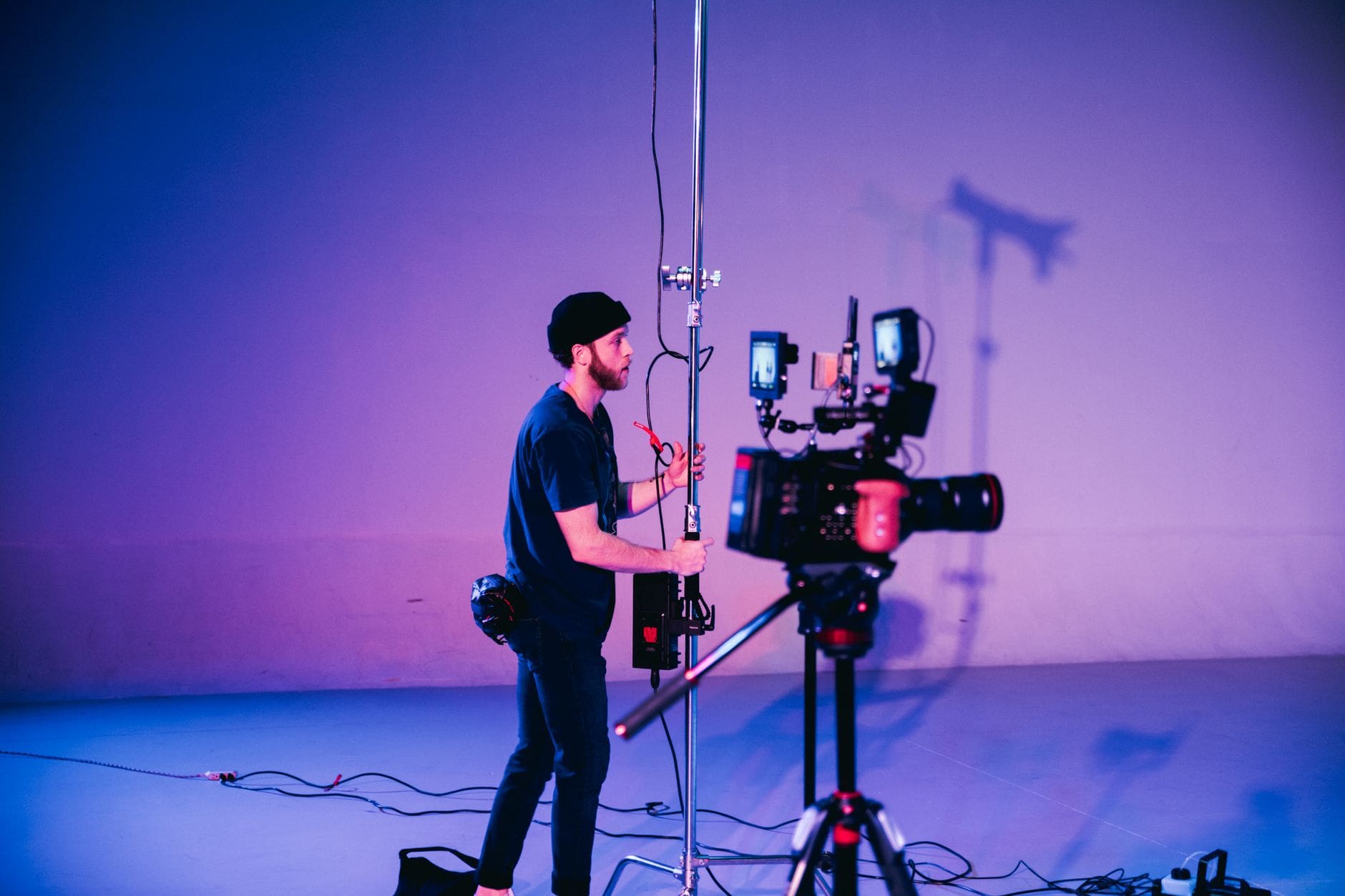
The Real Day-to-Day: What a Gaffer Actually Does on Set
Pre-production is where most of the real work happens. A gaffer reads the script, breaks it down by scene, and starts building a lighting package. That means deciding between an ARRI SkyPanel S60 or a Litepanels Gemini for a controlled interior, figuring out whether you need a condor and a 6K HMI for a night exterior, or sourcing a Kino Flo Select for a quick interview setup. These aren’t abstract decisions. Every choice has a cost, a setup time, and a power draw.
On set, the gaffer is constantly communicating. Before each shot, they’re walking the space with the DP, understanding the frame, and then directing their crew to place, adjust, and gel the lights. The best boy electric handles the paperwork and logistics side so the gaffer can stay focused on the floor. On smaller productions, those lines blur and the gaffer does both.
Power management is a real skill people underestimate. Running a 12K HMI off a generator on a practical location without tripping breakers or blowing a transformer takes actual electrical knowledge. In most jurisdictions, a licensed electrician must supervise any high-voltage work. The gaffer is usually that person, or they’re working directly alongside one.
And it never goes perfectly. A location falls through the day before the shoot. The sun moves faster than expected. The practical fixtures on a dressed set throw everything off. The gaffer solves those problems in real time without panicking, because the whole crew is watching and the clock is running.
Gaffer Salary: What You Can Actually Expect to Earn
Pay varies a lot by market, format, and union status. Here’s a realistic picture.
On a union feature or episodic TV in the US under an IATSE Basic Agreement, a gaffer can earn anywhere from $2,500 to $5,000 or more per week depending on budget tier and negotiated rate. On a big studio production in Atlanta or Los Angeles, experienced gaffers on major network series or streaming shows can earn well above that. The IATSE Local 728 in LA covers studio electricians and sets minimum rates that serve as a floor, not a ceiling.
In Canada, union gaffers working under IATSE agreements in Vancouver or Toronto earn comparable rates. The Canadian dollar affects take-home, but Vancouver in particular runs a high volume of US studio productions, so rates have stayed competitive.
On non-union indie productions, the numbers drop significantly. A gaffer on a microbudget feature might earn $500 to $1,200 per week, sometimes less. On a music video or commercial, a gaffer might negotiate a day rate between $350 and $800 depending on the market and their experience level.
The difference between someone earning $800 a week and $3,500 a week is usually a combination of union membership, market, relationships, and a track record that production companies trust. That takes time to build. But it’s absolutely buildable.
Skills You Need to Actually Work as a Gaffer
You need a working knowledge of electricity. Not necessarily a full electrician’s license at the entry level, but you need to understand circuits, load calculations, generator capacity, and basic safety. On larger productions, you absolutely need that certification. Check your local jurisdiction’s requirements because they vary between states and provinces.
You need to know your gear. Not just what an ARRI Orbiter or an Astera Titan tube is, but when to use it, how to rig it, and what its power requirements are. DPs will ask you questions and expect real answers fast.
Strong communication matters as much as technical skill. You’re translating a DP’s visual intent into a practical plan your crew can execute. You’re also managing those crew members, dealing with production, and staying calm when everything is going sideways simultaneously.
Grip and electric overlap more than people think. Understanding what the grip department does, how stands work, how to hang a butterfly, how to rig a light from a condor arm, makes you more useful and earns respect faster.
How to Break Into Film Lighting and Work Toward the Gaffer Role
Nobody starts as a gaffer. You start as a set electrician, often called a lamp operator or “electric.” You load the truck, you run cable, you set stands, you learn how every fixture in the package works. You watch the gaffer and best boy and you ask smart questions when there’s time.
Film school can give you theoretical grounding, but most working gaffers built their knowledge on set. Programs like the CSATF/Contract Services training trust in California offer hands-on electrical training relevant to the industry. Some community colleges run grip and electric programs worth looking at.
Getting on set in the first place is the real challenge. Check film production job listings for PA, electric, and lighting crew openings. Get yourself into the crew directory so productions can find you. Build relationships with DPs, because a DP who trusts you will bring you up with them as their career grows.
The path from electric to best boy to gaffer takes most people five to ten years of consistent work. Some move faster in active markets. Some take longer. The people who move fastest are the ones who show up prepared, stay curious, and make their DP’s life easier every single day. Check out more filmmaking articles to round out your industry knowledge while you’re building on-set experience.



Key Takeaways
The gaffer role is one of the most technically demanding and creatively collaborative positions on any film set, and breaking in requires a combination of electrical knowledge, gear expertise, and real on-set experience.
- The gaffer runs the entire electrical department, translating the DP’s lighting vision into a practical, executable plan from pre-production through wrap.
- Union gaffers on US studio productions can earn $2,500 to $5,000 or more per week. Non-union indie rates often fall between $500 and $1,200 per week depending on market and budget.
- You need real electrical knowledge, not just an interest in lighting. Load calculations, generator management, and safety protocols are non-negotiable on professional sets.
- Almost everyone starts as a set electrician and works up through best boy electric before stepping into the gaffer role. Expect five to ten years of consistent work in most markets.
- Active gaffers build their careers through DPs they trust and who trust them. That relationship is the engine of this career path.
Start where the work is, learn everything about the gear and the power, and make yourself indispensable to every DP who hires you.
FAQs
What’s the difference between a gaffer and a best boy electric?
The gaffer is the department head, focused on lighting design and on-set execution. The best boy electric is the gaffer’s assistant and handles the administrative side: scheduling crew, managing equipment rentals, tracking expendables, and running the truck. On smaller productions, one person often handles pieces of both roles.
Do you need an electrician’s license to work as a gaffer?
It depends on the jurisdiction and the type of work. For high-voltage work and larger productions, many states and provinces require a licensed electrician to supervise. Even where it’s not legally required, having a formal electrical certification makes you more hireable and safer to work with. Check the requirements in your specific state or province.
Is the gaffer the same as the key grip?
No. The gaffer runs the electrical department and is responsible for the lights themselves. The key grip runs the grip department, which handles the physical rigging, dollies, camera support, and light-shaping tools like flags and diffusion frames. The two departments work closely together, but they’re separate crews with separate responsibilities.
How do you find gaffer jobs or electric work as a beginner?
Start by getting your name into production networks through job boards and crew directories. The film industry employment starter pack is a solid starting point for understanding how to position yourself. Student films and low-budget productions are where most people build their first credits, even if the pay is minimal at that stage.
Can a gaffer also shoot their own projects as a DP?
Yes, and many do. Strong gaffers often have a deep visual sensibility from years of working with DPs, and some transition into cinematography on their own projects or smaller productions. The skills overlap significantly, though the DP role adds camera operation, lens choices, and a different kind of creative ownership to the mix.
Ready To Find Gaffer And Lighting Crew Jobs Near You?
The path to working as a gaffer is straightforward in theory and genuinely demanding in practice. Start in the electric department, learn every fixture and every circuit, and build real relationships with DPs who are also climbing. The technical knowledge matters, but so does being someone a department head wants in their truck at 4 AM when things go sideways. Get your credits, get your certifications, and stay on set as much as you possibly can.