Disclosure: This article contains affiliate links. If you make a purchase through one of these links, FilmLocal may earn a commission at no extra cost to you.
What Does a DIT Do, Exactly?
The short answer: a digital imaging technician manages everything that happens to the image between the camera sensor and the hard drive. But that single sentence undersells the job by a lot.
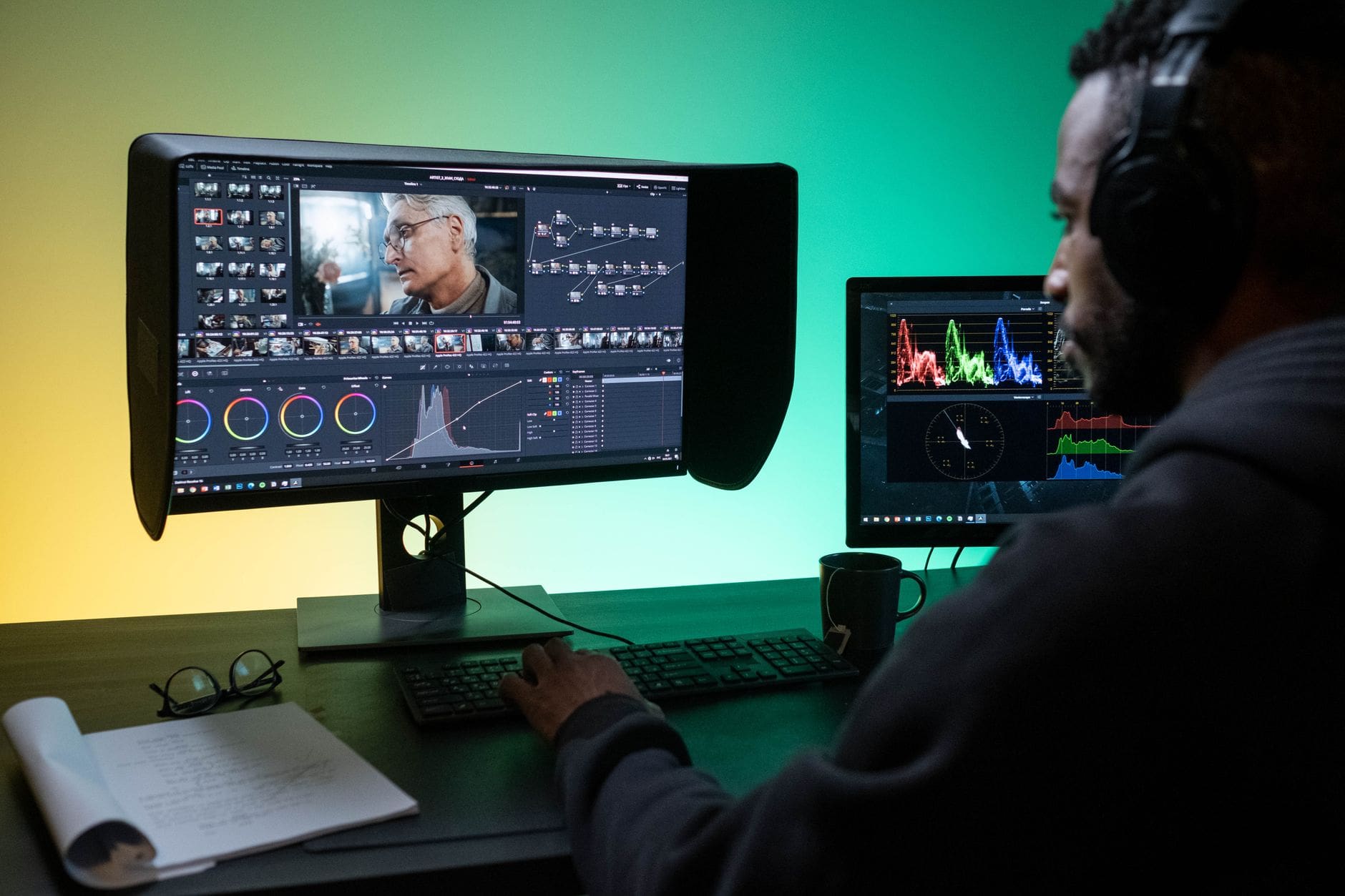
On a working set, the DIT sits at a color-calibrated monitor station, usually called the DIT cart, and does several things at once. They receive the raw footage from the camera department, build and apply looks for the DP to see on set, monitor the technical quality of the image in real time, and make sure every single clip gets offloaded correctly at the end of the day. They’re also the person the DP calls over when something looks wrong. And they’re the person who has to explain to post why the footage is in the format it’s in.
You’re bridging two worlds. Production and post. And if you do it badly, both sides suffer.
The Core Responsibilities Broken Down
Let’s be specific about what fills a DIT’s actual day.
LUT management and on-set color. The DP shoots in a flat, log color space, like ARRI LogC3 on an ALEXA 35 or Sony S-Log3 on a VENICE 2. Raw log footage looks washed out and grey on a monitor. The DIT applies a viewing LUT so the director and DP can see something closer to the finished image. On higher-end productions, the DIT builds a show LUT from scratch with the DP in prep, matching a creative reference. On smaller jobs, they’re pulling from a library and adjusting on the fly.
Real-time signal monitoring. A good DIT watches waveforms and false color on every take. They’re checking exposure, clipping, and noise floor. If a highlight is blowing out in a way that can’t be recovered in post, they flag it before the DP moves on. Tools here include hardware like the Teradek COLR or software like Pomfort Livegrade Pro. Some DITs run a full Pomfort workflow connecting livegrade on set to Silverstack in the data department.
Data management and offloading. At the end of each day, the DIT or loader pulls cards from the camera department and offloads to at least two drives, sometimes three. They verify checksums using software like Pomfort Silverstack or YoYotta. Every clip gets checked. Nothing gets formatted until there are verified copies. This is not glamorous work. It’s also not optional. Losing a day of footage because someone skipped a checksum verification is a career-ending mistake.
Metadata and deliverables. The DIT generates camera reports, populates metadata fields, and sometimes outputs dailies or a camera card inventory that goes to post. On union productions, they’re often coordinating with the DIT at the production company or post facility to make sure the format, codec, and file-naming conventions are exactly right.
What Skills You Actually Need
Color science is the foundation. You need to understand how different color spaces work, what a LUT actually does mathematically, and how log footage relates to the final deliverable. You don’t need to be a finishing colorist, but you need to understand what the online colorist will need to do their job.
Camera knowledge matters a lot. You should know the major cinema cameras, their native ISOs, their recording formats, and their quirks. ARRI, Sony, RED, Blackmagic. Know how an ALEXA 35 handles highlight roll-off differently from a RED MONSTRO. Know what ProRes 4444 gives you versus REDCODE RAW at 5:1. A DP will trust you more if you speak their language fluently.
Data management is non-negotiable. You’re working with irreplaceable material. Comfort with terminal commands, RAID configurations, and backup workflows isn’t optional on professional productions.
And honestly? People skills. You’re working directly with the DP, often under pressure, and you need to be the calm person in a loud, fast environment. The DIT who panics when a card won’t read is a liability. The one who quietly solves it and reports back clearly is worth their rate.
What a DIT Actually Earns
Rates vary a lot depending on union status, market, and production scale. On IATSE productions in the US, a DIT falls under Local 600 (the International Cinematographers Guild) in many markets. Scale rates for a DIT on a union feature or episodic drama typically run between $600 and $900 per day, depending on the contract and the market.
Non-union commercial work can go anywhere from $350 to $700 a day depending on the budget. Music videos and independent features often pay less. A DIT kit rental, meaning you charge for your equipment, adds $200 to $500 a day on top of your labor rate on most productions. That kit rental is part of how experienced DITs make the role economically solid.
Freelance annual earnings for a working DIT range roughly from $60,000 on the low end to $150,000 or more for someone consistently on high-budget productions. The top earners in major markets like Atlanta, New York, or Los Angeles are consistently busy on studio-level episodic work.
How to Break Into the Role
Nobody hires a junior DIT without evidence you can handle the data side without supervision. So build that evidence first.
Start as a loader or digital utility on smaller productions. You’re pulling cards, offloading, and learning the data workflows under someone more experienced. It’s not the most exciting work on set, but it’s how you build real trust with camera departments. A loader who’s meticulous and never loses data becomes the person a DP calls when they need a DIT.
Get serious about the software. Download the trial versions of Pomfort Silverstack and Livegrade. Learn Resolve’s color management tools from the ground up. That kind of foundation helps you speak intelligently on set before you’ve logged 200 shoot days.
Build your kit gradually. A color-calibrated reference monitor, a laptop with fast storage, and quality cables are the starting point. You can find competitive pricing on production gear through Adorama, which a lot of camera department folks use for exactly this kind of build-out.
Network in the camera department specifically. The jobs come through relationships with DPs and camera operators. List yourself in a crew directory so you’re findable, and keep an eye on film production job listings for loader and digital utility calls that can get you in the door. A FilmLocal membership gives you better visibility when productions are actively crewing up.
The DIT role rewards people who treat it like a craft. The best ones know color deeply, handle data obsessively, and make the DP’s life easier every single day. That combination is rare, and productions know it.



Key Takeaways
A DIT sits at the center of the on-set image pipeline, combining color work, technical monitoring, and data management into one high-stakes role.
- Learn color science before anything else. Understanding log formats, LUTs, and color spaces is the foundation the rest of the job is built on.
- Data management is where careers are made or ended. Verified backups and checksum confirmation aren’t optional on professional productions.
- Software fluency matters. Pomfort Livegrade and Silverstack are industry standards. Know them before you’re hired, not after.
- Start as a loader or digital utility to build hands-on experience and earn trust within the camera department before stepping up to DIT.
- Union scale puts DIT day rates between $600 and $900, with kit rentals adding meaningful income. Annual earnings for consistently working DITs typically fall between $60,000 and $150,000.
The DIT role is one of the few positions on a film set that requires deep technical knowledge and a genuine creative eye. If you build both, you’ll stay busy.
FAQs
What does a DIT do differently from a data wrangler?
A data wrangler focuses almost entirely on offloading and backing up footage. A DIT does that too, but also manages on-set color, applies LUTs, monitors the image technically in real time, and works directly with the DP on the look of the film. On lower-budget productions the roles sometimes overlap or get combined. On larger sets, they’re distinct positions.
Do you need to join a union to work as a DIT?
Not to start out, no. Plenty of non-union commercial and independent work exists, and that’s where most DITs build their initial experience. If you want to work on major studio features and high-budget episodic television, joining IATSE Local 600 is the path. You typically need documented days to qualify.
What software does a DIT use on set?
Pomfort Livegrade Pro is the most common tool for on-set color management. Pomfort Silverstack handles data management and checksum verification. Some DITs also use DaVinci Resolve for creating show LUTs in prep. Hardware like the Teradek COLR is used for wireless signal management on bigger productions.
How long does it take to become a working DIT?
Realistically, two to four years if you’re actively working in the camera department. You’ll spend time as a loader and digital utility first, building your software skills and kit on the side. Your first real DIT credits will likely come on smaller independent productions where you can prove the workflow before someone trusts you with a studio camera day.
Is a DIT the same as a colorist?
No, though the skills overlap. A DIT works on set during production, building temporary viewing looks and monitoring the image. A colorist works in post, doing the final grade in a controlled environment. Some people do both across different projects, and knowing color deeply helps in either role.
Ready To Find DIT And Camera Department Jobs Near You?
The DIT role takes time to build into, but the path is clear: start in the data side of the camera department, develop your color science knowledge seriously, and accumulate real set days before you call yourself a DIT. The productions hiring for this role are looking for someone technically reliable and creatively fluent. Build that reputation one verified backup and well-managed LUT at a time.