Disclosure: This article contains affiliate links. If you make a purchase through one of these links, FilmLocal may earn a commission at no extra cost to you.
What Does a Colorist Do in Film, Exactly?
A colorist takes the raw or edited footage and shapes how it looks, feels, and reads emotionally. That means correcting exposure, balancing skin tones, matching shots that were filmed on different days or with different cameras, and then doing the creative work of grading, pushing the image toward a specific visual style. Think of the bleach bypass look in Saving Private Ryan, the teal-and-orange palette that defined a decade of blockbusters, or the desaturated green of The Matrix. A colorist built those looks deliberately, node by node.
The job splits into two phases. Primary color correction fixes the technical problems: overexposed highlights, inconsistent white balance, shots that don’t cut together because the lighting changed between setups. Secondary grading is the creative layer, where you’re isolating specific elements, a character’s face, the sky, a neon sign, and treating them independently to serve the story.
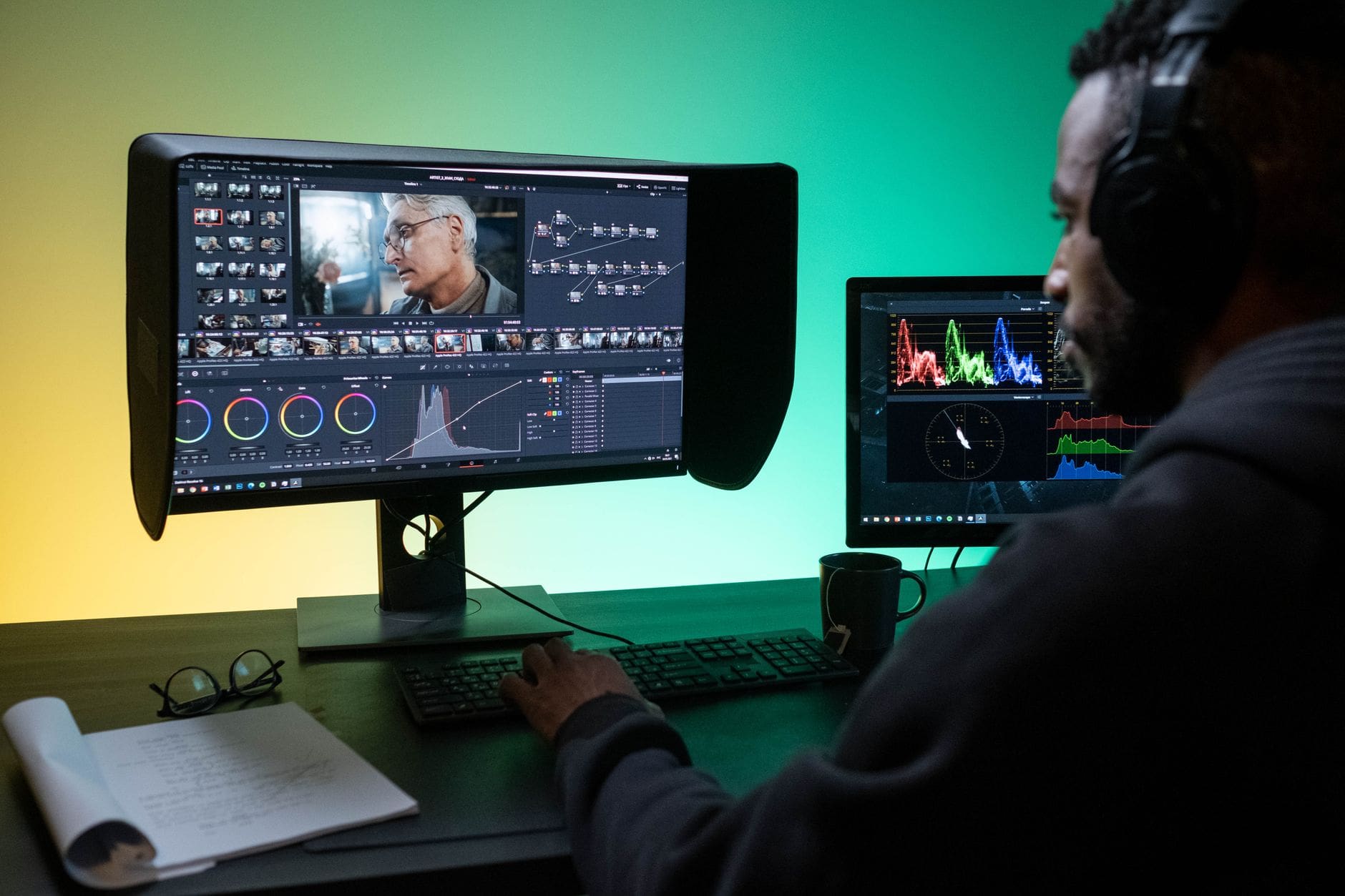
Most professional colorists work in DaVinci Resolve. It’s the industry standard. Some high-end commercial and feature work still runs through Baselight from Filmlight, but if you’re starting out, Resolve is where you need to be. The free version is genuinely powerful. The Studio version runs $295 one-time, no subscription.
The Tools and Skills You Actually Need
Color grading is a technical and perceptual skill. You’re training your eyes as much as your hands. A colorist reads scopes, waveforms, vectorscopes, parade displays, and uses them to make objective decisions about what the image is doing, separate from what your eyes think they’re seeing. Monitors lie. Scopes don’t.
On the hardware side, most colorists use a control surface. The DaVinci Resolve Micro Panel runs around $995 and gives you physical trackballs for lift, gamma, and gain. It’s not mandatory, but it speeds up the work considerably once you’re handling long-form projects. A calibrated reference monitor is arguably more important. A consumer TV from Best Buy is useless for serious grading work, even if it looks pretty.
Beyond the software and hardware, you need to understand color science. Log footage, LUTs, color spaces, ACES pipelines, HDR delivery specs. These aren’t optional electives. Streaming platforms like Netflix have published delivery requirements that specify exactly how the grade needs to behave. Getting that wrong costs the production real money and real time.
Strong communication matters too. You’re sitting in a suite with a director and DP, translating their instincts into technical decisions. You need to understand what someone means when they say a scene feels “too flat” or “too aggressive.” That’s a relationship skill, not just a technical one.
What Colorists Actually Earn
Rates vary by market, project type, and experience. Realistically, a junior colorist or color assist in a major market like Los Angeles or New York might start around $25 to $35 per hour in a post house. Mid-level colorists with a solid reel and a few years of real credits can earn $500 to $1,000 per day on commercial or episodic work. Senior colorists on major feature and streaming projects can bill $1,500 to $3,000 a day, sometimes more on long-form union work.
Freelance rates are different from staff rates. A lot of colorists work staff at post houses early in their careers and go independent once they’ve built a client base. The tradeoff is stability versus ceiling. Staff work gives you consistent income and mentorship. Freelance gives you significantly higher potential earnings and more creative control over who you work with.
The IATSE covers colorists in some markets under specific contracts. If you’re working on union productions, it’s worth understanding which local covers post-production in your area and what the minimums look like.
How to Break Into Color Grading
The honest answer: you start by grading everything you can get your hands on, for free, until your reel is strong enough to get paid work. Shoot your own test footage. Offer to grade student films. Find a local production community and make yourself useful.
The more strategic answer: get into a post house as a runner or assistant. Post houses are where the working colorists are. You watch how they run sessions, how they manage client relationships, how they deal with technical problems under pressure. That proximity accelerates your learning faster than any tutorial.
Build a reel that shows range. A good color reel has narrative work, commercial work, and at least one piece that shows you can handle a complex visual style with consistency across multiple scenes. Thirty seconds of genuinely excellent work beats three minutes of mediocre grading every time.
For learning resources, the Desktop Documentary courses cover post-production workflow in a practical, project-based way that’s useful for anyone learning the full pipeline, including where color fits. It’s a solid starting point if you’re building fundamentals from scratch.
Once you have something to show, get your work in front of people. Add yourself to a crew directory so productions can find you. Check film production job listings regularly, color assist and junior colorist roles do come up, especially in markets with active commercial and episodic work. If you’re building your profile from scratch, the film industry employment starter pack has a practical breakdown of how to position yourself for post-production work.
The Career Path and What Progression Looks Like
Most colorists start as color assists or dailies colorists. Dailies work is unglamorous but genuinely educational. You’re processing large volumes of camera footage, creating onset looks, managing the technical handoff between production and editorial. You learn the technical infrastructure of a production fast.
From there, you build toward independent grading on smaller projects, then bigger ones. The career is reputation-based. Repeat clients and word-of-mouth from DPs and directors matter more than any credential. A DP who loves working with you will bring you onto every project they can. That’s how careers actually build.
Senior colorists often specialize. Some focus on features and narrative. Some build careers in high-end commercials, where the budgets are large and the turnaround is fast. Others work primarily in music videos or branded content. Specialization isn’t mandatory, but it often helps define your market positioning once you’re past the generalist phase.
There’s more work in this field than most people realize. Streaming has driven massive demand for skilled post-production labor. Understanding what does a colorist do in film is one thing. Actually training your eye, building your technical knowledge, and showing up consistently is what separates people who break in from people who don’t.



Key Takeaways
Color grading is a high-skill, consistently in-demand post-production role that combines technical precision with creative vision, and it’s more accessible to break into than most people think.
- A colorist handles both technical correction and creative visual styling. You need to be strong at both, not just one.
- DaVinci Resolve is the industry standard. Learn it deeply before worrying about anything else. The free version is enough to start.
- Mid-level colorists earn $500 to $1,000 per day on commercial and episodic work. Senior colorists on major projects can significantly exceed that.
- Getting into a post house as a runner or assistant is one of the fastest real-world education paths available in this field.
- Your reel and your professional relationships will drive your career more than any formal credential. Build both intentionally from day one.
Color grading rewards people who combine genuine technical rigor with a strong visual instinct, and the demand for skilled colorists across streaming, commercial, and feature work is real and ongoing.
FAQs
Do you need a film degree to become a colorist?
No. Most working colorists are self-taught or learned on the job in post houses. What matters is your reel, your technical knowledge, and your ability to deliver under client pressure. A degree won’t hurt, but it’s not a hiring factor in most post-production contexts.
How long does it take to grade a feature film?
A typical feature film grade takes anywhere from two to six weeks depending on the complexity of the look, the number of visual effects shots, and the delivery requirements. A simple narrative with clean footage grades faster than a stylized project with heavy compositing or HDR deliverables.
What’s the difference between a colorist and a color scientist?
A colorist grades footage creatively and technically for delivery. A color scientist works on the underlying systems, developing camera profiles, LUTs, color pipelines, and display technology. Color scientists often work at manufacturers like ARRI, RED, or Blackmagic, or at large studios managing pipeline infrastructure. They’re related but distinct roles.
Can you freelance as a colorist without a post house behind you?
Yes, and many working colorists do. You need a properly calibrated monitoring environment, a solid Resolve setup, and enough client trust to work remotely or from your own suite. Most freelancers build that client base first while working in-house, then take it independent once the relationships are established.
What does a colorist do on a low-budget indie film versus a streaming series?
On a low-budget indie, the colorist often handles everything from the technical fix to the final deliverable, sometimes in a single short session with minimal client time. On a streaming series, the process is more structured: multiple client review sessions, HDR and SDR simultaneous deliveries, closer collaboration with the DP, and formal approval from the network’s technical team before anything is locked.
Ready To Find Your First Colorist Or Post-production Role?
Color grading is a real career with real earning potential, but it takes time to build the eye, the technical foundation, and the professional relationships that make it sustainable. Start with DaVinci Resolve, grade everything you can, and get yourself visible in the communities where post-production work actually happens. The path is clear. The work is the work.