Disclosure: This article contains affiliate links. If you make a purchase through one of these links, FilmLocal may earn a commission at no extra cost to you.
What Does a Boom Operator Do on Set?
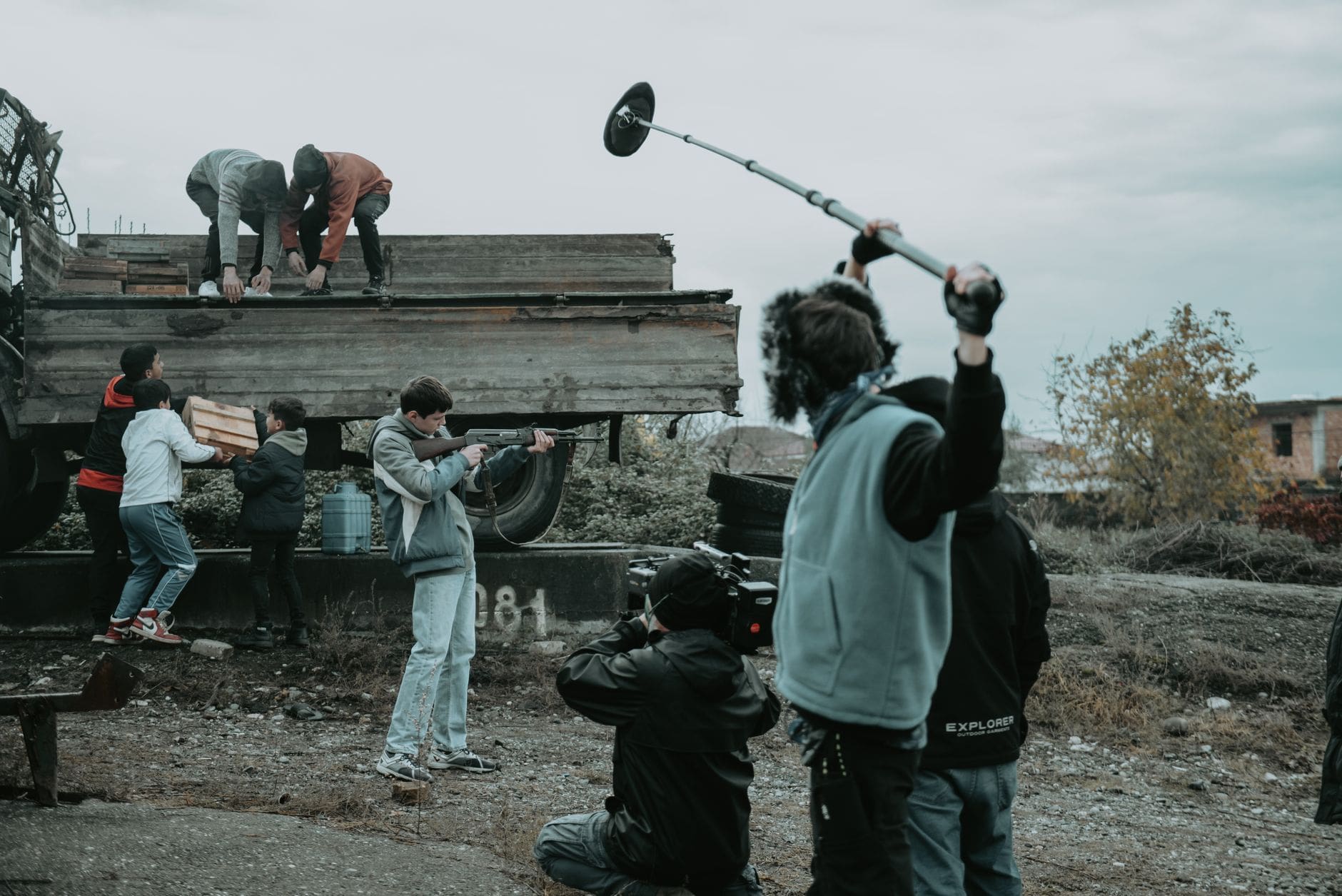
The boom operator’s job is to capture clean, on-axis dialogue audio from the actors while staying completely out of frame. That’s the whole thing. But executing it well requires reading camera angles, understanding lens focal lengths, anticipating actor movement, managing a pole that can weigh 10 to 15 pounds extended overhead for hours, and doing all of it silently. You’re the bridge between the actors performing and the production sound mixer making decisions on the cart.
On a typical day, you’re working directly under the IATSE-covered production sound mixer. Your primary tool is a boom pole, usually a carbon fiber model like a K-Tek or Ambient, with a shotgun microphone mounted at the end. The Sennheiser MKH 416 is the industry standard shotgun you’ll find on almost every professional set in North America. You’ll point it at whoever is speaking, aim it from above at roughly a 45-degree angle toward the actor’s mouth, and you’ll hold that position for as long as the take runs.
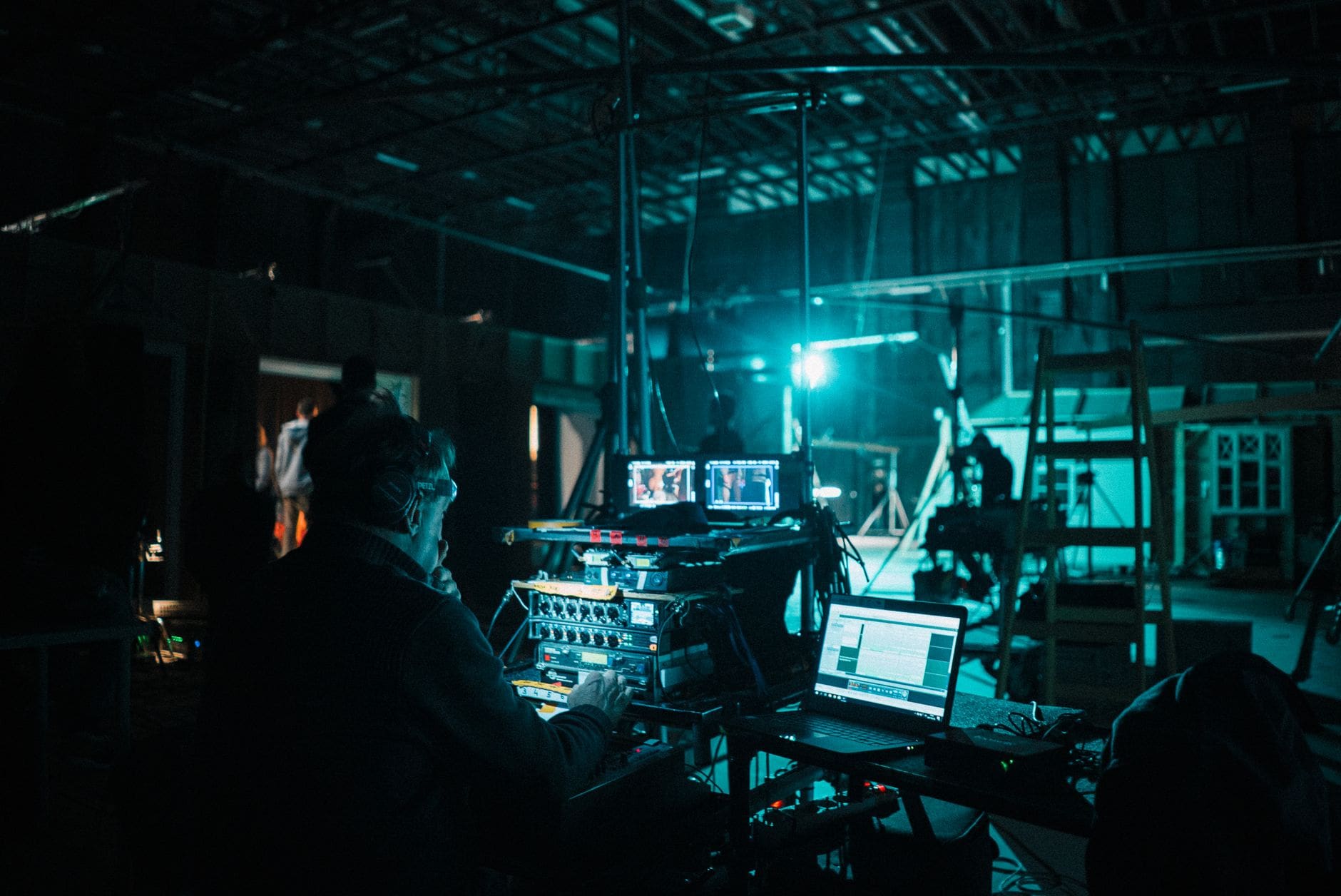
Beyond the pole itself, boom operators also place lavalier microphones on actors when the scene calls for it. Hiding a lav under a silk shirt or inside a costume without creating noise is its own skill set entirely. And you’re constantly feeding information back to the mixer: calling out clothing noise, flagging a refrigerator hum you heard during a quiet take, watching for shadows your pole might cast if the sun shifts.
The Physical Reality Nobody Warns You About
This role will wreck your shoulders if you’re not prepared. Holding a boom pole overhead for a 12-hour day isn’t like going to the gym. It’s sustained isometric strain, and it builds up over weeks and months. Experienced boom operators treat their physical conditioning seriously. Rotator cuff injuries are an occupational hazard.
You’re also on your feet the entire day, often in tight spaces, moving around lighting rigs and camera equipment without making a sound. Wearing headphones while simultaneously reading the set physically is something that takes real time to develop. Your ears tell you one thing. Your eyes and body have to respond to something else entirely at the same moment.
Budget enough time to build actual stamina before your first big job. Start practicing with a weighted pole at home. It sounds basic. It matters.
What Skills You Actually Need
Technical knowledge comes first. You need to understand microphone polar patterns, specifically the difference between a hypercardioid and a supercardioid, and why it affects how you aim at an actor. You need to know gain structure, how to properly coil a cable, how XLR connectors work, and why a Lectrosonics wireless system behaves differently than a Zaxcom in a crowded RF environment.
But honestly, some of the most important skills are about spatial awareness and communication. You have to read a room fast. Where is the key light? What’s the lens? Is the camera operator going to push in during this take? You ask those questions before the take rolls, not after you’ve cast a shadow across the lead actor’s face.
Good boom operators are also diplomatically assertive. You’ll sometimes need to tell a director that a shot as blocked makes your job impossible without compromising the audio. Knowing how to have that conversation without causing friction is something you develop over time, but you should start developing it early.
If you’re still building your foundational knowledge of how production sound fits into the larger workflow, the Documentary Starter Kit from Desktop Documentaries covers audio concepts in a practical context that translates well to narrative work too.
Boom Operator Salary: What the Numbers Actually Look Like
Pay varies significantly depending on the market, the budget, and whether you’re working under a union contract. On a union studio production covered by an IATSE agreement, a boom operator in a major market can earn anywhere from $400 to $600 per day, sometimes more on high-budget features. On non-union indie shoots, you might see day rates from $150 to $350, and on low-budget student productions, less than that or deferred pay entirely.
The IATSE local unions set minimums for covered productions, and those minimums differ by local. Local 695 covers production sound in the Los Angeles area, for example. Knowing which local covers your region matters once you start working toward union membership.
Weekly rates on longer shoots typically work out slightly better than daily rates. And kit rentals, where you’re bringing your own equipment, can add meaningfully to your income once you’ve invested in gear. A solid boom pole and a professional shotgun mic together will run you $800 to $1,500 new. Browse current pricing at Adorama if you’re budgeting for your first kit.
Realistically, most people don’t start at union rates. You build credits, build relationships, and earn your way up. That’s not pessimism. That’s just how the path works.
How to Break Into Production Sound
The most direct route is to start as a sound utility or cable person, sometimes called a third. You handle the cables, prep the gear, maintain the cart, and watch everything the boom operator and mixer do. You’re learning the workflow at close range without the pressure of being responsible for the audio.
Get to know your local film community. Reach out to working mixers and offer to swing third on low-budget projects for minimal pay. That sounds uncomfortable. Do it anyway. Every working boom operator you’ll ever meet got started by making themselves useful to someone more experienced.
Build a basic kit as soon as you can afford to. Even a used Rode NTG3 and a decent K-Tek pole will get you on student sets and micro-budget productions where you can start accumulating real credits. Check film production job listings regularly. Sound department openings come up, and producers do hire people with limited credits if they can demonstrate competence and reliability.
Your resume and your crew directory profile should list your equipment, your experience level honestly, and any specific formats you’ve worked on. Short films count. Music videos count. Industrials count. Credits are credits when you’re starting out.
One more thing. Boom operating is fundamentally collaborative. You’re not competing with the mixer or the gaffer or the camera department. You’re all solving the same problem together. The people who get hired back are almost always the ones who are easy to work with in addition to being good at the technical side.


Key Takeaways
Boom operating is a physically demanding, technically precise role that serves as the standard entry point into production sound careers.
- Your core job is capturing clean dialogue on a boom pole while staying out of frame, which requires reading camera angles, lens lengths, and actor blocking before every take.
- Physical conditioning matters more than most people expect. Sustained overhead work causes real injury if you’re not preparing your body for it.
- Union day rates run $400 to $600 on covered productions. Non-union indie work pays $150 to $350. Starting out, you’ll likely see the lower end of that range.
- The fastest path in is starting as a sound utility or third, making yourself useful to working mixers on low-budget productions where experience is everything.
- Your equipment knowledge, specifically microphone polar patterns, wireless RF systems, and lav placement, needs to be solid before you take your first paid gig.
Break in from the bottom, build real credits on real sets, and treat every job as a chance to learn from the person above you in the sound department hierarchy.
FAQs
Do boom operators need to join a union?
Not immediately, and most people don’t start union. But working on union productions requires membership in the relevant IATSE local, which usually requires qualifying work hours. Research the local that covers your region and understand their path to membership early. It takes time to qualify, so start working toward it deliberately rather than waiting.
What’s the difference between a boom operator and a production sound mixer?
The mixer is in charge of the entire sound department and makes the final call on all audio decisions. The boom operator captures the dialogue on set and reports back to the mixer. On small crews, one person sometimes does both, but on any production with a real budget, they’re always separate roles.
What microphone do most boom operators use?
The Sennheiser MKH 416 is the industry standard shotgun microphone in North America. The MKH 50 is also widely used indoors because of its tighter hypercardioid pattern. You’ll see both on professional sets. Starting out, a used Rode NTG3 or Audio-Technica AT897 gets you working without the higher price tag.
How long does it take to become a boom operator?
There’s no fixed timeline, but most working boom operators spent one to three years doing sound utility and third work before operating regularly on their own. Some people move faster in active markets with strong networks. Some take longer. Consistency and the quality of your relationships matter as much as raw time.
Can you become a boom operator without film school?
Yes, and many working boom operators did exactly that. What you need is practical knowledge of audio equipment, set etiquette, and the willingness to start at the bottom and learn from experienced mixers. Film school can accelerate the learning, but it’s not a requirement. Real set experience is what gets you hired.
Ready To Find Your First Boom Operator Or Sound Department Gig?
Boom operating rewards people who combine genuine technical skill with physical endurance and the kind of situational awareness that only comes from time on real sets. Start by making yourself useful to working sound mixers, build your equipment knowledge before you need it under pressure, and take every low-budget credit you can get your hands on while you’re building your reputation. The sound department is a tight community, and the people who move up are almost always the ones who showed up prepared and were easy to work with from day one.