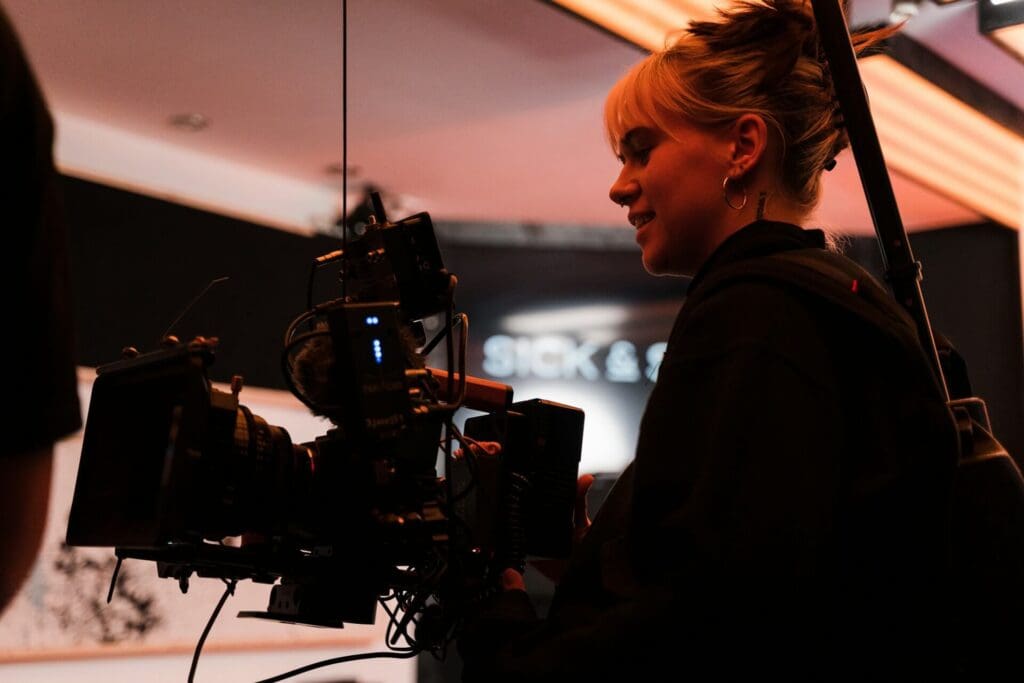
What Production Design in Film Actually Means
Production design in film is the practice of creating every physical and visual element you see on screen. Not just the furniture in a room. Every wall color, every street sign, every piece of costume jewelry sitting on a bathroom counter. The production designer is responsible for making the world of the story feel real, even if that world never existed.
It’s one of the most collaborative jobs on any production. The production designer works directly with the director and cinematographer to translate a script’s tone into something tangible. If the DP decides how light hits a surface, the production designer decides what that surface is, what color it is, and why it belongs in that particular scene.
Don’t confuse the role with interior decorating. This is storytelling through space. Think of how the crumbling, cluttered apartment in Parasite tells you everything about the Kim family’s situation before a single line of dialogue. Or how the sterile white sets in 2001: A Space Odyssey made HAL feel genuinely threatening. That’s production design doing its job.
The Art Department Hierarchy
The production designer sits at the top of the art department. Below them is the art director, who manages the day-to-day execution of the designer’s vision, things like scheduling builds, supervising the art department budget, and coordinating with construction.
Under the art director you’ll find set decorators, prop masters, graphic designers, set dressers, buyers, and a construction coordinator overseeing the actual build crew. On bigger productions, each of those roles has assistants and additional hires. On a $200K indie, one person might hold three of those titles simultaneously.
The Art Directors Guild (IATSE Local 800) covers production designers, art directors, and related roles in the US. In Canada, production designers typically fall under NABET-700 or provincial IATSE locals depending on the project. If you’re looking to hire or get hired in this space, browsing the crew directory is a good starting point for finding qualified art department professionals across both countries.
The prop master runs a separate but parallel track. They’re responsible for anything an actor handles, picks up, or interacts with directly. A lamp sitting on a table is set decoration. The same lamp thrown across the room during a scene becomes a prop. That’s the technical line, and it matters for both budget and on-set coordination.
How Production Design Shapes Story
Color is one of the most direct tools available. Wes Anderson uses symmetry and a specific pastel palette to create a world that feels slightly off-kilter. David Fincher strips color out, pushing everything toward gray-green to create dread. These aren’t accidents. They’re deliberate design decisions made before a single camera rolls.
Production design also controls time. A script might call for a character’s apartment to show the passage of years without a single flashback. The production designer communicates that through layered detail: a wall calendar from the wrong year, a stack of unopened mail, a plant that’s clearly been dying for months. The camera doesn’t have to linger. The environment does the work.
Practical locations versus built sets is one of the bigger creative and financial choices any production makes. Shooting in a real location gives you texture and authenticity but removes control. A built set gives you flexibility over camera angles, lighting rigs, and the ability to remove walls. Big studio films often build everything. Mid-budget films mix both. Low-budget films lean hard on found locations dressed by a small art department team.
The Production Design Process, Start to Finish
It starts with the script. The production designer reads it multiple times, flagging every location, every described object, every visual detail. Then comes a concept meeting with the director. What’s the emotional tone? What period? What does this world feel like to the people living in it?
From there, the designer creates concept art, mood boards, and eventually detailed drawings of each set. Software like SketchUp and AutoCAD are standard for technical drawings. Concept artists often work in Photoshop or Procreate. The director approves the direction, revisions happen, and then pre-production construction begins.
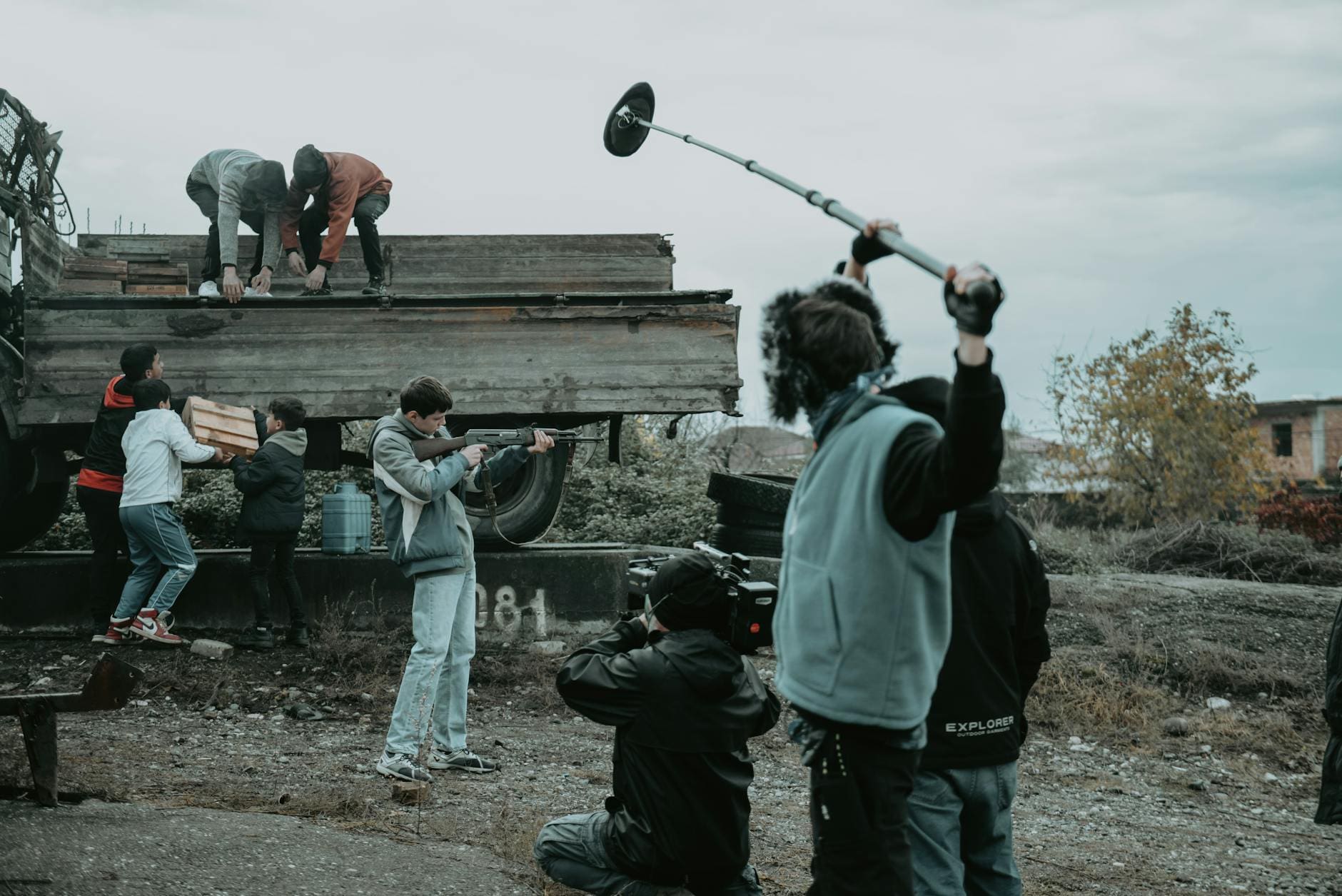
During production, the art department runs parallel to everything else. While one set is being shot, another is being built or dressed. After shooting wraps on a location or set, the strike crew comes in to take it apart. The pace is relentless on any production with a real schedule.
Budget management is constant. A production designer on a $5M feature might have $300K to $500K for the entire art department, covering construction materials, rentals, purchases, and labor. Every decision involves a trade-off. If you want to build that elaborate period kitchen, you might have to dress the exterior locations from scratch rather than building them. Those calls get made every single day.
Breaking Into Production Design
Most production designers didn’t start there. They came up through the art department as set dressers, props assistants, or buyers. The path builds practical knowledge first, creative authority later. You learn how a set gets built before you decide what it should look like.
Film school helps, but a degree in architecture, interior design, or even fine arts can lead to the same place. What matters is your eye, your portfolio, and your ability to work fast under pressure. The film industry employment starter pack covers the basics of how to position yourself for these roles if you’re just getting started.
If you’re already working in production and want to move toward art department roles, check current film production job listings for set dresser and art department PA positions. Those entry points are real. People get hired that way constantly.
Building your own short films or low-budget projects is also legitimate training. You’ll be surprised how much you learn about production design when you’re personally responsible for making a $400 budget look like something. That’s not a knock on big productions. It’s a reminder that constraint teaches you resourcefulness that money can’t buy later.

Key Takeaways
Production design is not decoration. It’s visual storytelling, and understanding it will make you better at every other filmmaking discipline.
- The production designer controls every physical and visual element on screen, working closely with the director and DP to translate script tone into tangible environments.
- The art department has a clear hierarchy: production designer, art director, set decorator, prop master, set dressers, buyers, and construction crew. Know the chain before you step on set.
- Color, texture, and object placement are active storytelling tools, not passive background elements. The best production design works on audiences without them noticing it.
- Breaking in usually means starting at the bottom of the art department as a set dresser or PA, building practical skills before moving toward design-level decisions.
- Budget management is a core production design skill. Knowing how to make $50K look like $200K is as valuable as any creative instinct.
The more deliberately you think about visual world-building, the more your films will feel like they exist somewhere real, even when they don’t.
FAQs
What is the difference between a production designer and an art director?
The production designer sets the overall visual concept and works directly with the director. The art director manages the execution of that concept, supervising day-to-day art department operations, coordinating construction, and keeping the budget on track. On small productions, one person often handles both roles.
What does a prop master actually do?
The prop master is responsible for any object an actor physically handles or interacts with on screen. They source, purchase, rent, and track all props through production. They also work with the armourer on any weapons and coordinate with the set decorator on items that cross between set dressing and active props.
How much does a production designer earn?
It varies widely by budget level and market. On a studio feature, a production designer might earn $6,000 to $10,000 per week or more. On a low-budget indie, the same role might pay $1,500 to $3,000 per week. ADG Local 800 publishes minimum rate scales for union projects in the US.
Do you need a film degree to work in production design?
No. Many working production designers came from architecture, interior design, theater, or fine arts backgrounds. What matters most is your portfolio, your practical knowledge of how sets are built and dressed, and your ability to collaborate under pressure. Entry-level art department work is where most people build that foundation.
What software do production designers use?
SketchUp and AutoCAD are standard for technical set drawings. Adobe Photoshop and Illustrator are used for concept art, graphics, and mood boards. Some designers use Vectorworks for drafting. For project management and budget tracking, productions often use Movie Magic Budgeting or simple spreadsheet systems depending on the scale.
Ready To Build Your Film’s Visual World From The Ground Up?
Production design rewards people who think spatially, obsess over detail, and understand that every visible choice in a frame is a storytelling decision. Whether you’re directing and need to communicate better with your art department, or you’re looking to build a career in the craft itself, start by studying the work closely. Watch films with the sound off and pay attention to what the environments are telling you. That’s where the real education begins.