Disclosure: This article contains affiliate links. If you make a purchase through one of these links, FilmLocal may earn a commission at no extra cost to you.
The Best Cinematography Equipment for Beginners Starts With One Decision
Stop trying to build the perfect kit. You need a working kit. There’s a real difference. The perfect kit is a fantasy you’ll chase forever while your camera bag stays empty. A working kit is four or five pieces of gear you understand deeply, that cover 80% of what you’ll actually shoot as a beginner.
So here’s the angle this guide takes: less is more, but the less you buy needs to be the right stuff. Every product below gets used on real productions. Real prices. Real trade-offs. No fluff.
Cameras: Two Honest Picks for Beginners
The Sony ZV-E10 II runs about $850 body-only and it’s genuinely the easiest entry point into interchangeable-lens cinematography right now. APS-C sensor, solid 4K up to 60fps, a flip-out screen that actually works for run-and-gun, and the Sony E-mount lens ecosystem is enormous. The menus are deep but learnable. Battery life is mediocre, so budget another $40 for a two-pack of NP-FZ100 compatibles.
If you’ve got more budget and you’re serious about shooting narrative or short films, the Blackmagic Pocket Cinema Camera 6K G2 is around $1,495 body-only. It shoots raw. The dynamic range is exceptional for the price, and it outputs files that colorists actually want to work with. But it eats batteries, overheats in sustained use, and the autofocus is basically nonexistent. You’re shooting manual. If that sounds intimidating, go with the Sony first.
Both are solid pieces of cinematography equipment for beginners. Neither will hold you back creatively. The limiting factor will always be your eye, not the sensor.
Lenses: One Fast Prime, One Zoom, That’s It
Don’t build a collection yet. You don’t need one.
For Sony E-mount shooters, the Sigma 18-50mm f/2.8 DC DN is about $550 and it punches well above its price. Sharp across the frame, compact, and f/2.8 throughout the zoom range gives you real low-light capability. This is the one lens you could use for a full year and not feel limited.
If you want a prime to complement it, the Sony FE 50mm f/1.8 is around $250 and produces genuinely beautiful images for the money. Shallow depth of field, fast enough for most interior work without additional lighting, and it forces you to move your feet instead of zooming lazily.
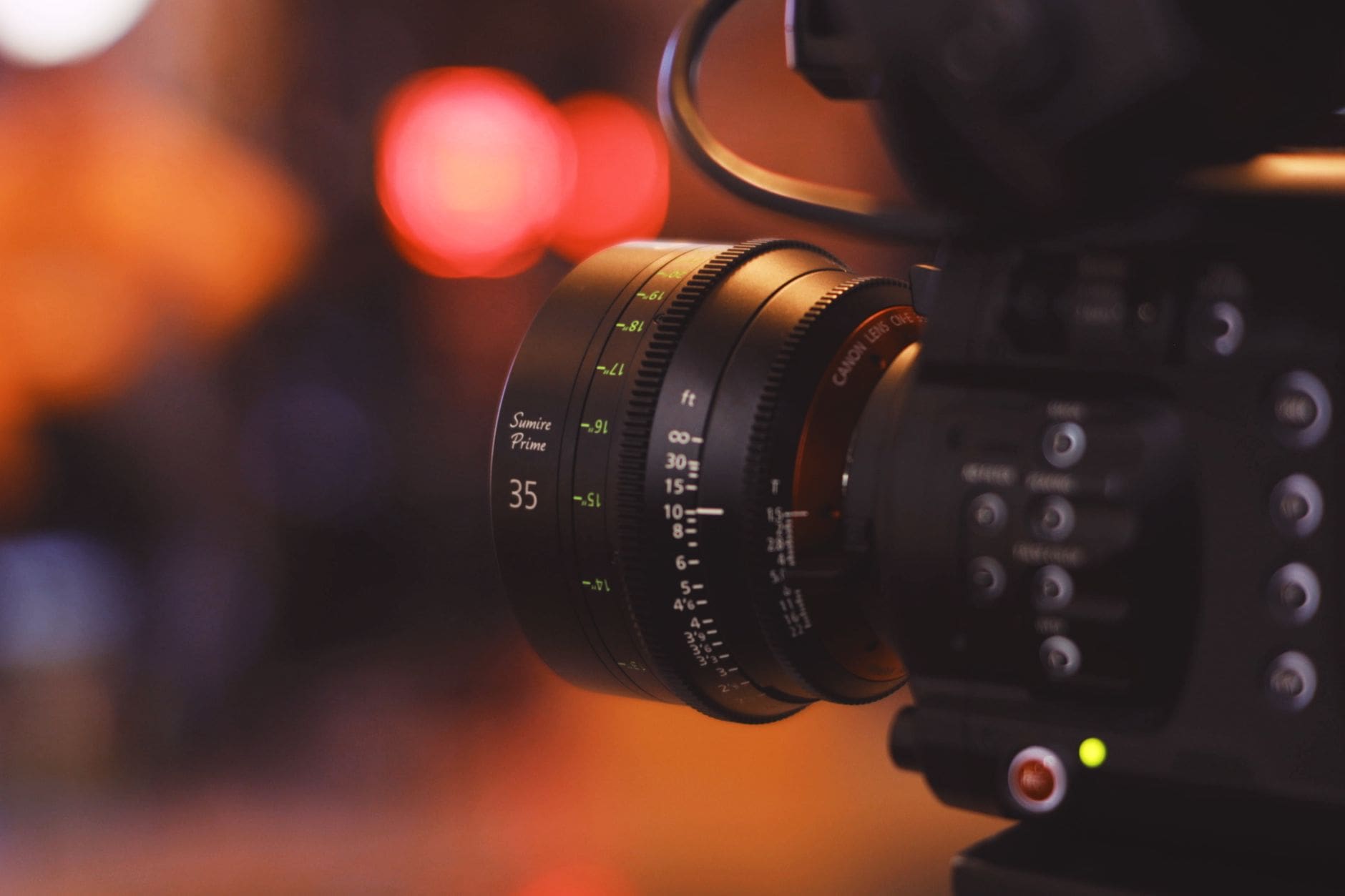
For BMPCC 6K G2 users on L-mount, the Sigma 18-35mm f/1.8 Art with an L-mount adapter runs around $800 total. Heavier setup, but that f/1.8 aperture on a larger sensor is stunning in the right hands. Just know it’s not a small rig. You’re committing to a shoulder-mount or cage workflow.
Lenses are where your money compounds over time. Bodies get replaced. Good glass sticks around. The Sigma Art series, for example, is used by working DPs on IATSE-covered productions. That’s not an accident.
Stabilization and Support: Don’t Skip This
Shaky footage is the fastest way to look amateur. And no amount of camera quality fixes it in post.
The DJI RS 3 Mini gimbal is about $299 and it’s the right call for solo operators shooting with lightweight mirrorless setups. Bluetooth axis locks, automatic calibration, and a 12-hour battery life. It’s not a pro gimbal, but it handles the ZV-E10 II or a similar body with a prime lens without breaking a sweat.
For a cage and rigging system, SmallRig is the honest answer for beginners. Their universal cage kits start around $45. Their follow focus systems, shoulder rigs, and top handles are modular and affordable. You’ll spend $150 to $300 total building a functional rig that doesn’t rattle apart on set. Their build quality at this price point is hard to beat.
A fluid head tripod is non-negotiable if you’re shooting any kind of dialogue or static composition work. The Magnus VT-4000 runs about $170 and is one of the best value fluid heads for beginners. Smooth enough for slow pans, sturdy enough for a full mirrorless rig. You’ll use this for years.
Audio and Lighting: The Two Things Beginners Always Underbudget
Bad audio kills a film faster than bad cinematography. This is not an opinion. It’s a fact everyone in post-production will confirm.
The Rode VideoMic GO II is $99 and plugs directly into your camera’s 3.5mm jack. It’s a shotgun mic. It’s not a boom setup, but for run-and-gun, documentary work, or solo shooting, it handles the job. If you’re doing narrative with a crew, add a Rode Wireless GO II kit at $299. Two transmitters, one receiver, clean wireless audio for interviews and dialogue scenes.
For lighting, the Godox SL60W is a 60-watt LED fresnel at about $130. Buy two. One as a key, one as a fill or backlight. They’re bright, they’re daylight-balanced, and they take standard bowens-mount modifiers. Add a cheap softbox from Adorama for another $30 to $50 and you’ve got a two-light setup that can cover most interview and short film scenarios. Browse Adorama for current pricing on modifiers and stands, they carry everything you need to complete a starter lighting package without overpaying.
This matters more than people admit. Many working DPs on low-budget productions in markets like Atlanta, Toronto, and Austin are still running modified versions of exactly this kind of setup on smaller jobs.
Storage, Power, and the Stuff That Quietly Ruins Your Shoot
Memory cards first. Don’t cheap out. The Sony Tough CFexpress Type A at around $100 for 80GB is what the ZV-E10 II and most Sony bodies prefer for 4K recording. For the BMPCC 6K G2, you need a fast CFast 2.0 card or a USB-C SSD. The Samsung T7 Shield SSD at $90 for 1TB via USB-C works and it’s what a lot of working camera assistants actually carry.
Batteries. Always double what you think you need. For Sony bodies, Wasabi Power NP-FZ100 two-packs run about $30. Reliable third-party option. Don’t buy off-brand unknowns.
A hard case matters too. The Pelican 1510 carry-on case is around $200 and it’s what professionals use to protect gear in transit. If you’re driving to locations, a padded Lowepro backpack at $80 to $120 works fine. But if you’re flying with gear, the Pelican is worth every dollar.
And once your kit is together and you’re ready to work, check the film production job listings on FilmLocal. Even as a beginner, getting on set in any capacity is how you learn what gear actually matters in the real world. You’ll also find working professionals to connect with through the crew directory, which is useful when you’re ready to collaborate or get mentorship from someone a few steps ahead of you.

Key Takeaways
The best cinematography equipment for beginners is the smallest functional kit you’ll actually use consistently, built around one camera, one or two lenses, and honest audio and lighting choices.
- Start with either the Sony ZV-E10 II ($850) or the Blackmagic Pocket Cinema Camera 6K G2 ($1,495) depending on whether you prioritize ease-of-use or raw image quality and color science.
- One zoom and one prime lens is enough for your first year. The Sigma 18-50mm f/2.8 DC DN and Sony FE 50mm f/1.8 cover most scenarios for under $800 combined.
- SmallRig rigging plus a DJI RS 3 Mini gimbal solves your stabilization needs without overcomplicating your kit or your wallet.
- Audio and lighting are where beginners consistently underinvest. The Rode Wireless GO II and two Godox SL60W lights handle the majority of shooting situations you’ll face.
- Use fast, reliable storage (Sony Tough CFexpress or Samsung T7 SSD), double your battery count, and protect your kit with a Pelican case if you’re traveling.
Buy less, learn it thoroughly, and the work will improve faster than it would with a bigger kit you only half understand.
FAQs
How much should a beginner spend on their first cinematography kit?
A functional starter kit including camera, one lens, a gimbal or tripod, audio, and basic lighting runs between $2,000 and $3,500 if you buy smart. You can go lower with used gear. The Sony ZV-E10 II and a Sigma zoom plus a Rode VideoMic GO II gets you shooting for under $1,500 if audio and stabilization can wait a shoot or two.
Should beginners buy new or used gear?
Used is often the smarter move, especially on bodies and lenses. Check B&H Photo’s used section and KEH Camera for graded, tested equipment with return policies. Avoid buying used batteries, memory cards, or audio cables from unknown sellers since those fail in ways that kill a shoot.
Is the Blackmagic Pocket Cinema Camera too hard for beginners?
Honestly, it depends on what kind of beginner you are. If you’re shooting documentary or solo run-and-gun work, the lack of autofocus and the battery drain will frustrate you fast. If you’re shooting short films with a crew and you want to learn manual operation properly, it’s a genuinely excellent camera that produces images you’d be proud to show a colorist.
Do beginners need a cinema lens or will photo lenses work?
Photo lenses work completely fine for most beginner projects. Cinema lenses with declicked apertures and geared focus rings matter when you’re pulling focus on a narrative shoot with a dedicated AC. Until you’re in that workflow, the Sigma Art series and Sony G-series lenses produce excellent results and cost a fraction of dedicated cinema glass.
What’s the single most overlooked piece of cinematography equipment for beginners?
A good fluid head tripod. Everyone obsesses over cameras and lenses, and then shoots wobbly handheld footage because they skipped a $150 to $200 fluid head. Smooth, controlled camera movement is one of the clearest signals of production quality. Buy the Magnus VT-4000 or a comparable Manfrotto option early, not as an afterthought.
Ready To Build Your First Real Cinematography Kit?
Pick one camera, commit to two lenses, fix your audio, and add light before you add anything else. The gear in this guide represents what you actually need to shoot work worth showing people, without spending money on stuff that sounds impressive but sits in a bag. Get the kit together, get on set, and learn by doing. That’s still the fastest path forward.