The Best Cheap Lights for Filmmaking Right Now
The budget LED market has exploded. Three years ago, spending under $200 on a panel meant noisy color, bad CRI, and a fan that ruined your audio. That’s not true anymore. You can buy genuinely usable lights for $60 to $150 that hold their own on real productions. But there’s still a lot of garbage out there, and the specs on the box lie constantly. So here’s what actually works.
This article focuses on three categories: flat LED panels, bi-color portable lights, and battery-powered location units. Each has a different job. Buy the wrong category and you’ll spend money solving problems your existing lights could have handled.
Flat LED Panels: The Workhorse Option
If you’re shooting interviews, talking heads, or any controlled interior work, a flat LED panel is your first buy. The Neewer 2-Pack 660 LED Video Light sits around $90 to $110 for both panels on Amazon and it’s the single most recommended budget kit in low-budget film communities for a reason. CRI is rated at 95+, color temperature is adjustable between 3200K and 5600K, and each panel pushes about 3200 lux at one meter. That’s enough to light a face cleanly without cranking ISO.
The trade-off is build quality. The stands that come in the kit are flimsy. Budget another $30 to $40 for a pair of decent light stands, something like the Ravelli APLA or the Manfrotto Compact. The panels themselves are solid though. No fan noise, which matters a lot if you’re recording dialogue.
Step up to the Godox SL60W at around $150 and you’re in different territory. It’s a single source, 60W daylight-balanced LED fresnel with a built-in fan, but the fan is quiet enough that it won’t show up in a boom mic at normal shooting distances. Output is dramatically stronger than the Neewer panels. Use it as your key, bounce the Neewer panels as fill and rim, and you’ve got a legitimate three-point setup for under $350 total.
Bi-Color Kits: Flexibility Over Raw Power
Bi-color lights let you dial between tungsten and daylight, which sounds like a luxury until you’re shooting in a location with mixed practical sources and you need to match them fast. The Falcon Eyes SO-28TD runs about $80 to $100 and covers 3000K to 5600K. It folds flat, runs on AC or with an optional V-mount plate, and the color accuracy is genuinely good for the price. Real-world CRI tests put it closer to 92 than the advertised 96, but that’s still workable for most narrative and documentary applications.
The Aperture AL-M9 is a pocket-sized bi-color panel at around $90. It’s not going to key a wide shot, but as a hair light, a practical insert on a desk, or a small fill in a tight car interior, it’s excellent. Battery life runs about 75 minutes at full power with the built-in cell. A lot of documentary shooters carry two or three of these as supplemental sources.
If your budget stretches to $200 for a single unit, look at the Nanlite Pavotube II 15C. It’s a bi-color RGB tube light, about 2 feet long, and it does things the flat panels can’t. Throw it behind a couch as a practical, use it as a rim light in a narrow hallway, clip it to a ceiling tile grid. The RGB feature is genuinely useful for stylized work, not just a gimmick.
Portable Battery-Powered Units for Location Work
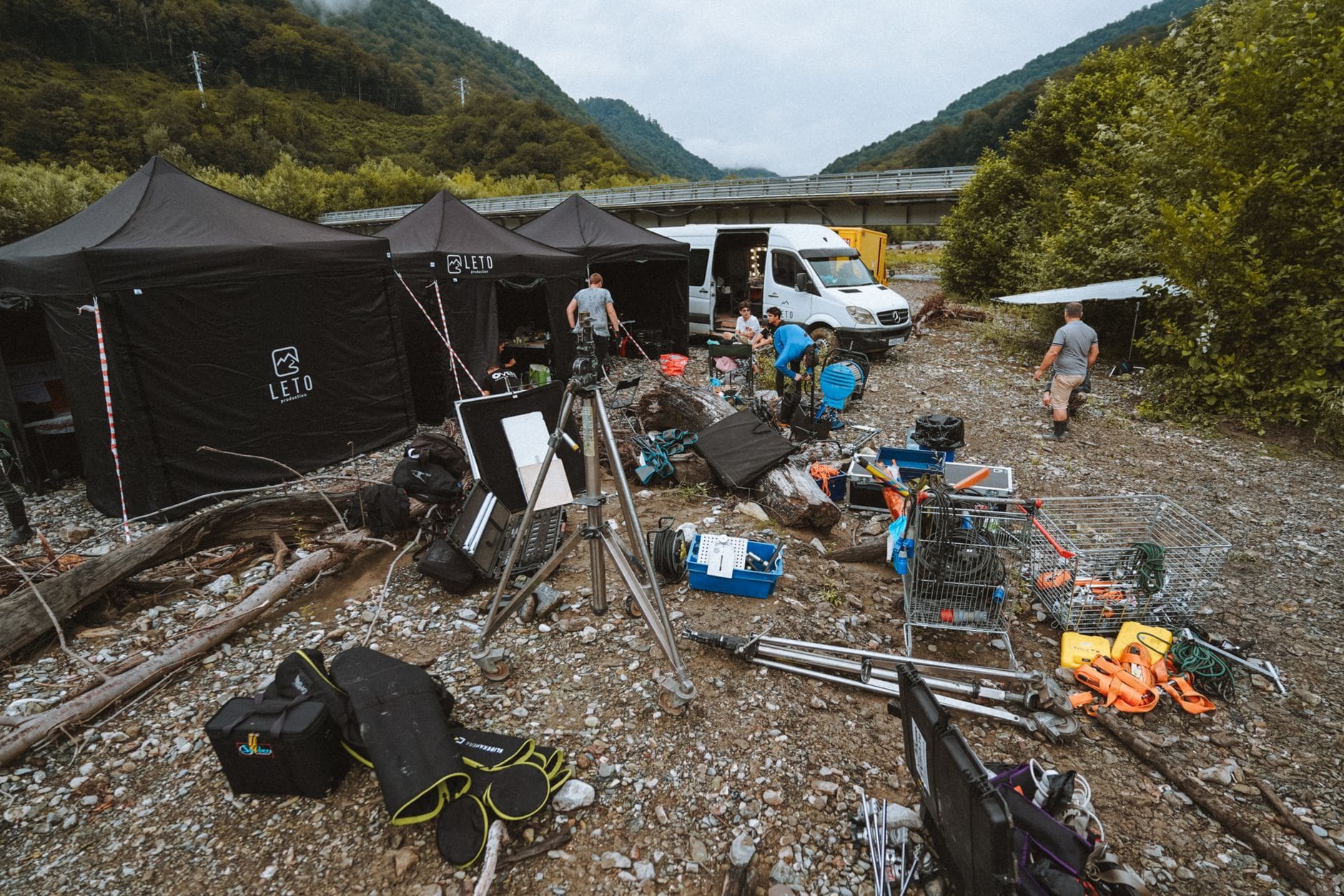
Location shooting changes everything. You might not have access to power, you’re moving fast, and you need a light that’s easy to rig and reliable in different conditions. The Godox ML60 at around $200 is the sweet spot here. It’s a 60W battery-powered monolight that accepts Bowens-mount modifiers, so you can put a small softbox or beauty dish on it. Battery life is about 90 minutes at full power. That’s real runtime for a short shoot.
For something cheaper, the Lume Cube Panel Pro 2.0 sits at $130 and runs on a USB-C power bank. It’s magnetic, mounts to basically anything, and the output is strong enough for close-up work and run-and-gun documentary. You’re not using it as a key light on a wide dramatic scene, but it’s a genuinely useful tool for a one-person crew. Check the Litra and Godox product pages for current specs, because both manufacturers update their product lines regularly and the firmware on these units can change what they’re capable of.
The Amaran 60x S is worth mentioning at around $170. It’s bi-color, outputs up to 65W, and works with a standard V-mount or gold mount battery plate. It’s becoming a staple on low-budget commercial shoots in markets like Atlanta, Toronto, and Austin because it’s fast to set up and the output-to-price ratio is hard to argue with.
What to Actually Buy Based on Your Situation
Starting from zero with under $300? Get the Neewer 660 two-pack and spend the rest on stands and a diffusion frame. That’s your foundation and you’ll use it for years.
You’ve got some lights already and need more flexibility? One Nanlite Pavotube II 15C or the Amaran 60x S will add more value than buying another flat panel. Variety in your sources matters.
Shooting documentary or run-and-gun? Skip the panels entirely and put your money into the Lume Cube Panel Pro and a couple of Aputure AL-M9 units. Battery power and small form factor will serve you better than raw output in those conditions.
Don’t overlook modifiers. A $15 diffusion panel from Impact or Matthews turns a harsh LED into a soft source. A $25 reflector gives you a free fill light. Cheap lights for filmmaking get dramatically better when you control how the light spreads. The IATSE Lighting Department has published resources on professional light modification techniques that translate directly to low-budget work.
If you’re building skills to move into professional productions, it also helps to understand what the standard tools look like. Browse the crew directory to find working gaffers and lighting technicians. A lot of professionals are willing to talk gear and some of them mentor newer filmmakers. And if you’re looking to move from making your own films into paid work, the film production job listings are a practical next step. More filmmaking articles on FilmLocal can help you keep building from here.
Key Takeaways
The budget LED market in 2026 is strong enough that you can build a professional three-point lighting setup for under $400 if you buy smart.
- The Neewer 660 two-pack ($90 to $110) is the best starting point for controlled interior work. Buy better stands separately.
- The Godox SL60W ($150) as a key light combined with budget fill panels gives you a proper three-point setup for under $350 total.
- Bi-color panels like the Falcon Eyes SO-28TD or Nanlite Pavotube II 15C are worth the extra $20 to $50 if you’re shooting in locations with mixed light sources.
- For location and run-and-gun work, prioritize battery power and small form factor over raw output. The Lume Cube Panel Pro 2.0 and Amaran 60x S are both strong options under $200.
- Spend $30 to $50 on diffusion and a basic reflector. Modifiers will improve any cheap light more than buying another panel will.
The right light for your situation depends on where you’re shooting and how you work, not on which unit has the highest lux number on the spec sheet.
FAQs
What’s the minimum number of lights you need for a basic film setup?
Three is the standard starting point: key, fill, and backlight or rim. You can shoot with two if you use a reflector as your fill. One light plus a reflector is a workable interview setup in a pinch, but you’ll have less control over shadows.
Is CRI really that important on budget lights?
Yes, but you need a real number, not a marketing number. Anything rated CRI 95 or above is generally accurate for skin tones and saturated colors. Below 90 and you’ll start seeing color shifts that are hard to fix in post, especially on faces. Check third-party reviews for real-world CRI tests before buying.
Can you use cheap LED panels for outdoor shooting?
You can, but their output will be overwhelmed by direct sunlight. They work outdoors in shade, during golden hour, or as supplemental fill when the sun is your key. If you’re shooting outdoors in bright conditions, you need something with significantly more output, or you need to control the ambient light with flags and diffusion.
Do budget lights work with standard modifiers like softboxes?
It depends on the mount. Lights with a Bowens mount, like the Godox ML60, accept a wide range of third-party modifiers. Flat panels usually need purpose-built diffusion frames or DIY solutions. Check the mount type before you buy if modifier compatibility matters to your workflow.
How do you power LED lights on location without access to mains power?
V-mount and gold mount battery plates are the most versatile option for professional-grade runtimes. Many smaller units like the Lume Cube Panel Pro 2.0 run off standard USB-C power banks, which are cheap and easy to source. A 20,000mAh power bank will run a small LED for several hours at partial power.
Ready To Build Your Lighting Kit And Start Shooting Better-looking Films Today?
Start with one good key light and a reflector, then add sources as your work demands it. The Neewer panels, Godox SL60W, and Amaran 60x S are all legitimate tools that working filmmakers use on real productions. Cheap doesn’t mean compromised anymore, it means choosing where to spend and being honest about what each light actually does well.