Disclosure: This article contains affiliate links. If you make a purchase through one of these links, FilmLocal may earn a commission at no extra cost to you.
The Best Sound Equipment for Filmmaking Starts With Three Things
Every working sound department runs on the same basic chain: a mic to capture the sound, a recorder to store it, and a wireless system to handle the talent who can’t be boomed. Get those three right and you’re set for almost anything. Get one wrong and the whole chain breaks down.
This isn’t about building the most expensive kit. It’s about knowing what each piece actually does on set, what it costs, and whether it’s the right buy for where you are in your career right now.
Boom Mics: The Sennheiser MKH 416 vs the Rode NTG5
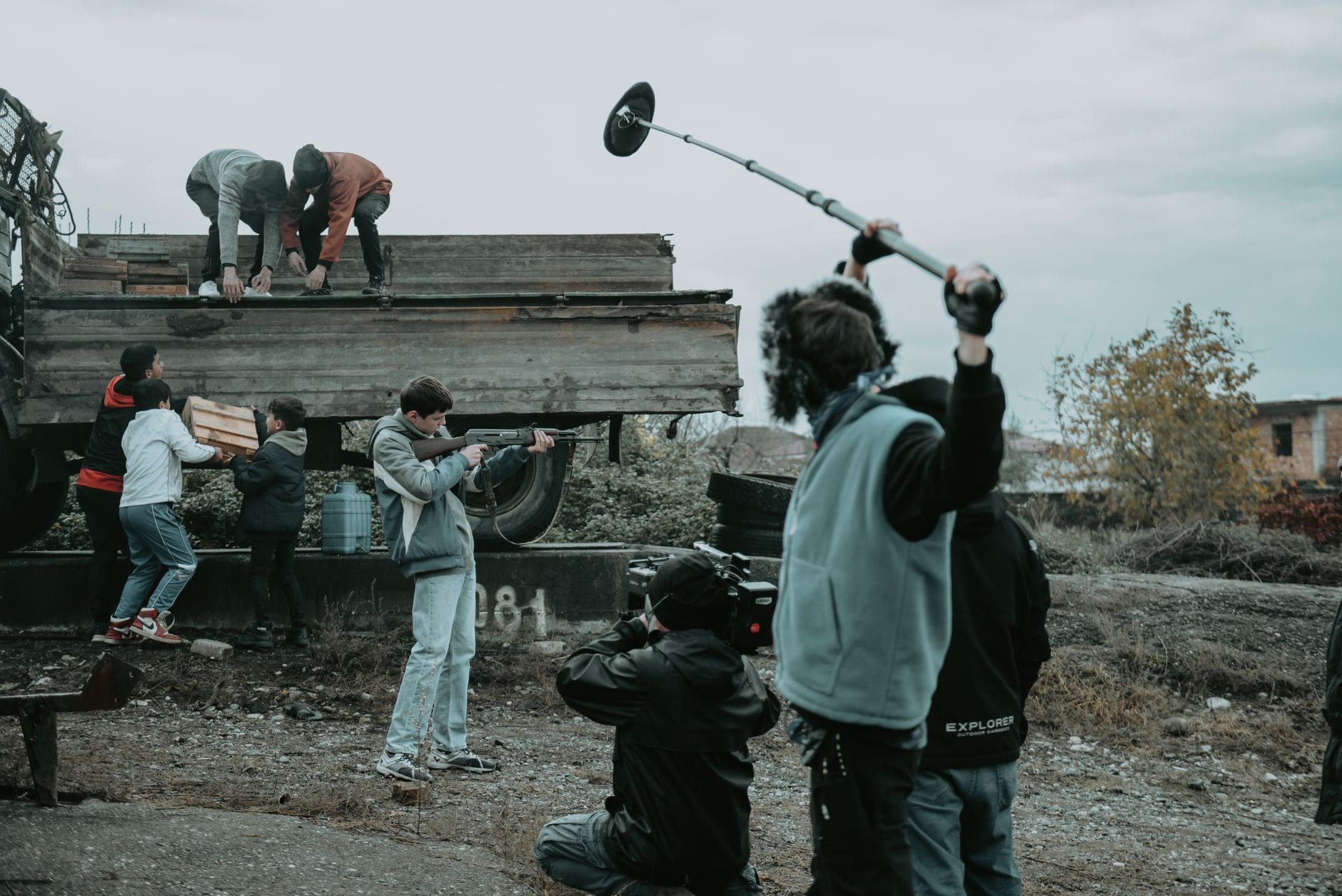
Two mics dominate working boom ops’ bags in 2026. The Sennheiser MKH 416 and the Rode NTG5. They’re not in the same price bracket, and they’re not trying to be the same mic.
The MKH 416 has been the industry standard for decades. Specs from Sennheiser put it at a supercardioid/lobar polar pattern, 40-20,000 Hz frequency response, 13 dB A-weighted self-noise, and a max SPL of 130 dB. It runs on 48V phantom power. The lobar pattern is what makes it so good outdoors: it rejects off-axis sound aggressively, which is exactly what you need on a noisy exterior. It ships with a foam windshield and a mic clamp. Sennheiser lists it at $1,049 at the time of writing.
The honest downside? It’s a longer mic at 250 mm, which matters when you’re trying to stay out of a tight frame. And indoors, that lobar pattern can work against you – it picks up room reflections in ways that a tighter supercardioid sometimes handles better.
The Rode NTG5 is the smarter choice if you’re doing a lot of boom work on run-and-gun or long shooting days. It weighs just 76 g, measures just over 20 cm, and has a self-noise floor of 10 dB A-weighted, which is actually lower than the 416. The RF-bias circuitry means it handles humidity, cold, and dust without dropping out. Frequency response runs 20 Hz-20 kHz, with a practical working range of 80 Hz-20 kHz ±3 dB. At around $485-$499 at the time of writing, it’s roughly half the price of the 416.
So which one? If you’re doing features and episodic work where the 416 is on every rental list and production expects to see it, buy the 416. If you’re a boom op doing documentaries, indie projects, or anything with long days on your feet, the NTG5 is lighter, quieter on paper, and significantly easier on the budget. Both are solid choices for the best sound equipment for filmmaking at their respective price points.
One more option worth knowing: Deity’s S-Mic 3, released in 2024 as the successor to the S-Mic 2. It retails for $399, weighs 80 g, has 12 dB A-weighted self-noise, and is built to handle up to 95% humidity. If you want a weather-resistant boom mic for less than either the 416 or the NTG5, it’s worth a look.
Field Recorders: The Sound Devices MixPre Series
Sound Devices makes the recorders that professional sound mixers actually use. The MixPre series covers three tiers, and the differences are real.
The MixPre-3 II is $995. Three Kashmir preamps, records up to 5 tracks to SD card, backs up to USB thumb drive, and runs as a 5-in/2-out USB-C audio interface. 32-bit float recording. It runs on the included 4AA battery sled or the AC power supply, both in the box. This is the right starting point for a solo boom op or a one-person sound department on a low-budget shoot. Three inputs is enough for a boom plus two lavs, which covers most indie setups.
The MixPre-6 II is $1,195. Four preamps, 8 tracks (6 inputs plus a stereo mix), and the same 32-bit float recording with a 192 kHz max sample rate. The specs are genuinely impressive: THD+noise at 0.005% max, EIN of −130 dBV, and a minimum 142 dB dynamic range. It has a 1.6-inch color LCD touchscreen and takes SD, SDHC, or SDXC cards up to 512 GB. If you’re regularly working with more than two talent mics at once, the step up to the 6 II is worth the extra $200.
The MixPre-10 II is $1,995. Eight preamps, 12 tracks, the same 32-bit float engine, and a BNC timecode connector. All three MixPre II models have an internal timecode generator, but the 10 II’s extra inputs and BNC timecode make it the better fit for bigger multi-camera narrative setups where sync matters. It streams 12-in/4-out USB audio via USB-C. If you need more than four mic inputs on a regular basis, this is your recorder. If you’re not there yet, the 3 II or 6 II will serve you well.
One note on the original MixPre-6: it’s been replaced by the MixPre-6 II. Don’t buy the first generation new.
Wireless Systems: The Deity Theos
Wireless lavs are where low-budget sound kits most often fall apart. Cheap systems drop out, compress the audio, or introduce noise that ruins otherwise clean production sound. The Deity Theos sits in a range that takes wireless seriously without requiring a Lectrosonics budget.
The Deity Theos 2-person system lists at $1,090 at the time of writing, which covers two bodypack transmitters with onboard recording, two omni lavalier mics, and a dual-channel camera-mount receiver. The receiver has a 103 dB dynamic range and two analog outputs, so you can send each mic to its own channel on your camera or recorder. The US version’s hardware covers 550-960 MHz, though local rules limit which parts of that you can actually use.
The transmitters can also record internally to microSD, but there’s a catch for US buyers: the US version can’t record and transmit at the same time, because of a patent held by Zaxcom. Once you switch a US transmitter into a recording mode, it stops transmitting, so internal recording works as a standalone recorder, not a live backup. Outside the US, you can do both at once, which gives you a genuine safety net if the RF signal drops.
At roughly $545 per channel all-in, it’s not cheap. But compare that to renting a comparable system repeatedly over the course of a year and the math shifts quickly. If you’re doing enough work to justify owning wireless gear, the Theos is a credible purchase. You can browse current pricing and options through Adorama.
Building Your Kit by Career Stage
If you’re just starting out and looking for film production job listings, you don’t need to own everything on day one. Most entry-level sound jobs don’t require you to bring gear. Focus on learning the craft, then invest in gear as the work justifies it.
When you’re ready to build, here’s a sensible order. Start with the recorder. A MixPre-3 II gives you professional-grade preamps and 32-bit float capture, which means even if you clip the input, you can recover it in post. That’s a real safety margin for anyone still learning gain staging on set.
Add the boom mic second. The NTG5 at $485-499 is an honest professional tool and won’t hold your work back. Buy the MKH 416 when you’re working on productions that expect it and when the extra spend makes sense for your budget.
Wireless last. Rent first, buy when you’ve got the volume of work to support it. And when you’re hiring or looking for collaborators, the crew directory is a good place to find sound professionals whose kits complement yours.
If you’re newer to the industry and want a broader sense of what working in film production actually looks like, the film industry employment starter pack covers a lot of practical ground beyond just gear.

Key Takeaways
Buying the right sound gear for filmmaking means matching the tool to the job, not just picking the most expensive option in each category.
- The Sennheiser MKH 416 ($1,049 at the time of writing) is the industry standard for exterior boom work and expected on most professional sets. The Rode NTG5 ($485-499) is lighter, has lower self-noise, and is a smarter buy for documentary and indie boom ops.
- The Sound Devices MixPre-3 II ($995) covers most indie sound department needs. Step up to the MixPre-6 II ($1,195) if you’re regularly handling more than two talent mics, or the MixPre-10 II ($1,995) when you need more inputs and BNC timecode. All three have timecode built in.
- 32-bit float recording is not a marketing term. It gives you real recovery headroom when gain staging goes wrong on set, which it will.
- The Deity Theos 2-person wireless system ($1,090) is a credible professional purchase. Outside the US, its transmitters can record a backup while transmitting, but US units can’t do both at once. Rent before you buy wireless gear.
- Buy in this order: recorder first, boom mic second, wireless last. Rent gear that’s outside your budget until the work volume justifies the purchase.
The chain is only as strong as its weakest link, so prioritize depth over breadth – one genuinely professional tool beats three mediocre ones every time.
FAQs
Is the Sennheiser MKH 416 worth the price for indie filmmakers?
If you’re working on sets where it’s expected and you can afford the $1,049, yes. But if budget is tight, the Rode NTG5 at around $485-499 delivers lower self-noise and is a legitimate professional tool. The 416 earns its price outdoors and in controlled environments. It’s not the only right answer.
What’s the difference between the Sound Devices MixPre-3 II and MixPre-6 II?
The MixPre-3 II gives you three preamps and records up to 5 tracks for $995. The MixPre-6 II adds a fourth preamp, records up to 8 tracks, and costs $1,195. If you’re running more than a boom plus two lavs, the 6 II is worth the extra $200. The preamp quality is the same in both.
What does 32-bit float recording actually mean for me on set?
It means you can clip the input and still recover the audio in post. With standard 24-bit recording, a clipped signal is gone. With 32-bit float, you have enough headroom to bring it back cleanly. It’s a genuine safety net, especially valuable when you can’t stop a take to adjust gain.
Should I buy or rent wireless lavalier systems?
Rent first. Wireless systems are expensive, frequency regulations differ by region, and your needs may change as you take on different types of productions. Once you’re doing enough work consistently – think multiple shoots per month – buying something like the Deity Theos at $1,090 starts to make financial sense.
Do I need all three pieces of sound equipment as a beginner?
No. Most entry-level sound roles don’t require you to own gear at all. Start by learning on set with rented or production-supplied equipment. When you’re ready to invest, buy a recorder first. It’s the most versatile piece and the one you’ll use across the most different types of jobs.
Ready To Build A Sound Kit That Keeps You Hireable On Any Set?
The core kit in 2026 looks like this: a MixPre-3 II or 6 II as your recorder, an NTG5 or MKH 416 on the boom depending on your budget and market, and rented wireless until the volume of work makes buying the Theos worthwhile. That’s not a beginner kit and it’s not an overkill kit. It’s what working sound departments are actually using. Build it one piece at a time, buy the recorder first, and don’t let anyone tell you good audio is a secondary concern on a film set.
Trying to actually get hired in film?
This article is one piece of the picture. Getting on set consistently comes down to three things: knowing how film hiring really works, having a resume built for it, and knowing exactly who to contact and what to say. The Film Industry Employment Starter Pack puts that whole system in one place, built for getting hired as crew.
Inside the Pro pack:
- A 75-page guidebook, from how hiring works to getting rehired
- Resume, cover letter, and outreach email templates
- Role guides, a contact tracker, and 90-day action trackers
- Free trials of Key Membership and Auto Apply
14-day money-back guarantee. Email us within 14 days of purchase for a full refund.