Disclosure: This article contains affiliate links. If you make a purchase through one of these links, FilmLocal may earn a commission at no extra cost to you.
The Best Lenses for Filmmaking in 2026: What Actually Matters Before You Buy
Most lens buying guides treat focal length and aperture like they’re the whole conversation. They’re not. For working filmmakers, the real questions are: Does it cover your sensor? Does it breathe? Can you pull focus on it? Does it match the other glass in your kit? Buy a lens that fails any of those tests and you’ll feel it on set, every single day.
So let’s sort this by what filmmakers actually shoot with in 2026, broken down by budget tier and use case. No fluff. Real glass, real prices, real trade-offs.
Cinema Primes Worth the Investment ($1,500 to $3,500 Per Lens)
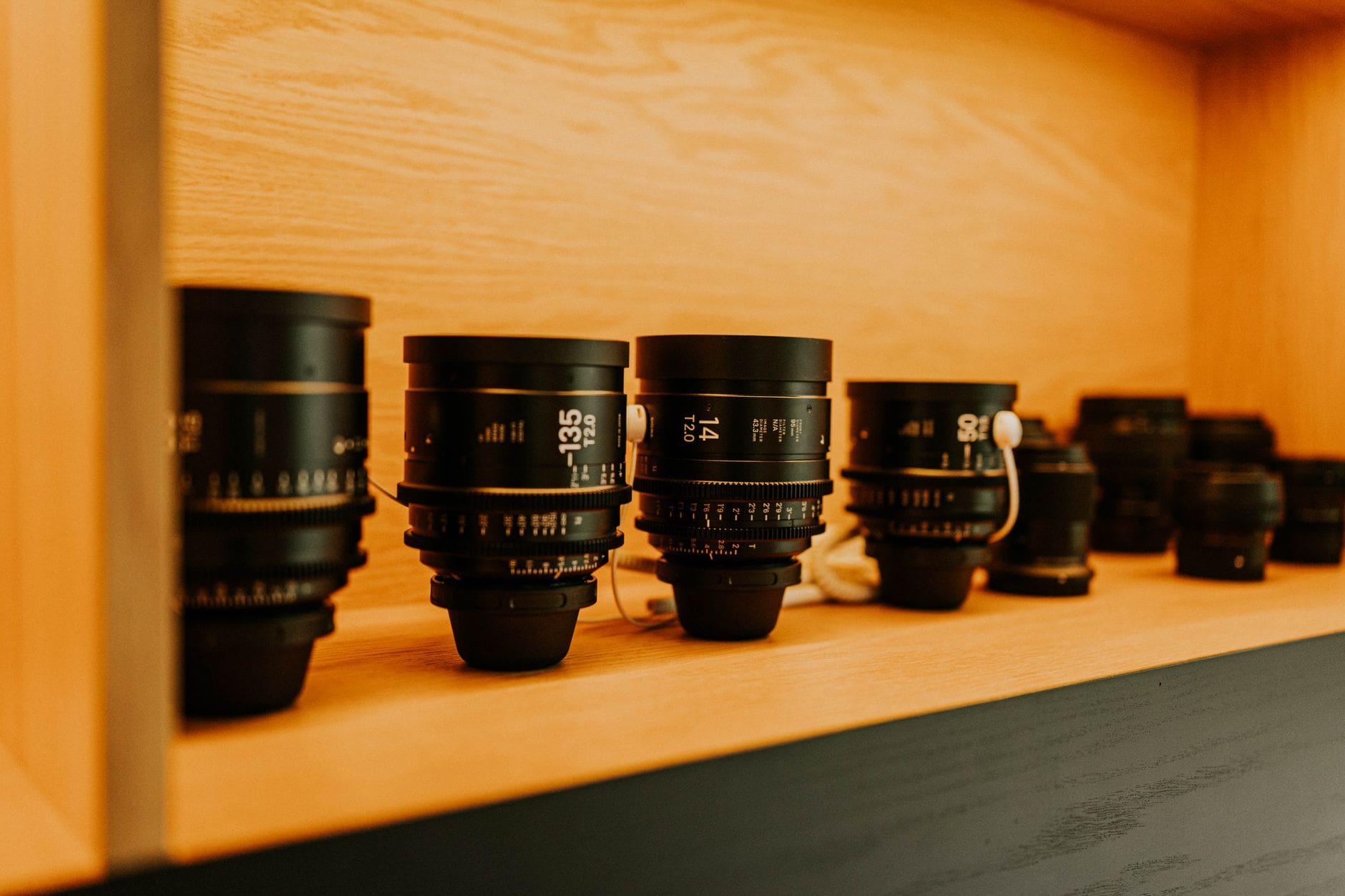
If you’re shooting anything with a budget and a professional crew, cinema primes are where you want to be. The Rokinon Xeen CF series runs around $1,600 to $1,900 per lens and gives you a matched set with consistent T-stops, front diameters for easy filter swapping, and zero focus breathing. The 24mm, 35mm, 50mm, and 85mm cover 90% of what most narrative shooters need.
The Sigma Cine Primes (Classic Art series) are another strong option, sitting between $1,800 and $2,500 depending on focal length. They’re sharper than the Xeens wide open, and the color science is genuinely beautiful on Sony Venice and ARRI sensors. The trade-off is weight. These are chunky. Long shooting days with a shoulder rig, you’ll feel it.
At the top of the accessible cinema range, the Atlas Orion Anamorphics are around $3,000 to $3,500 per lens. That’s real money. But if anamorphic is your look, these are the most practical anamorphics in that price bracket. 2x squeeze, consistent flares, and they actually cover full-frame. The Atlas Lens Co. site has solid documentation on coverage and barrel specs if you’re spec-checking for a rental package.
Mid-Range Glass That Punches Hard ($400 to $1,200)
This is where most indie filmmakers actually live, and there’s genuinely good news here. The Viltrox AF 35mm f/1.8 and 85mm f/1.8 for Sony E-mount sit around $300 to $400 each and autofocus well enough for documentary and run-and-gun work. They’re not cinema lenses. But they’re sharp, compact, and the color rendering is neutral enough to match with other glass in post.
The Tokina Cinema 11-20mm T2.9 runs about $900 and fills a gap that’s hard to cover with primes alone. Wide zoom for interiors, event work, or anything where you can’t reframe with your feet. It holds its T-stop through the zoom range, which matters more than most people think when you’re exposing for a specific look.
For a matched prime set on a budget, look at the Meike Cinema Primes. You can get the 25mm, 35mm, 50mm, and 75mm in a PL or EF bundle for around $1,200 to $1,500 total. They’re not optically flawless, but they’re matched in color, have consistent front diameters, and hold up better than their price suggests. Great for a DP building their first rental kit. You can browse current pricing on Adorama, which tends to stock the full Meike lineup.
Vintage Glass: The $200 to $600 Option That Actually Works
Adapted vintage glass is not a shortcut. It’s a specific aesthetic choice, and if it’s the right choice for your project, it’s completely legitimate. The Helios 44-2 58mm f/2 goes for $80 to $150 on eBay and delivers that swirly bokeh that no modern lens replicates digitally. Used on anything from music videos to short films. You’ve seen it. You know the look.
The Super Takumar 50mm f/1.4 is another one worth tracking down, usually $100 to $200 depending on condition. Slightly radioactive glass in some versions (yes, really, the thorium-coated elements), which gives a warm color cast that some DPs actively want. Adapted to Sony or Canon RF with a cheap step-ring, it’s a beautiful portrait and close-up lens.
The honest downside of vintage glass: no cine housing, so focus marks are inconsistent, front diameter varies, and pulling focus for a narrative with AC support is painful. If you’re solo shooting docs or music content, that trade-off is manageable. If you’re on a narrative with a focus puller, it’s going to create friction.
Speed Boosters: The Case for Metabones and Viltrox Adapters
A Speed Booster isn’t a lens, but it affects your image as much as your glass does. The Metabones Speed Booster XL 0.64x for Canon EF to MFT runs about $650. It compresses your image circle, effectively widening your field of view and gaining about a stop of light. On a Blackmagic Pocket 6K, it’s a legitimate tool for getting closer to a S35 look from MFT-compatible rigs.
The Viltrox EF-E Speed Booster for Sony E-mount is around $200 to $280 and performs remarkably well for the price. Autofocus works on most Canon EF lenses. The optical quality isn’t Metabones, but for B-camera or budget productions, it’s a smart way to stretch a kit.
The B&H Photo lens adapter section is worth bookmarking for comparing the full Metabones and Viltrox lineup with real specs side by side.
How to Match Lenses Across a Multi-Camera Shoot
Matching lenses across cameras is where a lot of indie productions fall apart in post. Color rendering, sharpness, and contrast can vary significantly between lens families, even within the same brand. If you’re cutting between a Sigma Cine and a vintage Nikon, expect to spend time in DaVinci Resolve correcting for it.
The practical rule: buy in sets, or rent in sets. If you own a mix, shoot tests before production day. Not on the day. Before. Record a gray card and a color chart with every lens at your working aperture, pull the clips into Resolve, and see how far apart they actually are. Sometimes it’s nothing. Sometimes it’s a headache you didn’t know you had.
If you’re building a career as a DP and want to see what lens packages other working professionals are renting and listing, the crew directory is a good place to connect with DPs who are actively working in your market. And if you’re a lens owner looking to get that glass on more productions, film production job listings on FilmLocal show you where active shoots are looking for camera department talent.
Gear matters. But the people who know how to use it matter more. If you’re still building that side of your profile, the FilmLocal membership is worth looking at for connecting with productions that match your kit and experience level.


Key Takeaways
The best lenses for filmmaking are the ones that match your sensor, your crew workflow, and your budget without compromising your ability to deliver consistent, matchable images across a production.
- Cinema primes like the Rokinon Xeen CF or Sigma Cine Art give you matched T-stops and consistent front diameters. Worth the investment if you’re on paid productions regularly.
- Meike Cinema Primes as a bundle ($1,200 to $1,500 for four focal lengths) are the smartest entry point for a DP building a rental kit from scratch.
- Vintage glass works well for specific aesthetics and solo shooting, but it creates real friction on narrative sets with focus pullers. Know what you’re signing up for.
- A Metabones Speed Booster XL ($650) or Viltrox EF-E ($200 to $280) can meaningfully extend what your existing glass does on a smaller sensor camera.
- Always shoot a lens test before production day on any multi-lens or multi-camera shoot. A gray card and a Resolve session can save hours in post.
Buy lenses for the work you’re actually doing now, not the theoretical production you might shoot someday. A well-matched set of mid-range primes used correctly beats mismatched cinema glass every time.
FAQs
What are the best lenses for filmmaking on a tight budget?
The Viltrox AF 35mm f/1.8 and 85mm f/1.8 (around $300 to $400 each) are strong performers for Sony E-mount shooters. If you want a matched set for under $1,500, the Meike Cinema Primes bundle is hard to beat. Vintage glass like the Helios 44-2 or Super Takumar can also work well if you understand their limitations on set.
Do cinema lenses make a visible difference over photo lenses?
Yes, but not always in the way people expect. The bigger difference isn’t sharpness, it’s consistency. Cinema lenses have matched T-stops (not f-stops), hard focus stops, and consistent front diameters. That matters enormously when you’re pulling focus, adding filters, or matching clips across a set. For solo or documentary work, the difference is smaller.
Should I rent or buy lenses for my first professional production?
Rent first. Seriously. Renting lets you work with professional glass on the job, learn what you actually need, and avoid a $2,000 purchase that turns out to be the wrong focal length for your shooting style. Once you know what you reach for every single shoot, that’s what you buy.
Are Speed Boosters worth it for filmmaking?
For MFT and APS-C shooters, yes. The Metabones Speed Booster XL on a Blackmagic Pocket or similar camera is a practical way to use full-frame glass and gain light in the process. The Viltrox version is a solid budget alternative. Just make sure your lens and camera combination is confirmed compatible before you buy.
What focal lengths do most narrative filmmakers use most often?
The 35mm, 50mm, and 85mm cover the vast majority of narrative shooting. A 24mm rounds out the wide end for interiors and establishing shots. If you’re building a kit from scratch, start with a 35mm and an 85mm and see how many situations you can solve with those two before spending more.
Ready To Find The Right Glass For Your Next Production?
The best lens decision you can make is a specific one: pick glass that matches your actual camera, your actual workflow, and the productions you’re actually getting hired on right now. A matched set of mid-range primes you understand completely will get you further than borrowed cinema glass you’ve never tested. Buy smart, test before you shoot, and let the work tell you what to buy next.