Disclosure: This article contains affiliate links. If you make a purchase through one of these links, FilmLocal may earn a commission at no extra cost to you.
What Does a Key Grip Do in Film, Exactly?
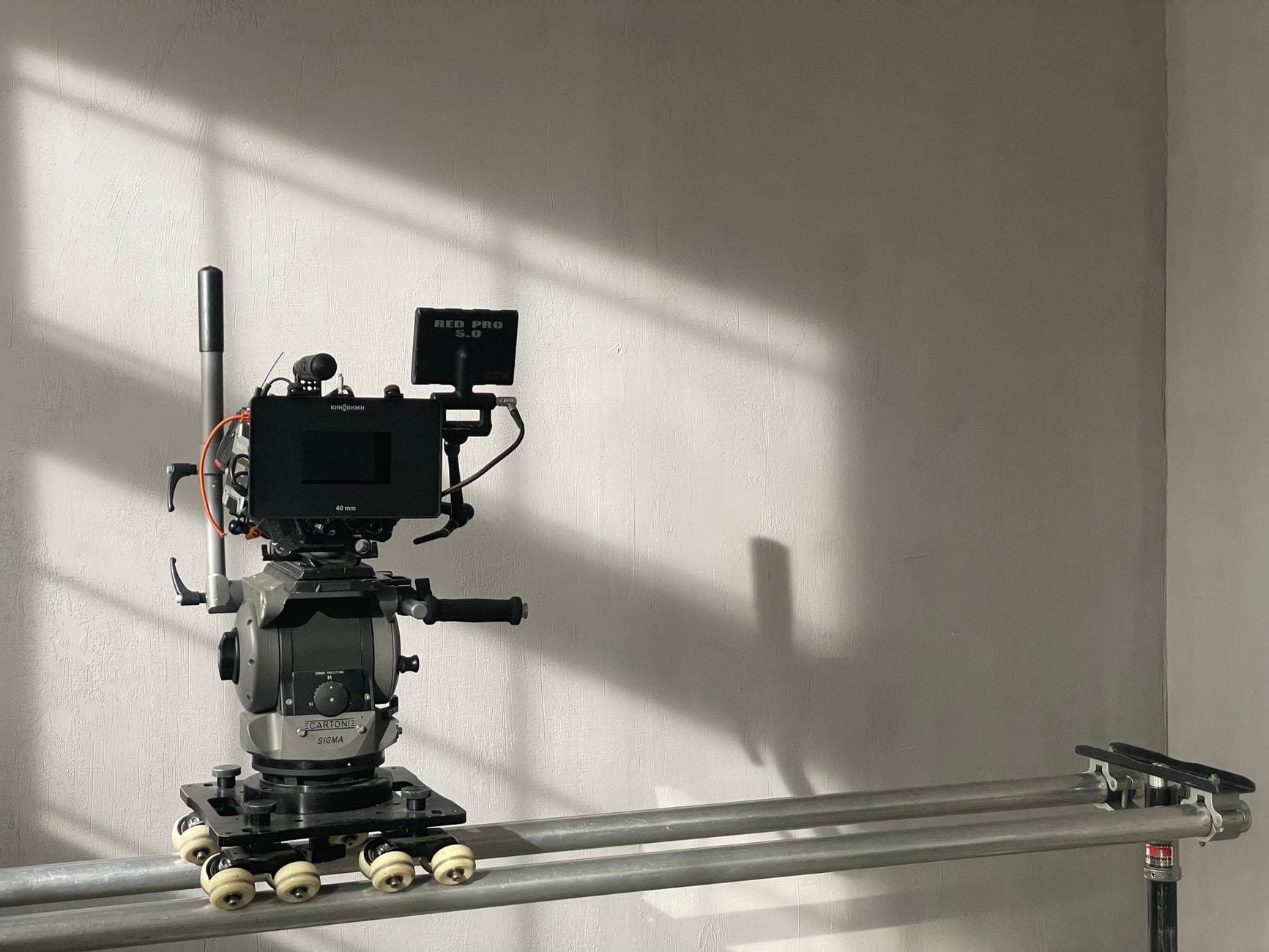
The key grip is the department head responsible for all camera support and rigging on set. That means dolly track, cranes, camera cars, jibs, parallels, and any custom rig needed to physically move or mount a camera safely. They also control the physical shaping of light, working directly with the gaffer to build frames, flags, diffusion, and negative fill that shape what the camera actually sees.
So the key grip doesn’t touch the camera, and they don’t connect anything to power. Those are the lines. Camera belongs to the camera department. Electricity belongs to the gaffer and the electric department. Everything in between, the iron, the pipe, the grip equipment that holds, shapes, and moves things, that’s the grip department’s territory.
On a union feature, the key grip manages a full team: a best boy grip (their second-in-command), a company grip, dolly grips, and a rigging crew. On a smaller non-union production you might be a key grip running just two or three people. The title scales with the budget. The responsibility doesn’t.
The Day-to-Day Work Nobody Talks About
People hear “key grip” and picture someone pushing a dolly. That’s a small slice of it. A big part of the job is prep. Before principal photography starts, the key grip reads the script, talks with the director of photography, scouts locations, and figures out what equipment the production needs to rent. They’re writing gear lists, calling rental houses like Film Tools or local grip houses, and negotiating package deals.
On the day, they’re on set early. Dolly track gets laid before the crew call. Diffusion frames go up before the gaffer can hang a light. The key grip is constantly looking two or three setups ahead, making sure their team is prepped and ready so the DP never has to wait.
Problem-solving is a huge part of the job. The location you scouted last week has a ceiling too low for the scissor lift. The dolly track won’t lay flat on that hardwood floor without risking a scratch. The director wants a low angle but there’s a concrete floor and no time to dig a trench. The key grip figures it out, fast and safely.
And safety is not optional. Grips work with heavy pipe, high rigs, and equipment that can seriously injure people if rigged wrong. The key grip is accountable for every rig their department builds. If something fails, it’s on them. That weight is real, and any good key grip feels it every day.
What Skills You Actually Need
Physical fitness matters. You’re carrying apple boxes, sandbags, pipe, and track all day. But raw strength isn’t the point. Technique is. Knowing how to lift safely, how to manage a load with your team, how to work in tight spaces without hurting yourself or others.
Beyond that, you need to understand rigging math. Load ratings, weight distribution, safety factors, what a Matthews C-Stand can actually hold versus what the sticker says. You need to know your hardware cold: speed rail, baby pins, cheeseboards, Cardellini clamps, Rocky Mountain legs, offset arms. If someone says “grab me a low boy,” you shouldn’t have to think about it.
You also need to understand light. Not how to produce it, but how to shape it. The difference between 216 and 250 diffusion. When the DP wants negative fill versus a bounce. Why a floppy goes on that side of the frame and not the other. Grips who understand light work better with gaffers and DPs, and they move up faster.
Communication rounds it out. The key grip coordinates with the DP, the gaffer, the AD, locations, and their own crew simultaneously. You have to be able to say “that’s not safe” to a director who’s in a hurry without burning the relationship. That skill is underrated and absolutely earned over time.
Key Grip Salary: What You Can Realistically Earn
On a union feature covered by the IATSE Basic Agreement, key grips typically earn between $55 and $75 per hour depending on the zone, contract type, and budget tier. On a high-budget studio feature, that can go higher with negotiation. A full union feature shoot over 60 days puts real money in your pocket, especially with kit rentals and overtime factored in.
Non-union rates vary widely. On a legitimate indie with a real budget, key grips might negotiate a flat deal in the $1,500 to $2,500 per week range. On micro-budget productions, you’ll see offers much lower, and you’ll have to decide whether the credit and relationships are worth it.
Television is where a lot of grips build consistent income. An episodic TV drama running 22 episodes can mean months of steady work at union rates. That consistency is why so many experienced grips in markets like Atlanta, Albuquerque, and Toronto gravitate toward TV.
Starting out as a grip PA or day player, you’re looking at $200 to $350 per day on non-union work. It’s not glamorous, but it’s how you build the hours and the reputation that eventually get you to the key grip chair.
How to Break Into the Grip Department
Start at the bottom. Seriously. Nobody walks onto a film set as a key grip. You start as a grip PA or a swing, you load trucks, you carry track, you hand tools to the grips above you, and you watch everything. The grip department rewards people who work hard, ask smart questions, and don’t create problems.
Get your hands on the equipment before you’re on set. SmallRig makes affordable rigging hardware that’s worth practicing with at home. Understanding how components fit together before someone hands them to you on a live set is a real advantage.
If you’re in a union market, look into your local IATSE chapter. Getting into the union takes time, usually through vouchers earned as a non-union day player on union productions, but the path is real and worth pursuing. The protection, the rates, and the network are worth the effort.
Build your network directly. DPs hire key grips they’ve worked with before or key grips recommended by people they trust. So every set you work, every relationship you build with a DP or a gaffer, that’s an investment in future work. Browse the crew directory to see how working pros are positioning themselves, and make sure your own profile reflects where you’re headed.
Check film production job listings regularly. Entry-level grip work does get posted, especially in growing markets, and being the first to apply with a tight, honest profile makes a difference. And if you’re still figuring out where you fit in the industry, the film industry employment starter pack is a solid place to get your bearings before you start knocking on doors.



Key Takeaways
The key grip is one of the most skilled and well-compensated department heads on any set, and the path in starts with showing up, working hard, and learning the gear.
- The key grip owns all camera support, rigging, and physical light control on set. They don’t touch the camera or the power.
- Strong candidates know their grip hardware cold before they’re tested on set. Learn the names, the load ratings, and the applications.
- Union key grips on studio features earn $55 to $75 per hour. Non-union indie rates run $1,500 to $2,500 per week on legitimate productions.
- Start as a grip PA or swing, load trucks, watch everything, and ask smart questions. That’s the actual entry point.
- Relationships with DPs and gaffers drive your career more than any credential. Every set is an audition for the next one.
The grip department is one of the most reliable career paths in the industry precisely because the work is technical, physical, and hard to fake.
FAQs
What’s the difference between a key grip and a gaffer?
The gaffer is the head of the electric department and is responsible for the production and placement of light sources. The key grip handles all the rigging and physical shaping of that light, including frames, flags, and diffusion. They work closely together, but their departments are completely separate.
Do grips need any formal training or certification?
There’s no single required certification to work as a grip, but practical training matters. Some grips come through film school, others through trade or safety courses, and many learn entirely on the job. OSHA rigging safety courses and aerial lift certifications can make you more hireable, especially on union productions where safety compliance is closely monitored.
What does a dolly grip do specifically?
The dolly grip is a specialist within the grip department who operates the camera dolly during shots. They’re responsible for laying track level, moving the dolly at exactly the right speed and timing during takes, and working closely with the camera operator to ensure smooth movement. It’s a skilled position that often takes years to master.
How long does it typically take to work up to key grip?
Realistically, five to ten years in most markets. You’ll spend time as a grip PA, then a company grip, potentially a best boy grip, before you’re running your own department. Some people move faster in smaller markets or on non-union productions where departments are smaller and responsibility comes sooner.
Can you work as a grip without joining the union?
Yes, plenty of grip work exists outside the union, especially in growing regional markets and on independent productions. But if you’re in a major market like Los Angeles or New York and you want consistent high-paying work, getting your IATSE card eventually is worth the effort. Non-union work is a legitimate way to build credits and skills while you pursue that path.
Ready To Find Your First Grip Job On A Real Production?
The grip department is one of the most technically demanding and genuinely rewarding paths in the film industry, and the entry point is simpler than most people think: show up, learn the gear, and be someone people want to work with again. Your first grip job probably won’t pay much, but it’s the one that starts the chain. Focus on the work in front of you, and the career follows.