Disclosure: This article contains affiliate links. If you make a purchase through one of these links, FilmLocal may earn a commission at no extra cost to you.
The Best Lens Filters for Filmmaking Are Not All Created Equal
Walk into any rental house and you’ll see cinematographers asking specifically for certain filter brands by name. That’s not brand loyalty. It’s hard-won experience after watching bad glass wreck a shoot. The best lens filters for filmmaking solve real problems: controlling exposure in bright conditions, killing reflections, and shaping the emotional quality of the image. Each filter type does a different job, and knowing which one to prioritize changes depending on your camera package, your shooting conditions, and your budget.
Let’s break them down by category, with real product comparisons and honest takes on what’s worth your money.
ND Filters: Where Cheap Glass Really Hurts You
Neutral density filters cut light without affecting color. Simple concept. But execution varies wildly, and this is where budget decisions come back to bite you in the grade.
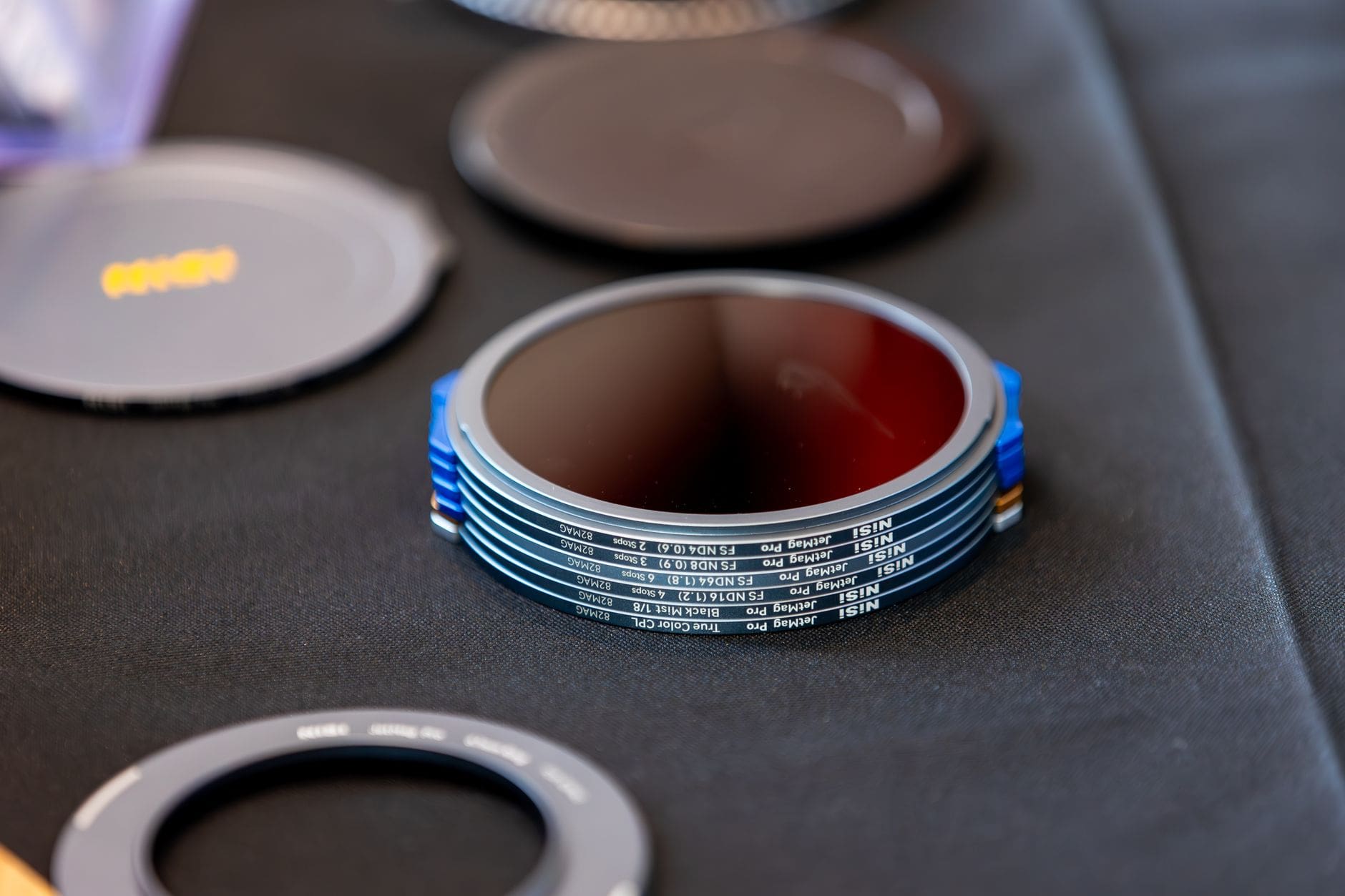
Variable NDs under $80 are generally a trap. The K&F Concept Variable ND (around $40-60 for 77mm) is popular on Amazon and produces a visible X-pattern darkening across the frame when you push past 6 stops. Fine for photos. Ugly on video. The color shift runs warm and muddy, which means extra time in the grade and inconsistent results shot to shot.
Step up to the Tiffen Variable ND (around $120-150) and you get much better color neutrality and no X-pattern below 8 stops. Tiffen has been manufacturing filters in Hauppauge, New York for decades, and their coatings are genuinely more consistent. Good mid-range choice for run-and-gun documentary or solo operators.
For narrative work or any shoot where you care about sharpness wide open, the PolarPro Peter McKinnon Variable ND (around $200-250) holds up at f/1.8 without the fringing issues you see on cheaper glass. And the NiSi True Color Variable ND (around $180-220) earns its name with minimal color cast across the entire range. Both are solid for A-camera use.
Fixed ND is a different conversation. If you’re shooting a controlled environment and you know your lighting, fixed NDs like the Tiffen 4×4 ND 0.9 (3 stops, around $60-80 for a single piece) or the Schneider Optics True-Match ND are more optically neutral than any variable. Production sets running a matte box will almost always have a set of fixed NDs over variable. There’s a reason for that.
If you’re sourcing gear or picking up a new filter set, Adorama carries the full range from Tiffen, NiSi, and PolarPro, which makes it easier to compare before you commit.
Circular Polarizers: Still Irreplaceable
No amount of color grading replicates what a polarizer does in-camera. It kills reflections on glass and water, deepens sky contrast, and saturates foliage naturally. You can’t fake this in post. Period.
The B+W XS-Pro Kaesemann CPL (around $80-130 depending on diameter) is the standard that most working DPs reach for. German-made, multi-resistant coating, excellent build quality. The glass is genuinely clear and the rotation is smooth and precise. It’s been a workhorse filter for years.
The Hoya HD Nano CPL (around $80-120) is a strong alternative with a harder coating that resists scratching better than most. If you’re working in dusty or coastal environments, the nano coating makes cleaning faster and less risky.
Budget option: the Tiffen CPL (around $40-60) works and holds up in most conditions, but you’ll notice slightly less contrast in the sky compared to B+W. Acceptable for lower-budget productions. Not what you’d spec for a feature.
One thing to know: polarizers cut about 1.5 to 2 stops of light, so factor that into your exposure math. And they only work at roughly 90 degrees to your light source, which means walking around to check effectiveness before you lock your angle is standard practice.
Mist and Diffusion Filters: Controlled Halation Without the Mess
This is the category that’s gotten the most attention over the last few years, largely because shooting on digital sensors produces crisp, sometimes harshly sharp images that feel clinical. Mist filters soften highlight edges and reduce micro-contrast in a way that reads as filmic rather than blurry.

The Tiffen Black Pro-Mist is the benchmark. The 1/4 strength (around $80-120) is the go-to for narrative work, portraits, and anything where you want a subtle organic quality without washing out the image. The 1/8 is barely perceptible and good for interviews where you want flattering skin but a clean look overall. The 1/2 gets dramatic fast. Know what you want before you go past 1/4.
The Moment CineBloom (around $80-100) is popular with mirrorless shooters and produces a slightly different bloom character, more milky than hazy. Good for music videos and narrative content with a stylized look. Less convincing on talking-head documentary work.
The NiSi Mist White (around $70-90) sits between the two and is worth testing if you shoot in high-contrast outdoor conditions. It controls flare blooming well without the warm shift you occasionally get from the Black Pro-Mist.
One honest note: mist filters are the best lens filters for filmmaking when you know the look you’re after, but they’re also the easiest to overuse. If you’re new to diffusion, rent before you buy. Seeing how a 1/4 vs 1/2 Black Pro-Mist reads on your specific sensor in your actual shooting conditions is worth more than any spec sheet.
For more gear decisions and production resources, check out the broader filmmaking articles on FilmLocal, especially if you’re building out a full kit from scratch.
Building a Practical Filter Kit on a Real Budget
You don’t need everything at once. Here’s how to prioritize based on where you’re working.
If you’re shooting mostly run-and-gun or documentary: get a quality variable ND first. The NiSi True Color or PolarPro Variable ND gives you the most flexibility for changing conditions. Add a CPL second. That combination handles 80% of practical shooting situations.
If you’re on set doing scripted work with a controlled lighting package: a set of fixed NDs (3, 6, and 10 stops) plus a Black Pro-Mist 1/4 will cover you. Add a CPL for any exterior work. That’s a complete kit.
Thread size matters. If you’re working across multiple lenses, using a step-up ring set (around $10-15 from Fotga or Neewer) so you can use one 82mm or 77mm filter across smaller diameter lenses is far cheaper than buying duplicate sets. This is standard practice and keeps your kit manageable.
Total cost for a solid working kit: $300-500 if you’re selective and buy one good option per category. That’s the realistic number. You can spend more, but spending less usually costs you time in post or reshoots.
If you’re earlier in your career and still building connections in the industry, having the right gear is only part of the picture. Finding consistent work matters just as much. The film production job listings on FilmLocal are a practical starting point for crew looking to get on more sets, and the crew directory helps you get found by the productions that need your skills.

Key Takeaways
Choosing the right filters for your specific shooting conditions saves you money, time, and headaches in post.
- Variable NDs under $80 almost always produce X-pattern artifacts and color casts. Spend at least $120-150 for usable results on camera.
- Fixed NDs outperform variable NDs for optical neutrality on controlled sets. Rent before you commit to a set.
- The B+W XS-Pro Kaesemann CPL is the standard circular polarizer for working DPs. Effects from a polarizer cannot be replicated in post.
- Start with Tiffen Black Pro-Mist 1/4 for mist diffusion. It’s the most versatile strength across narrative, commercial, and portrait work.
- Use step-up rings to standardize one filter diameter across your lens set. It keeps costs down and your kit simple.
Buy one excellent filter per category instead of three mediocre ones, and your footage will show the difference immediately.
FAQs
What is the best ND filter for filmmaking beginners?
The Tiffen Variable ND (around $120-150) is the most practical starting point. It avoids the worst artifacts of cheap variable NDs, holds reasonably neutral color, and gives you flexibility across changing light conditions without swapping filters constantly.
Can I use a circular polarizer with an ND filter at the same time?
Yes, and this is common practice on exteriors. Stack the polarizer on the lens first, then the ND on top. Just be aware you’re now cutting 3-4 stops total minimum, which affects your exposure planning. Some manufacturers like Tiffen make combination ND-polarizer filters if you want a single-glass solution.
Is a Black Pro-Mist filter worth it for digital cameras?
Yes, particularly for anything shot on a Sony FX3, BMPCC 6K, or similar high-resolution mirrorless or cinema camera. These sensors resolve detail sharply enough that a 1/4 Black Pro-Mist reads as organic and intentional rather than soft. The difference is visible in highlights and skin tones, and it’s hard to recreate convincingly in the grade.
Do mist filters affect autofocus performance?
Slightly, but it’s rarely a practical issue. The diffusion layer doesn’t block light to the phase-detection system in a way that causes hunting or locking failures under normal conditions. If you’re shooting fast action in low light with a 1/2 strength or higher, you might notice slower lock times, but the 1/8 or 1/4 strengths are generally transparent to AF performance.
What filter thread size should I standardize on for my kit?
77mm or 82mm covers most cinema and mirrorless lenses in common use. Check the largest diameter lens in your kit and buy filters for that size, then use step-up rings for anything smaller. It’s cheaper than buying duplicate sets and keeps your bag lighter.
Ready To Upgrade Your Glass And Shoot Better-looking Footage Today?
The short version: buy one quality variable ND, one CPL, and one Black Pro-Mist 1/4, and you’ll cover the majority of real-world shooting conditions without overspending or overcomplicating your kit. Don’t cheap out on the ND. That’s the one filter that will show up in every frame you shoot outdoors, and bad glass costs you more in the grade than it saves you at checkout. Rent what you’re unsure about, buy what you know you’ll use constantly.