Disclosure: This article contains affiliate links. If you make a purchase through one of these links, FilmLocal may earn a commission at no extra cost to you.
The Best Sound Recorder for Film Production Depends on Your Channel Count, Not Your Budget
Before you compare specs, answer one question: how many isolated tracks do you actually need rolling simultaneously on your busiest shooting day? That answer rules out half the market immediately. The Zoom F6, the Sound Devices MixPre-3 II, and the Tascam Portacapture X8 all sit in the $300 to $900 range, they’re all capable recorders, and they’ll all produce broadcast-quality audio. But they’re built for different workflows, and buying the wrong one wastes money in ways that hurt you mid-production, not at checkout.
This comparison focuses on working sound departments doing narrative shorts, indie features, documentary, and corporate video. Not studio recording. Not podcasts. Film production, where your recorder lives in a bag, runs all day on battery, and gets handed off to post with clean, labeled tracks.
Zoom F6: The Best Sound Recorder for Film Production on a Tight Budget
Street price sits around $500. Six inputs. 32-bit float recording on every channel. That last part matters more than almost anything else on this list.
32-bit float means the F6 captures such a wide dynamic range that clipping is essentially impossible. You set your gain, you roll, and if the director decides to fire a prop gun without warning you, the recording survives. Post can pull the peaks back down without artifacts. For a solo sound mixer running bag on a run-and-gun doc or a low-budget narrative where you’re also pulling your own boom, that’s a legitimate safety net.
The preamps are genuinely good for the price. They’re not Sound Devices good, but they’re far better than anything Zoom made five years ago. Self-noise sits around 128 dB dynamic range, and you’ll hear that difference when you’re recording quiet dialogue in a bedroom scene and need to push gain on a lav buried under a sweater.
The downsides are real. The touchscreen is small and fiddly with cold hands or gloves, which matters in Vancouver in November. The menu system requires several taps to access functions you’ll want fast. And the build quality feels like what it is, a $500 recorder. The knobs are fine. The chassis feels plasticky next to a MixPre.
But for a sound utility building their first kit, or a DP on a micro-budget who needs to cover their own audio on B-unit days, the F6 is hard to argue against. Six channels of 32-bit float for five hundred dollars is a strong value proposition. You can browse film production job listings and see how many low-budget postings specifically call for 32-bit float capability now. It’s become a baseline expectation fast.
Sound Devices MixPre-3 II: The Professional Standard, With a Price to Match
This is the one working production sound mixers actually reach for. The MixPre-3 II runs about $650 to $700, which puts it only $150 to $200 above the F6 on paper. But the gap in build quality, preamp performance, and workflow speed is much wider than that spread suggests.
Three inputs, so you’re more constrained on channel count. But the Kashmir preamps Sound Devices uses are genuinely exceptional. Low self-noise, wide dynamic range, and a physical feel on the controls that lets you work fast without looking down. The knobs have real detents. The screen is readable in direct sunlight. These aren’t minor conveniences, they’re things you notice at hour ten of a twelve-hour shoot day.
The MixPre-3 II also records 32-bit float. So you get the same clipping protection as the F6, but with better preamps and a significantly more refined workflow. The USB-C bus power is a practical win too. You can run it off a V-mount battery plate with a USB-C output, which integrates cleanly into most bag rigs.
Where it falls short: three inputs is limiting. Add a boom, two lavs, and you’re already at the ceiling. If your production regularly calls for more than three isolated tracks, you’re either chaining units or looking at the MixPre-6 II, which jumps to around $1,000. For many indie narrative shoots, three channels is fine. But know your show before you commit.
Sound Devices publishes detailed technical specs and firmware updates directly on their site, and their MixPre-3 II product page is worth reading if you want to go deep on the technical side before buying. The community around Sound Devices gear is also active and useful when you’re troubleshooting in the field.
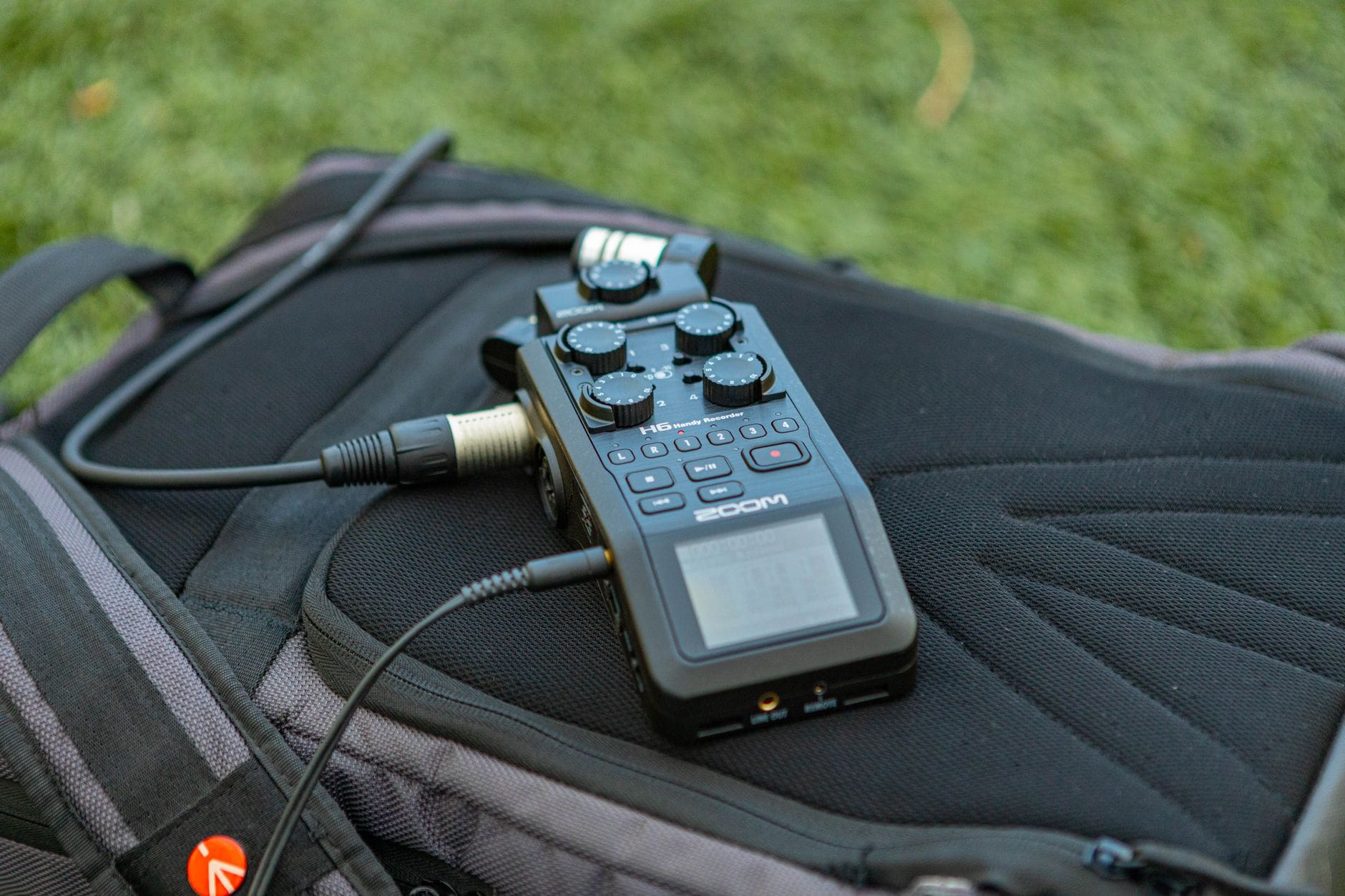
Tascam Portacapture X8: The Wildcard That Earns Its Place
The Portacapture X8 runs around $300 to $350 and gives you eight tracks. Eight. That’s the headline. For the money, nothing else in this tier touches that channel count.
It records 32-bit float on all eight channels. The touchscreen interface is actually the best of the three, more intuitive and better organized than the F6’s. And the built-in mid-side mic capsules are genuinely useful for documentary-style location ambience and room tone capture. Tascam has been in this space a long time and their Portacapture X8 documentation is thorough.
So why isn’t everyone using it? The preamps. They’re adequate but not exceptional, and you’ll notice it when you compare raw recordings against the MixPre side by side. The noise floor is slightly higher. For most production situations, you won’t care. But on a quiet dialogue scene in a treated room where the director wants to use the whisper take, you might.
The build is somewhere between the F6 and the MixPre. Solid enough for field work, not as confidence-inspiring as Sound Devices. Battery life is good. The form factor is slightly bulky for a shoulder bag rig compared to the more compact MixPre.
Where it wins clearly: documentary work where you’re covering a lot of subjects simultaneously, run-and-gun shoots with multiple wireless systems feeding it, or productions where you need eight channels and can’t spend $1,500 on an F8n Pro. If you’re building out a sound package from scratch and expect to take on increasingly complex shoots, the X8 grows with you in a way the MixPre-3 II doesn’t.
How to Actually Choose Between These Three
Here’s a simple framework. Don’t overthink it.
- Solo mixer, mostly two or three person shoots, want the best audio quality per dollar: MixPre-3 II. It’ll outlast the production and hold its resale value better than either alternative.
- Solo mixer, micro-budget productions, price is the primary constraint, need at least six channels: Zoom F6. The 32-bit float safety net will save a take eventually, and six channels handles most indie narrative scenarios.
- Doc shooter, journalist, or sound utility covering large casts or multiple wireless channels regularly: Tascam Portacapture X8. Eight tracks at $350 is a deal that doesn’t have a direct competitor at that price point.
If your budget allows, seriously consider pairing whichever recorder you choose with a good bag rig and proper cable management. The recorder is only as useful as the system around it. You can find working sound professionals and their preferred kit setups through the crew directory, which is worth using to connect with experienced mixers in your market before you finalize your package.
And if you’re sourcing gear and accessories, Adorama carries all three of these recorders and frequently runs open-box deals worth checking before paying full retail.
The ProductionHub community forums also have active threads comparing these units with real field notes from mixers across different production types. Worth reading before you decide.


Key Takeaways
Your channel count requirement and preamp quality expectations should drive your recorder choice, not brand loyalty or spec sheet bragging rights.
- The Zoom F6 ($500) offers six channels and 32-bit float recording, making it the best value for solo mixers who need headroom against unexpected level spikes.
- The Sound Devices MixPre-3 II ($650-$700) delivers the best preamp quality of the three and the most professional workflow, but you’re capped at three inputs.
- The Tascam Portacapture X8 ($300-$350) gives you eight tracks at the lowest price point, with the trade-off of slightly noisier preamps than the Sound Devices.
- All three record 32-bit float, which has effectively become a baseline expectation on professional productions in 2026. Don’t buy anything below this spec in this price tier.
- Choose your recorder based on your most complex regular shoot day, not your simplest one. Running out of inputs on set is worse than having too many.
Lock in your recorder before you finalize your camera package. Your picture gets graded in post. Your audio either works or it doesn’t.
FAQs
Is the Zoom F6 good enough for professional film production?
Yes, for most indie and low-to-mid budget productions. The preamps are good, 32-bit float recording is a genuine professional feature, and the six-channel count covers most narrative and documentary scenarios. Working professional mixers use the F6 regularly on paid shoots. It’s not a Sound Devices, but the gap is smaller than the price difference suggests.
Can the MixPre-3 II handle a three-person documentary interview?
Exactly. One boom on input one, two lavs on inputs two and three, and you’re at capacity but covered. Problems start when a fourth person enters the frame unplanned. If you regularly shoot panel setups or large group scenes, step up to the MixPre-6 II or look at the Tascam X8 for the channel count.
What does 32-bit float actually mean in practical terms on set?
It means the recorder captures audio with such a wide dynamic range that you can’t clip the signal at the recording stage. If a sound event is far louder or quieter than anticipated, you recover it cleanly in post without the distortion that would ruin a standard 24-bit recording. You still need to monitor levels, but a blown take becomes recoverable rather than unusable.
Do I need a separate mixer if I’m using one of these recorders?
Not for most productions in this budget tier. All three units have built-in mixing capabilities. A dedicated field mixer like a Sound Devices 552 adds more routing flexibility and physical faders, but it also adds cost and weight. Most sound utilities and solo mixers run these recorders standalone in a bag rig without a separate mixer and manage fine.
Where do I find jobs that specifically require field recording experience?
Check the film production job listings on FilmLocal, which regularly posts sound utility, boom operator, and production sound mixer roles across the US and Canada. If you’re building your first sound package and want to start getting on set, the film industry employment starter pack covers how to position yourself for your first paid crew calls.
Ready To Lock In Your Sound Package Before Your Next Shoot?
Pick the recorder that fits your most demanding regular workflow, buy it before you rent the camera, and test it on a non-critical shoot before you rely on it for principal photography. All three of these units are capable of delivering broadcast-quality audio in the right hands. The difference between them shows up in workflow speed, channel count, and how they perform when the shoot goes sideways, which it always does. Know your tool before the call sheet lands.