The Three Wireless Lavalier Microphones Worth Talking About for Film Production in 2026
The market for wireless lavalier microphones has gotten genuinely crowded over the past few years. But most of what’s out there is either consumer-grade gear dressed up in professional packaging, or broadcast-focused systems that cost more than some people’s entire kit. For working film production in 2026, three systems consistently come up in real conversations between sound mixers: the Rode Wireless PRO, the DJI Mic 2, and the Sennheiser EW-DP. They’re not all aimed at the same buyer. That’s the point.
If you’re shopping for the best wireless lavalier microphone for film production right now, this is the comparison you actually need. Real specs, real limitations, real prices.
Rode Wireless PRO: Best All-Rounder for Indie and Documentary Work
Street price: approximately $399 USD for the dual-channel kit
Rode positioned the Wireless PRO as a serious upgrade from their GO series, and they delivered. The onboard 32-bit float recording on each transmitter is the standout feature. If your talent goes loud unexpectedly and you can’t ride gain in real time, having a safety recording on the transmitter itself has saved a lot of takes. That’s not a small thing.
RF performance runs on 2.4 GHz, which some mixers will immediately flag as a concern. And it’s a fair concern. On a busy set in a convention center or an urban location with heavy Wi-Fi saturation, 2.4 GHz can get ugly. But in most controlled narrative and documentary environments, the Rode Wireless PRO handles it cleanly at up to 260 meters line-of-sight. Realistically you’re working within 30 to 50 meters indoors, and it holds up well there.
Audio quality is genuinely good. The included lavalier capsule isn’t the most transparent in this group, but it’s usable out of the box. Most sound departments running this system will swap to a DPA 4060 or Sanken COS-11D anyway, and the preamp handles those cleanly.
Pros: 32-bit float safety recording, compact transmitters, solid battery life (around 7 hours), great companion app for gain staging and monitoring.
Cons: 2.4 GHz only, no true timecode sync, included lav capsule is mediocre, not ideal for large multi-channel productions.
This system makes the most sense for one- or two-person sound departments, documentary crews, and indie narrative productions where budget discipline is real. Check film production job listings and you’ll see how many indie and doc gigs are running exactly this kind of lean audio setup.
DJI Mic 2: The Run-and-Gun Option That Punches Above Its Price
Street price: approximately $329 USD for the dual-channel kit with charging case
DJI entered the audio space and a lot of traditional sound people rolled their eyes. They shouldn’t have. The DJI Mic 2 is a well-built, genuinely capable system for the right context.
It also runs 2.4 GHz. The range claim is 250 meters, which is similar to the Rode. Real-world performance is comparable. Where the DJI Mic 2 stands out is the charging case, which gives you multiple full charges for both transmitters and the receiver before you need a power source. On a long exterior day with no basecamp nearby, that matters.
The onboard recording per transmitter goes up to 14 hours of audio. Combined with the magnetic clip-on design, this system is built for fast-moving production: ENG style, run-and-gun documentary, social content shot on a narrative budget. Setup time is minimal. The companion app is straightforward.
Audio quality is the honest limitation here. The preamp isn’t as clean as the Rode or the Sennheiser. In a quiet room with a good subject, it sounds fine. In challenging acoustic environments or with demanding post expectations, you’ll notice the noise floor more. And the included capsule is consumer-adjacent. Swapping to a better lav helps, but the system’s preamp limits the ceiling.
Pros: Lowest price of the three, excellent battery and charging case, fast setup, magnetic clip is genuinely useful, onboard recording.
Cons: Noisier preamp, 2.4 GHz only, less flexibility for professional post workflows, capsule quality is the weakest here.
If you’re building your first kit and you’re doing documentary, social, or ENG-style work, the DJI Mic 2 is a smart entry point. You can browse gear-focused resources at Adorama to compare current street pricing across all three of these systems.
Sennheiser EW-DP: The Professional Standard for a Reason
Street price: approximately $699 to $799 USD per channel, depending on configuration
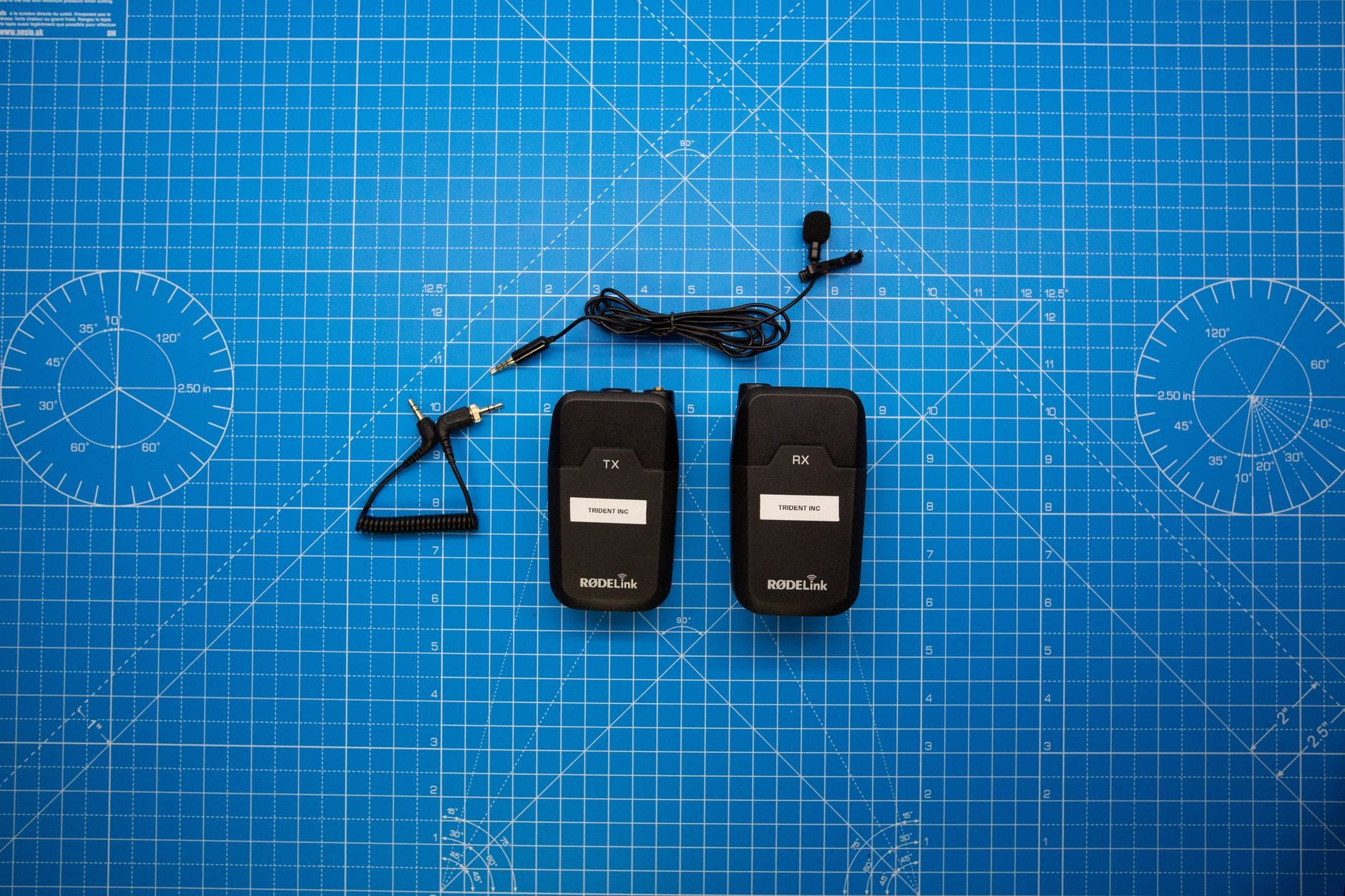
The Sennheiser EW-DP is the only system here that runs on UHF. Specifically, it operates in the 520 to 607.8 MHz range, which means it doesn’t compete with Wi-Fi, Bluetooth, or the 2.4 GHz noise floor that the other two systems live in. On a busy production set, that’s a meaningful advantage. Your RF coordinator will thank you.
Range is rated at 100 meters, which is less on paper than the 2.4 GHz systems. But the RF behavior is more predictable, more stable, and more manageable in complex multi-channel environments. If you’re running six or eight channels on a narrative feature, you want UHF. Full stop.
The audio quality is clearly the best of this group. The preamp is cleaner, the noise floor is lower, and the system is built to interface cleanly with professional recorders like the Sound Devices 888 or Zoom F8n Pro. It accepts the full range of professional lavalier capsules without complaint. The Sennheiser EW-DP product page has full frequency coordination specs worth reviewing before you buy for a specific market.
The cost is real. At roughly $700 per channel, a four-channel kit puts you close to $3,000. That’s a professional tool at a professional price. But for working sound mixers building a rental kit, or for productions that need to meet broadcast delivery specs, this is where you spend the money.
Pros: UHF operation, superior RF reliability in complex environments, best audio quality of the three, professional connector options, broadcast-grade build quality.
Cons: Significantly more expensive, no onboard recording, larger form factor, requires more RF planning knowledge to deploy correctly.
If you’re a working sound mixer looking to build a kit that gets you on professional sets, the EW-DP is worth the investment. Browse the crew directory to see how sound department professionals list their kit, and you’ll notice UHF systems dominate at the mid-to-upper tier.
How to Choose Between Them: Honest Advice
Match the system to the actual production, not the aspirational one.
You’re shooting a low-budget feature with a two-person sound department, a controlled set, and tight post? The Rode Wireless PRO is probably your system. The 32-bit float safety recording alone is worth the price difference over the DJI, and the audio quality is meaningfully better.
You’re doing documentary work, ENG, or social content where setup speed and battery endurance matter more than audio perfection? The DJI Mic 2 gets out of your way and keeps running. For that context, it’s a smart buy.
You’re a sound mixer building a professional rental kit, or you’re on a production with multiple channels and real RF management needs? The Sennheiser EW-DP is the answer. The cost is justified because the alternative, dropped channels and RF interference, is more expensive in lost time and unusable takes.
One thing all three systems share: they benefit from using a better lavalier capsule than what ships in the box. The DPA 4060 (around $350) and Sanken COS-11D (around $300) are the two capsules most experienced production mixers reach for. Budget for one if you’re serious about the best wireless lavalier microphone results for film production. The DPA lavalier lineup is a good reference for understanding what professional capsule options actually exist.
And if you’re earlier in your career and still figuring out how audio fits into your role on set, the film industry employment starter pack is worth a look for broader context on building production skills.

Key Takeaways
The right wireless lav system depends on your production type, your channel count, and your RF environment, not just your budget.
- The Rode Wireless PRO ($399 dual kit) is the best all-rounder for indie narrative and documentary, especially for the 32-bit float safety recording.
- The DJI Mic 2 ($329 dual kit) wins on speed and battery life, but its noisier preamp limits it to run-and-gun and ENG contexts where audio perfection isn’t the top priority.
- The Sennheiser EW-DP ($700+ per channel) is the professional standard for multi-channel narrative and broadcast work, with UHF reliability that 2.4 GHz systems can’t match in complex RF environments.
- All three systems perform better with an upgraded lavalier capsule. The DPA 4060 and Sanken COS-11D are the two most commonly used professional options on film sets.
- If you’re building a rental kit as a working mixer, buy for the jobs you want to get, not just the jobs you’re currently getting. The EW-DP opens doors the other systems don’t.
Buy the system that fits your actual shooting conditions, and budget for a quality lav capsule from day one.
FAQs
Is 2.4 GHz wireless actually reliable enough for professional film production?
In controlled environments, yes. The Rode Wireless PRO and DJI Mic 2 both perform reliably in most narrative and documentary settings. But 2.4 GHz gets problematic in dense RF environments: convention centers, crowded urban locations, or sets with heavy Wi-Fi infrastructure. If you’re running multiple channels or working in complex RF conditions, UHF is still the more dependable choice.
Do I need a separate lavalier capsule, or are the included mics good enough?
The included lavs in all three systems are usable but not great. For documentary interviews or corporate work, they’ll get you through. For narrative film production where dialogue is going to be scrutinized in post, upgrading to a DPA 4060 or Sanken COS-11D makes a noticeable difference in clarity and noise floor.
Can the Sennheiser EW-DP work with Sound Devices recorders?
Yes. The EW-DP has a 3.5mm TRS output on the receiver, and with the right cable or adapter it connects cleanly to a Sound Devices 888, MixPre series, or similar professional recorder. Many mixers also run it into their bag via a Lectrosonics or Sound Devices input card. Check Sennheiser’s spec sheet for output level and impedance matching before you finalize your setup.
What’s the practical battery life difference between these systems on a real shoot day?
The DJI Mic 2 has the edge here, with transmitters rated at around 6 hours and the charging case adding multiple full recharges. The Rode Wireless PRO transmitters run about 7 hours. The Sennheiser EW-DP gets approximately 10 hours on AA batteries, which some mixers actually prefer because you can swap cells fast on set without a cable.
Which system is best if I’m just starting out as a production sound mixer?
Start with the Rode Wireless PRO. The 32-bit float safety recording reduces the risk of blown takes while you’re still learning to manage gain in real-time. The system is also well-documented, has a strong user community, and the audio quality is respectable enough that you won’t be embarrassed on a professional set. Graduate to UHF when your work demands it.
Ready To Upgrade Your Wireless Lav System Before Your Next Shoot?
The Rode Wireless PRO handles most indie and documentary work well, the DJI Mic 2 earns its place on fast-moving shoots, and the Sennheiser EW-DP is still the system you want when reliability and audio quality both have to be right. Whichever direction you go, pair it with a quality capsule and actually test your RF environment before the shoot starts. Problems you find in prep cost you nothing. Problems you find on set cost you everything.