Disclosure: This article contains affiliate links. If you make a purchase through one of these links, FilmLocal may earn a commission at no extra cost to you.
The Real On-Set Communication Systems for Film in 2026
Most sets run on two-channel simplex radio. That’s it. One channel for the AD team, one for G&E, and everyone pushes to talk. It works until it doesn’t, and on a shoot with more than 20 people, it starts breaking down fast. Knowing which system fits your production size is what saves you from renting the wrong gear or under-buying for a shoot that needs more.
The broad categories are: handheld walkie talkies, wireless belt pack intercoms, and hardwired party-line systems. Each solves a different problem. Walkies are flexible and cheap to scale. Intercom systems are hands-free and always-on. Hardwired systems are bulletproof but locked to a physical location. Most productions end up mixing two of these three.
Walkie Talkies: The Backbone of Most Sets
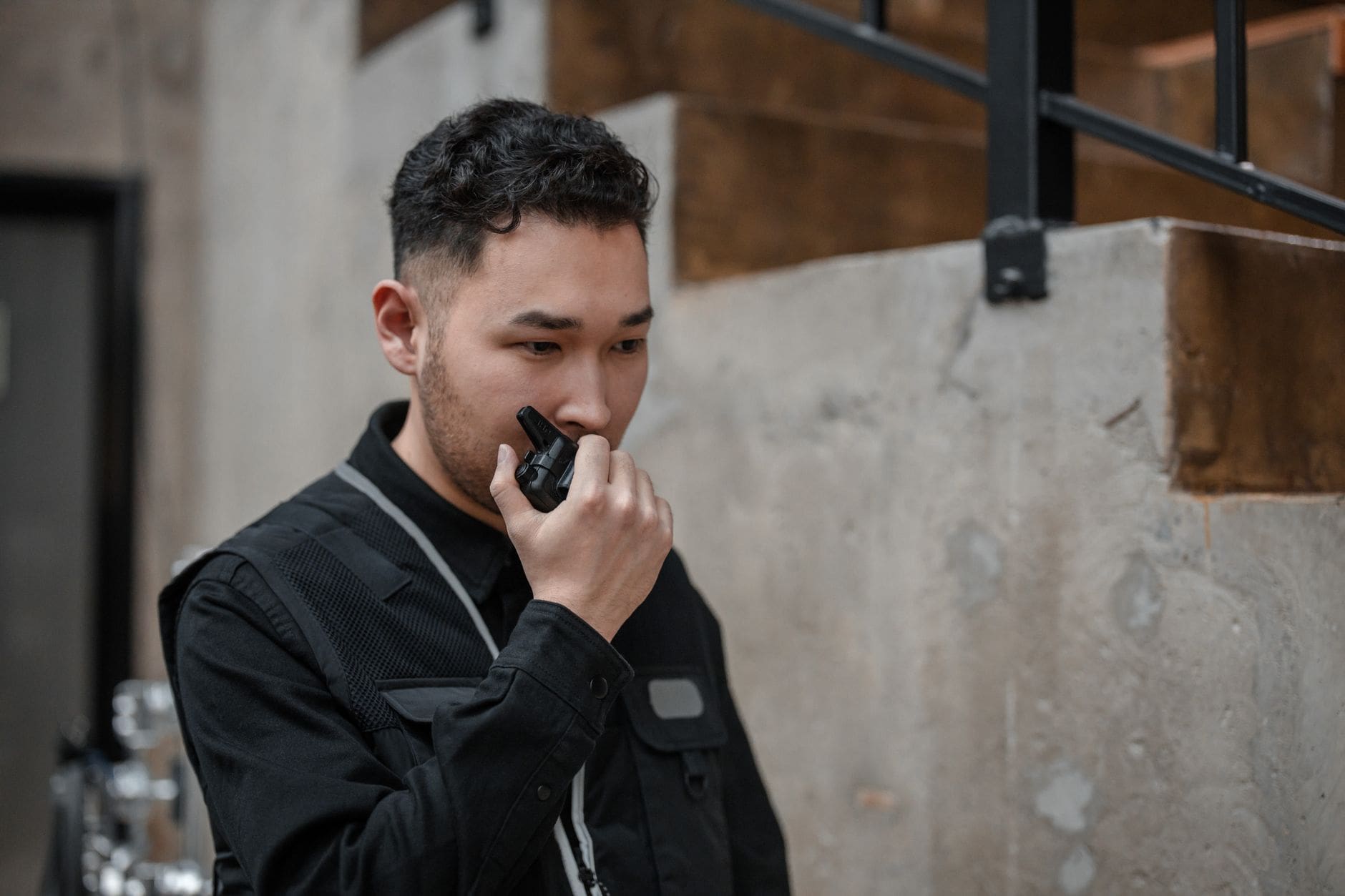
The Motorola CP200d is still the industry standard rental unit across most of North America. You’ll pay $15 to $25 per unit per day from most rental houses, or around $300 to $350 to buy outright. It’s UHF, it’s durable, and almost every AD in the country knows how to use it without a tutorial. That familiarity matters on day one of a new shoot.
If you’re buying for a small production company and want something more budget-friendly, the Motorola RMU2080d runs about $130 to $150 per unit and works fine for crews under 15 people. It’s limited to 8 channels and lacks the build quality of the CP200d, but for a three-day indie short, it gets the job done. Don’t expect rental houses to stock it, so factor in that you’re buying, not renting.
The Kenwood NX-P500 is worth a look if you’re outfitting a small production company from scratch. Street price is around $200 to $230 per unit. Better audio than the Motorola entry-level options, solid battery life at 14-plus hours, and it accepts standard AA batteries as a backup, which is a genuinely useful feature on a long location day.
One honest caveat: consumer-grade FRS radios like the Baofeng UV-5R are everywhere because they’re $25. Don’t use them professionally. Audio quality is inconsistent, range is poor in urban environments, and the FCC licensing situation for GMRS frequencies is something you don’t want to deal with mid-production. Buy once, buy right.
Belt Pack Intercoms: What the Camera and Sound Departments Actually Want
Walkies are push-to-talk. Intercom systems are always-on, full duplex or party-line depending on the setup. Camera operators and 1st ACs don’t want to fumble with a PTT button while they’re pulling focus. That’s where belt pack intercoms earn their place.
The Clear-Com RS-702 is the standard wired party-line beltpack. Around $400 to $500 per unit new, and you’ll find them on almost every narrative set that has a dedicated video village and DIT cart. They’re reliable, compatible with most party-line infrastructure, and the audio is clean. The trade-off is obvious: you’re on a wire. Range is defined by your cable runs.
For wireless intercom, the Hollyland Solidcom C1 Pro has been making serious inroads on mid-budget productions over the last two years. A base station plus four beltpacks runs about $1,200 to $1,400. It’s not Clear-Com, but the range is solid at up to 350 meters in open environments, and the full-duplex audio is genuinely usable. For a production spending $50k to $200k total budget, it’s a reasonable choice where a full Clear-Com Matrix system at $10,000-plus doesn’t make sense.
Clear-Com’s own FreeSpeak II wireless system is the gold standard. Budget $4,000 to $6,000 for a basic setup with a few beltpacks, and significantly more for a full deployment. Major studio productions and broadcast work. Worth knowing about, not necessarily worth buying for most independent productions.
Headsets and Earpieces: Getting the Details Right
The radio is only half the system. A bad earpiece makes even a CP200d frustrating to use. The two-wire surveillance earpiece is the film industry default because it keeps the ear clear and the PTT accessible on the shoulder. Expect to pay $15 to $40 per unit for decent quality. Otto Engineering makes the ones you’ll see on most union sets, and they hold up to daily use far better than the generic alternatives.
For intercom headsets, the Clear-Com CC-300 single-ear headset runs about $200 to $250 and pairs with their party-line beltpacks. It’s the correct tool for anyone sitting at a station for long periods, like a DIT or a script supervisor. If you’re moving around, a lightweight headset is better than a full over-ear solution.
Noise-canceling headsets matter more than people admit. On a set with generators running or in a location with significant ambient noise, a standard headset turns into a garbled mess. The Telex PH-1R runs around $150 and gives you meaningful noise rejection without the bulk. Worth having a few in the kit for your sound mixer and AD on noisy exterior days.
How to Think About System Scale
Here’s a practical framework. Under 10 people on set, consumer-grade walkies and surveillance earpieces work fine. Spend $200 to $400 total and move on. Ten to 30 people, you want at minimum 15 to 20 CP200d-class radios, probably rented, plus a small intercom setup for camera and sound. Expect to spend $800 to $1,500 per week on comms. Above 30 people, you’re in professional rental territory with dedicated comms packages, and your production coordinator should be sourcing this from a house like PSW Productions or similar regional supplier.
Channel discipline matters as much as hardware. Most ADs run channel 1 for the primary AD net and channel 2 for G&E. Production often gets channel 3. Art department and locations on 4 and 5 if the radios support it. The Directors Guild of America doesn’t mandate specific comms protocols, but experienced ADs will have strong opinions about channel assignments, and they’re usually right.
If you’re newer to production and building out your first kit for a PA or AD role, check out the film industry employment starter pack for a broader look at what gear actually matters when you’re starting out.
Buying vs. Renting: An Honest Take
Buy if you’re doing more than six production days per year with the same crew size. Rent if you’re producing one or two projects annually. The math is straightforward. Renting 10 CP200d units costs around $150 to $250 per week depending on market. Buying 10 units outright costs $3,000 to $3,500. You break even in a year or two of consistent production.
If you’re buying, Adorama carries a solid range of communication gear and production equipment, and they’re a reliable source if you’re outfitting a kit rather than going through a dedicated rental house.
Renting makes sense for features and larger productions because you also get tech support, replacement units if something dies, and you’re not storing 30 radios in your garage between shoots. Production equipment managers at rental houses know their inventory well, and a good one will help you spec the right comms package for your crew size.
For newer crew members trying to understand where comms responsibilities fall on a real set, the crew directory shows how different roles are structured across departments, which also gives you context on who’s actually responsible for managing the radio package.
The IATSE covers several departments that use intercom and radio systems regularly, and on union productions, familiarity with professional-grade comms is a baseline expectation for most crew categories above PA level.
If you’re looking for your next production role, browse the current film production job listings to see what’s active in your market.


Key Takeaways
Matching your communication system to your crew size and budget is the decision that actually matters, not chasing the most expensive hardware.
- The Motorola CP200d is the industry rental standard for walkies. Know it, use it, and don’t fight the convention.
- For wireless intercom on a mid-budget production, the Hollyland Solidcom C1 Pro at around $1,200 to $1,400 for a starter kit is a practical middle ground between consumer and broadcast-grade gear.
- Invest in decent earpieces. An Otto Engineering two-wire at $30 to $40 outperforms a $5 generic unit on every long shooting day.
- Buy comms gear if you’re shooting more than six days a year at the same crew size. Rent for anything under that.
- Channel discipline and protocol matter as much as hardware. Set clear channel assignments before day one and stick to them.
Get the comms right at the start of prep, not during production, and you’ll spend a lot less time repeating yourself on set.
FAQs
What walkie talkies do most professional film sets use?
The Motorola CP200d is the most common unit on North American sets and the standard offering from most production rental houses. On lower-budget productions, you’ll also see the Motorola RMU2080d and Kenwood NX-P500 series. Avoid consumer FRS radios for anything professional.
How many walkie talkies do I need for a typical film shoot?
A rough rule is one radio per department head plus all ADs, plus a few spares. A 15-person crew typically needs 10 to 12 units. Larger shoots with 30 or more people often run 25 to 35 radios across departments. Over-spec by 10 to 15 percent and you’ll cover replacements for dead batteries and late arrivals.
What’s the difference between a walkie talkie system and an intercom system on set?
Walkies are push-to-talk simplex radios. You press a button, you talk, you release. Intercom systems, like Clear-Com party-line, are always-on connections where multiple people can speak and listen simultaneously without pressing anything. Camera and sound departments prefer intercoms because they need both hands free during shooting.
Is the Hollyland Solidcom C1 Pro actually reliable enough for professional use?
For productions under $500k it’s a solid choice. Range holds up well on smaller locations, audio is clear, and the setup is genuinely simple. It won’t replace a Clear-Com Matrix system on a large studio production, but for a 10 to 20 person shoot, it does the job at a fraction of the cost.
Do I need a license to use walkie talkies on a film set?
UHF business-band radios like the CP200d require an FCC Part 90 license in the US or an Industry Canada authorization to operate on licensed frequencies. Most production companies either hold their own license or operate under the rental house’s license. Don’t assume your rental unit is covered and check before production starts.
Ready To Build Out Your On-set Communication Kit?
Start with the radios that match your crew size and budget, get earpieces that will actually survive a 14-hour day, and add an intercom solution for camera and sound if your shooting ratio demands it. The gear doesn’t have to be expensive to work well, it just has to be right for the scale of the production you’re running.